Satay? Okay! is available on all major podcast platforms including Spotify, Apple Podcasts and Amazon Music.

16. Bosou and the Fight for Sabah Part 2 – Satay? Okay!
From traditional to contemporary, we look at the other side of Sabah culture.Continuing on from Part 1, we learn about efforts to modernise traditional indigenous cuisine through fine dining. Raphael Jay Peter Lee is head chef of OITOM, a restaurant in Kota Kinabalu that aims to redefine what Sabahan cuisine is. But it turns out that instilling traditional cultural values into your restaurant requires more than just a menu change.Resources and ReferencesA History of Malaysia (2016), Barbara Watson Andaya, Leonard Y. AndayaBorneo: The History of an Enigma (2026), Olivier HeinDruce, Stephen C and Nani Suryani Haji Abu Bakar. 2023. Brunei and the World Since 1984. Routledge Handbook of Contemporary Brunei, pp. 100-117. eds. Ooi Keat Gin and Victor T. King. London: Routledge.The Making of Sabah, 1865-1941: The Dynamics of Indigenous Society, University of Malaya Press, 2000Titas Chakraborty, Matthias van Rossum, Slave Trade and Slavery in Asia—New Perspectives, Journal of Social History, Volume 54, Issue 1, Fall 2020, Pages 1–14, https://doi.org/10.1093/jsh/shaa004James Warren, The Sulu Zone 1768–1898: The Dynamics of External Trade, Slavery, and Ethnicity in the Transformation of a Southeast Asian Maritime State (Singapore, 2007)Barbara Andaya, To Live as Brothers: Southeast Sumatra in the Seventeenth and Eighteenth Centuries (Honolulu, 1993).CreditsHosted by Dr Noby Leong and Philip GibsonProduced by Dr Noby Leong and Philip GibsonSound Design by Jack BarrSatay? Okay! is produced by Kopi Productions Limited and supported by the Golden Chopsticks Scholarship, by the Oxford Cultural Collective Trust
- E16 – Bosou and the Fight for Sabah Part 2
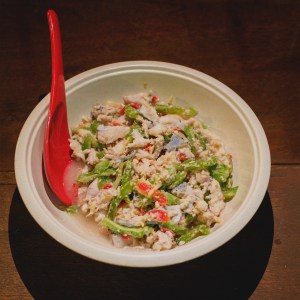 From traditional to contemporary, we look at the other side of Sabah culture.
 - E15 – Bosou and the Fight for Sabah Part 1Almost anything can be turned into bosou. Sabah’s favourite fermented condiment can be found in vegetable, meat and fish forms. It’s a dish of survival, and a core part of indigenous identity.
- E14 – Tuak and the White Rajahs of Sarawak Part 2
 A new generation of Sarawakians are breathing life into the burgeoning tuak industry. But can they take this drink worldwide when brewing tuak is technically illegal.
 - E13 – Tuak and the White Rajahs of Sarawak Part 1Tuak is more than just rice wine, it’s a core part of indigenous identity in Sarawak. But can the traditions of tuak be upheld if the drink is commercialised?
- E12 – Ginger and the Empires of Borneo
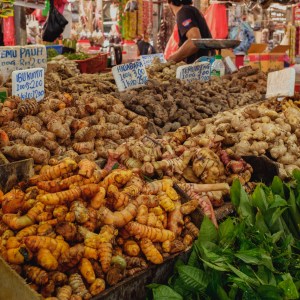 Ginger root isn’t the only ginger out there. Malaysia boasts dozens of different gingers, some that are only found in Borneo.
 - E11 – Rice and the Birth of Borneo
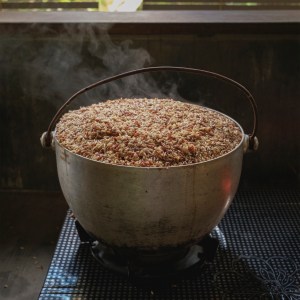 Where does rice come from? The oldest rice grain found in Malaysia is in Sarawak, but rice likely didn’t originate from there. The tale of everyone’s favourite grain tells us a lot about Borneo and its people.
 - E10 – Chicken Rice and the Making of an Empire
 What does an American missionary have to do with Hainanese Chicken Rice in Malaysia? More than you ever thought possible.
 - E9 – Toddy and the Colonisers’ Secret Treaty
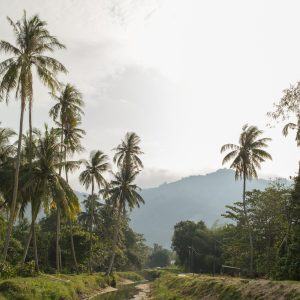 There’s no whisky in a Malaysian toddy. That’s because toddy in Malaysia refers to the kombucha-like coconut drink. Toddy is sugary, sour and a bit funky. But like so many of Malaysia’s foods, the sweet taste obscures a very dark origin.
 - E8 – Laksa and the Great British Lie
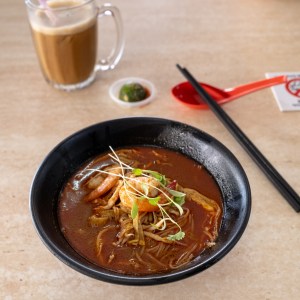 Tried laksa with spaghetti? Or sour tamarind laksa? Laksa comes in many forms, but a classic Nyonya laksa has captured global hearts more than others. Its a dish that’s central to the Chinese Peranakan community – a community that found unusual favour in Britain-controlled Malaya.
 - E7 – Kueh and the Unlikely Dutch Affair
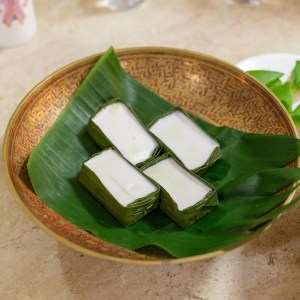 Kueh defies classification. Even kueh experts can’t land on a definition. Perhaps that’s because kueh has influences from around the world, notably from European colonisers.

