
15. Bosou and the Fight for Sabah Part 1 – Satay? Okay!
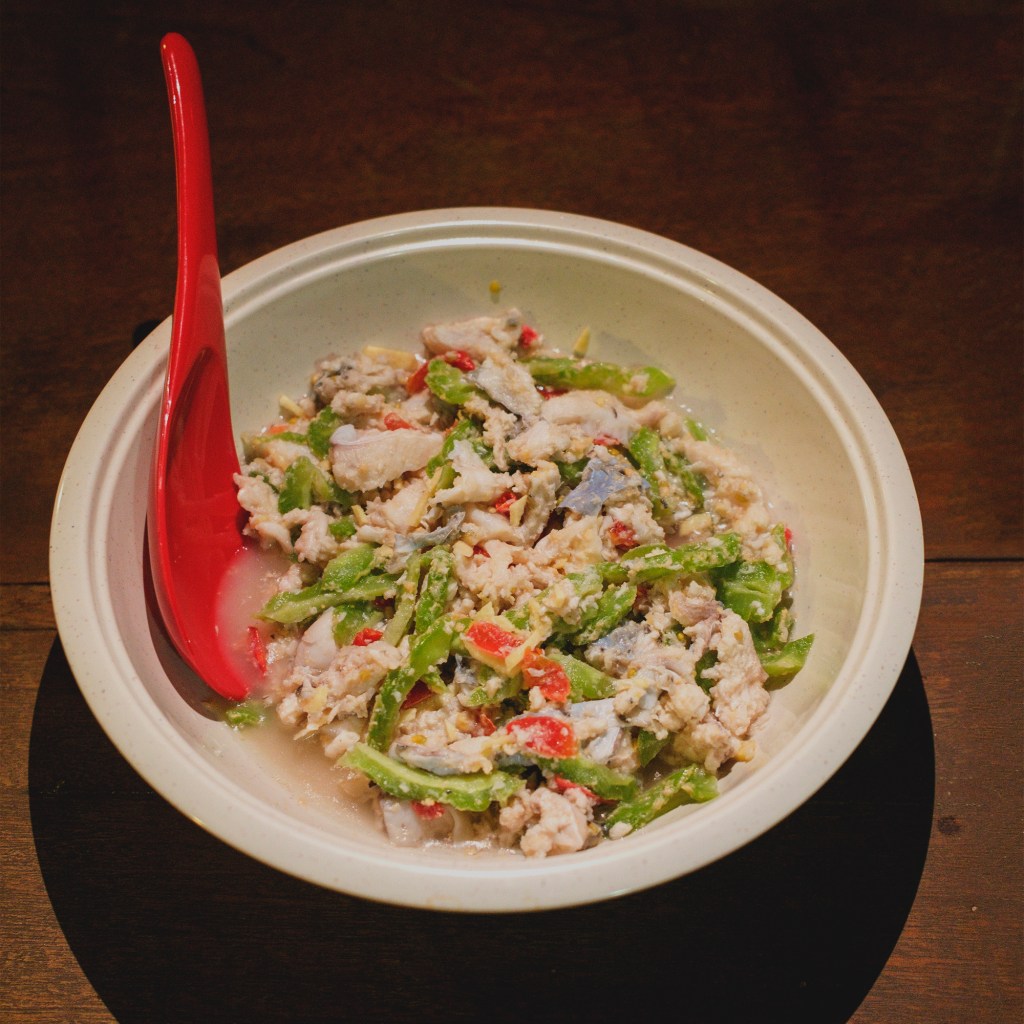
Almost anything can be turned into bosou. Sabah’s favourite fermented condiment can be found in vegetable, meat and fish forms. It’s a dish of survival, and a core part of indigenous identity.
Brunei’s grip over Northern Borneo weakened in the 19th Century. Before long, land rights were acquired by the British North Borneo Company, kicking off a period of corporate colonialism. To survive, indigenous communities could either play along or rebel.
Dr Richard Gunting is a Murut community leader and founder of Borneo Outback Tours. His home of Nabawan is one of Sabah’s poorest districts and both the environmental and Murut culture is at stake. Richard shares his efforts to use ecotourism to reverse his community’s fortunes.
Credits
Hosted by Dr Noby Leong and Philip Gibson
Produced by Dr Noby Leong and Philip Gibson
Sound Design by Jack Barr
Satay? Okay! is produced by Kopi Productions Limited and supported by the Golden Chopsticks Scholarship, by the Oxford Cultural Collective Trust
Resources and References
A History of Malaysia (2016), Barbara Watson Andaya, Leonard Y. Andaya
Borneo: The History of an Enigma (2026), Olivier Hein
Druce, Stephen C and Nani Suryani Haji Abu Bakar. 2023. Brunei and the World Since 1984. Routledge Handbook of Contemporary Brunei, pp. 100-117. eds. Ooi Keat Gin and Victor T. King. London: Routledge.
The Making of Sabah, 1865-1941: The Dynamics of Indigenous Society, University of Malaya Press, 2000
Titas Chakraborty, Matthias van Rossum, Slave Trade and Slavery in Asia—New Perspectives, Journal of Social History, Volume 54, Issue 1, Fall 2020, Pages 1–14, https://doi.org/10.1093/jsh/shaa004
James Warren, The Sulu Zone 1768–1898: The Dynamics of External Trade, Slavery, and Ethnicity in the Transformation of a Southeast Asian Maritime State (Singapore, 2007)
Barbara Andaya, To Live as Brothers: Southeast Sumatra in the Seventeenth and Eighteenth Centuries (Honolulu, 1993).
Transcipt
Please note that this transcript may contain errors and typos
Welcome to Satay. Okay. A podcast about the foods
that have shaped Malaysia. I’m Dr. Noby Leong,
scientist, food writer and broadcaster. And I’m
Philip Gibson, photographer and friend of the
earth. And in this series, we explore the history,
cultures and cuisines of Malaysia, from the ancient
lands of Southeast Asia, all the way through
to the creation of a modern day nation. In today’s
episode, we take a look at Bosou and the fight
for Sabah. So polish your armor and get ready
for satay. Okay. We have another massive episode
today that is all about Sabah, the Malaysian
state on Borneo. And it’s so big. How big is
it? Well, it’s so big that we’ve split this episode
into two parts. Two really interesting interviews
that give you two sides of the culinary coin
in Sabah. the very traditional side of the coin
and the very contemporary side of the coin. A
feast. We’re going to kick off part one with
a little recap. So Philip, in the last episode,
we looked at the colonial history of Sarawak
and we saw how James Brooke, a supposed private
British citizen, came to become the White Raja
of Sarawak, beginning a three generation long
dynasty in the region. Now today we’re going
to look at the other half of Malaysian Borneo,
which is the state of Sabah. And we’re going
to take a look at the very different colonial
history that took place there. Okay. But before
we get into that, let’s look at the food of the
day, that symbol that connects us with the past
and the people. And that is Bosou. You’re going
to have to remind me what Bosou is. I’m sure
I ate it. You definitely ate Bosou. In essence,
Bosou refers to a type of preserved food. Oh,
okay. Whether that’s meat, seafood, or vegetable,
that’s really popular across Sabah. Bosou is
a term often used by the Kadazan dusun and Murut
communities for food that is preserved. Okay.
But other indigenous groups might use different
terms. I’m not quite sure. And in Malay language,
I believe the term is juruk. Okay. So that’s
just a bit of etymology for you. Great, love
that. So basol is a fermented, preserved product.
So there’s salt, rice, typically. Okay. And also
often something called pangi, which in the Malay
Peninsula is better known as bua kuluak. So it’s
this kind of like nut. Oh, yeah. Is that the
one that, how would you describe it? It’s kind
of almost like a heart shape, but it’s kind of
hot. Is that the one that gets added into curries
and you can like scoop it out and it tastes a
bit chocolatey almost? Yeah, so in Nyonya, in
Chinese Peranakan, in Nyonya culture, that’s
one of their core dishes. Is this not something
as well that takes ages to prepare? Yeah, it’s
like full of cyanide or something. And so that
goes through its own fermentation process to
make that dish. For a dish like bosol, I think
that… They grate it up really, really finely
and add it to the fermentation vessel itself.
I love that in a country like Malaysia, where
you’ve got an abundance of probably quite safe
-to -eat foods, you’ve gone for, now let’s go
for the one with cyanide and let’s prepare it
in this really long and complicated way before
we can actually cook with it. Look, we know our
stuff. I guess you had a lot of time to experiment.
Exactly, yeah. Probably the most common type
of pozole that we encountered was the fish variety.
So depending on the size of fish, there are different
treatments. If you’ve got something small like
an anchovy, they might preserve that whole anchovy.
So you have this like jar of anchovies. But if
you’ve got a larger fish that… fillet it and
then cut that into chunks and then preserve those
chunks. Now I remember. See, I think when people
described it to me as like fermented fish, I
mean, I know you’ve just said anchovies there.
And I guess like, I think of like salted and
like maybe dried fish, but fermented to me is
like, this isn’t. a concept a culinary concept
to me that just shouldn’t exist what do you mean
because well like like fermented meat it’s like
the kind of pickled herring stuff that you get
from scandinavia that like you see videos of
people opening on like the internet and they’re
just like retching at the smell of it and stuff
like that um and that’s that’s the kind of i
mean that’s the delicacy and sorry to scandinavians
listening um but uh not to yuck your yum but
you know all these fermented products they have
a purpose of preserving things for the future
sure you know taking a glut of seafood for instance
or glut of meat and then ensuring that you’ve
got it for a long period of time so you don’t
waste anything and also to survive in lean times
sure I understand I mean like you know we have
food preservation methods over here as well but
I think that’s mostly like salting and smoking
and so fermented fish to me just sounded a bit
kind of like oh okay but you like your Worcester
sauce all right okay whatever I think we were
in Sabah for about a week and I think we had
boso every single day. And I think we mostly
had it, not like a condiment, but as a little
side dish that you’d add to each spoonful of
rice. Yeah, it’s like your salted eggs in Chinese
food. Yeah, a little bit like that. I thought
it had a very, the fish boso that we had, I found
to be very lemony, very tangy. And also the fish
had like a tougher texture, not in a bad way.
You know, like… If you have beef jerky and
the beef that’s fresh is really soft, but then
the jerky is kind of like chewier and tougher,
that similar transformation happens with the
fish boso. Yeah. And the meat’s like toughened
up a bit. Yeah. To me, it really encapsulated
the flavor of saba. I think of boso when I think
of the flavors of saba. I just think of like
ginger flowers. That’s my saba. like food association
for some reason. Torch ginger. Both of those
things are very distinctive of certainly Borneo.
And that’s what makes it different from, say,
Malay, Indian and Chinese Malaysian food that
most tourists encounter when they visit Malaysia
because they’re just sticking to the Malay Peninsula.
And to be honest, even in Kota Kinabalu, which
is the capital of Sabah, and also Kuching, which
is the capital of Sarawak, a lot of people, it’s
very easy just to eat. Malay, Indian, Chinese,
Malaysian food. Do you think? Yeah. You could
easily spend your entire time in Kota Kinabalu
and never eat anything, quote unquote, from traditional
cuisine. Because Kota Kinabalu is known for its
seafood. Right. You know, that’s one of the main
reasons why tourists visit. And so it’s easy
to get seafood prepared in a way that’s familiar
to you. Okay, in a kind of Chinese -y way or
whatever. And especially, I think, there’s not
as many traditional restaurants, I suppose. in
kota kinabalu because people still eat at home
cooking traditional ways right so the need for
a traditional restaurant hasn’t historically
been there sure yeah yeah but yeah i hadn’t really
had bosol or even heard of it before i went to
saba i didn’t grow up eating it at all there
are similar -ish dishes in the malay peninsula
like pekasam which again i haven’t had it before
i didn’t really grow up eating it but a similar
fermented fish dish and as i said basol is i
think key to so many indigenous communities across
Sabah. And like so many of the preserved products,
they represent survival. So whether there’s a
glut of meat, seafood, or other produce in abundant
times, saving them for leaner times is key to
survival. And that’s been the case for peoples
of Sabah, surviving environmental forces, but
also… colonial ones here we go again so when
last we left sabah we were talking about the
sultanate of brunei and we talked about the golden
age of brunei and how various parts of sabah
came under the control of brunei there were people
in sabah that would have traded with brunei they
would have procured jungle products and and that
sort of thing But from the late 16th century,
Brunei declines in power for many, many different
reasons. There’s competing trade empires, the
rise of Europe in the region, and lots of other
smaller competing sultanates. One of the main
ones being the Sultanate of Sulu. And if you
get out your map, Philip, you’ll see that Sulu…
are a set of neighboring islands that are between
Borneo and, you know, the main islands of the
Philippines. So on rolls on the 19th century,
a very, very weakened Brunei has a very loose
control over Sabah and Sabah ends up being carved
out into three main zones. You’ve got this coastal
belt that is de facto Brunei control. You’ve
got other parts that are under control of Sulu,
the Sultan of Sulu, and the rest are all independent
chiefs. And they’re probably going to be the
more inland, inaccessible areas. From the mid
-19th century… A declining Sultan of Brunei
wants more money and needs to try and grab some
kind of financial power. So they begin leasing
parts of Sabah for development. Some of these
regions are under Brunei’s control. Others are
not. So we again see this kind of pattern in
Southeast Asian history where other people’s
lands are being bought and sold without their
knowledge or consent. So across several decades,
these leases change hands between various American
and European parties who have purchased them
from Brunei. This is the first time we’re hearing
of America playing as a party in the region.
Yeah, they don’t really have a lot. It’s more
just like businessmen trying to convince other
businessmen that they’re… going to make a lot
of money if they invest in Saba. Okay, it’s like
railway prospecting. Something like that, yeah.
So they all want to develop Saba for their own
personal gain. They want to plant cash crops
or do some mining. Everyone just wants to make
a quick buck. So that’s why all these parties
are kind of interested at some point or another.
Buying for land, yeah. Yeah. Eventually, these
leases fall into the hands of Alfred Dent, who
managed to get Britain’s assistance to set up
a company. And in 1881, the British North Borneo
Company is established with a royal charter.
Okay. So it is a private company, I suppose,
but with assistance from the crown. Sounds familiar.
Yeah. So the British North Borneo Company has
three main principles. The Victorian ideal of
free enterprise is very important to them. Ah,
capitalism. And then further to that, they really
want to discover outlets for British capital
investment overseas. Oh, right, of course. But
at the same time, they’re so kind and gentle,
Philip, that they want to bring enlightenment
and progress to Indigenous peoples as a means
of increasing productivity, commerce and profit.
Productivity. Yeah, that’s a good word, isn’t
it? So they were bound by these principles and
they were also theoretically bound to protect
the property and personal rights of indigenous
people. And they were kind of forbidden from
interfering with religious and customary beliefs
and practice, but only to the extent that it
did not hinder a capitalistic enterprise. Of
course. And so if there was tension between an
indigenous custom or practice and some kind of
cash endeavor, they were always going to choose
the cash endeavor. Of course. Yeah. So the company
has these principles and they set out to explore
exploiting Sabah with agricultural and mining
type activities but they’re actually spread out
pretty thin and the three years leading up to
the formation of the company with the royal charter
there are just three Brits administering the
entire region of Sabah and that number did not
dramatically increase in the coming years so
they have a very very loose understanding of
the region, loose control, loose influence over
the region that try to enforce all these new
rules and develop this region. They must have
been quite persuasive. I don’t know if they were.
Yeah, maybe it was just a summer holiday. And
then when a British ship passed by, they kind
of like stood up smart and kind of, yeah, everything’s
under control. It does sound like that. Because
there was quite a lot to do for this, these handful
of employees. For one thing, they’re trying to
kind of develop these new industries. And in
the process, they had to try and consolidate
two very different systems of administration,
the Brunei system and the Sulu system. And remembering
all the chiefs of Saab. are kind of one or the
other right so you’re trying to convince these
local chiefs to go along with you and try to
teach them a different system that they might
not be used to and they might not like okay there’s
issues around population not getting enough workers
it’s not really enough local people to work in
whatever agricultural mining industry they’re
trying to develop so they end up encouraging
more migrants from china to come do you think
it was a problem with the fact that not so much
that there was a lack of people, there was perhaps
a lack of willingness of the native people on
the land. It could have been a bit of both. A
lot of these people were just like agrarian subsistence
farmers and kind of just were living their lives
and not really that bothered by what people coming
onto their land were, well, not bothered, but
like not interested in participating. Yeah, it
could have been a range of issues. I’m sure there
were some people that maybe wanted to work and
found value in that and other people maybe not.
really believing in this capitalistic enterprise
that was happening on their land sure and the
area that the north british company occupied
is like what is now saba is enormous huge i’m
not sure how big it is but um massive and also
you’ve got areas that are coastal river systems
you’ve got a lot of like mountainous area as
well that’s really difficult to traverse malaysia’s
highest peak yes mount kinabalu and then you
also had a lot of cultural issues that these
handful of company employees were trying to overcome.
But perhaps the most contentious issue and the
biggest challenge that the company faced in,
I guess, bringing Saba under their belt was the
issue around slavery. And one of the fundamental
missions of the North Borneo Company was to also
abolish slavery in the region. But their attempts
to do so became really, really controversial
because slavery in Borneo is radically different
to slavery in the West. And the British North
Borneo Company didn’t really understand that.
As in like native slavery? Well, let’s just unpack,
I guess, what slavery was in Southeast Asia at
the time. I will say there’s probably not a lot
of modern scholarship on slavery in that region.
A lot of academic research in slavery has focused
on the Atlantic slave trade. So it does feel
like we’re missing a lot of vital research that
really helps us understand what it was like in
Borneo at this time. But we do know that there
were quite significant differences between the
Atlantic slave trade and slavery in Southeast
Asia. Right, okay. So in general, in Southeast
Asia, there are two types of slaves. There are
chattel slaves, and these are enslaved people
that are a result of conflict. So you might have
raiders going through villages and forcibly capturing
and enslaving people, or you might have had wartime
slaves and things like that. and then you have
bond slaves and so bond slaves are people who
voluntarily enter into loan agreements they borrow
money and if they don’t pay it back they enter
into slavery with the person who gave them the
loan and often this was the only way that people
could get loans so is this a bit like the indentured
labor system about people kind of i’m going to
sign a contract to work exclusively for you for
five years I’m not sure if it’s exactly like
that, but I guess if you don’t pay back the loan,
maybe then you agree to work a certain amount
of time, quote unquote, for free. Okay. But I’m
not exactly sure on the specifics. Modern scholars,
please do some research for us. Help us. Alternatively,
bond slaves may become indebted for other reasons.
So they might have been convicted of a criminal
offense like stealing or adultery or gambling,
which is punishable by a fine. If they can’t
pay the fine, they become enslaved. Okay. So
there’s a big spectrum between those two extremes
and also a really big difference into how enslaved
people were treated, whether or not they were
a chattel slave or a bond slave. Okay. So compared
to Western society’s notion of slavery, enslaved
people in Borneo weren’t solely defined as property.
And so the social position of slaves, it was
a pretty wide spectrum, I suppose. There were
enslaved people on one end of the spectrum with
very few rights, treated very, very poorly. But
on the other end of the spectrum, some could
marry, own property, and they could hold really,
really high position jobs. It sounds as though
the slavery part of it was just kind of forgotten
about for those individuals. How could you still
owe a debt to somebody but still have a position
of power? Well, that’s what the North Borneo
Company didn’t really understand when they were
trying to abolish slavery in the region. They
didn’t understand all this different nuance.
So, yes. On the one hand, being enslaved, the
situation was terrible. You were torn away from
your home. You became a victim and you were treated
terribly. And you may never see your home or
your family or loved ones again. But for other
people, slavery was a way of upward social mobility.
And it offered them an ability to improve their
economic situation. This was especially the case
if you had a skill like reading and writing or
a craft that you could practice. Okay. so many
slaves ended up becoming bureaucrats they became
traders tribute collectors also artists musicians
and they could sometimes travel between different
islands to be traders these were all things that
a lot of free people could not aspire to in their
ordinary life yeah i’m struggling to see the
kind of raw end of the deal here well again it’s
a spectrum yeah right yeah yeah yeah and so some
people were so skilled some enslaved people were
so skilled that they also held some of the highest
positions in power and it wasn’t uncommon for
enslaved people to be involved in serious affairs
of the state for a local chief or a sultan it
kind of sounds like a work -sponsored visa at
this point Well, one of the reasons why enslaved
people were so useful in those situations is
that they could never displace a local chief.
Okay. Right? They’re still enslaved, so they
have no ability to wage some kind of coup to
take over a leadership position. So they were
trusted by top officials to handle matters of
the state. So I’m going to read you a quote from
one enslaved Malay man. And he was asked by a
European that was traveling through, why don’t
you escape? And the Malay man said, why should
I do so? There was something to regret everywhere.
Here I am well enough. My master treats me as
if I were one of his kindred. I am well paid
and could save money if I wished. In my own country,
I know I could not do better and perhaps should
not fare as well. Therefore, I prefer remaining
here. So with this quote, I think it’s important
to contextualize what society must have been
like for, quote unquote, free people in some
parts of Southeast Asia. So for instance, if
you were a poor person living in the Philippines
under Spanish rule, your life was miserable.
You had no way to improve your situation because
colonizers had destroyed your home, your livelihood
and your future. That’s what freedom was. Contrast
this to volunteering into a slavery system. into
a wealthy Sultanate’s household where you could
be clothed and fed and be able to use your skills.
And if slavery enabled you to move up the social
ladder, enabled you to buy property and have
land to be treated with respect, then that became
very attractive for some people. Yeah, okay.
I mean, I feel like there’s a lot of historical
comparisons here because, like, you would have
had people even over here, like, pledging allegiances
to kings and, like, you know, noble people. And
then, like, as a result of that, you were given
land, which is the hereditary peers that we still
have today in this country. Okay, it’s not a
totally alien concept. I think it’s just parceled
up slightly differently. Yeah, but you can see
how… it’s like it’s a nuanced discussion about
what slavery was and again i don’t want to say
that this was the you know this great thing there
were definitely a lot of victims of the slave
trade in in borneo and many people were forcibly
taken from their homes as a result of slave raiders
going around the different islands to round up
slaves But you can see how deeply ingrained the
slavery system is within the cultural fabric
of Borneo at that time, particularly in Brunei
and Sulu. It’s intertwined with the labor force,
with the administrative class and the bureaucrats,
the ruling classes. It’s ingrained in a way that
I think Europe didn’t understand and I think
they didn’t bother to understand it either. Sounds
about right. And so that’s why slavery became
such a huge… source of friction. Combine that
with issues around taxation, land rights, and
the indigenous groups of Sabah are getting pretty
fed up. Understandable. So from the late 19th
century, they begin launching rebellions. They
begin fighting back and fighting for what they
believe. And perhaps the most famous rebellion
is the Mat Salleh uprising. Oh yeah. So before we
get into what this Mat Salleh uprising is, in
general Malaysian discourse, Mat Salleh is a slang
term for a white person. Is it kind of pigeon
English, Mad Sailor? I think so. And I think
it’s derived from, you know, English people that
would arrive and, I don’t know, were they drunk?
And they kind of just like flailing about and
they looked mad. I don’t know. I think it was
just a big boy strip. It was a scout excursion
to most of these individuals, I think, that signed
up to these privateering. missions or join the
navy. Yeah. So normally if you hear Mat Salah,
that’s what it refers to. And there’s even a
restaurant in London called Mat Salleh. But in
the context of Sabahan history, Mat SSallehlah refers
to Muhammad Salleh. He was a local chief and a
fighter. His father was of Suluk origin and his
mother was Bajau. And as a chief, he felt bound
to protect his community and fight for their
rights. So using his position as a chief, he
gathered up various other indigenous communities
and launched a series of uprisings from 1895.
Some of these were successful, some were not.
Matsala was a source of frustration for the British
North Borneo Company. He was a very principled
man. He really believed in his rebellion. And
in a meeting with the managing director of the
North Borneo Company, he famously said, your
company cannot prevent us from dying for what
we think are our rights. So with that quote,
I think it shows that Matsala knew he was probably
disadvantaged in this situation. He didn’t have
the same military force as the North Borneo Company.
He knew that death was a high possibility, but
he was willing to risk that regardless. Sabah’s
William Wallace. Yeah, yeah, I guess so, yeah.
Mat Salleh was eventually killed in battle in 1890.
However, the rebellions continued into the early
20th century, but these proved largely unsuccessful
for the indigenous communities. And from then
on, the North Borneo Company thrived. So in terms
of what they eventually grew and traded, kind
of varied across the many years that they tried
to figure out how best to use the land. Early
attempts at cash crops included sugar, tapioca,
opium, soybean. orchids and even pineapples.
They also tried their hand at silk and coal mining
but none of these were particularly viable. They
tried coffee that was attempted and abandoned
and so too was Gambia. Tobacco looked pretty
good for one stage but that was also abandoned
and actually what was initially really profitable
for them was bird’s nest. Oh right for making
soup. Yeah for lots of different reasons probably
traded with with Chinese people. My family would
make it into like medicine. Oh, okay. In soup
form. Right, right. So bird’s nest, if you don’t
know, this is the saliva of swiftlets, and they
use the saliva to build a nest. I still don’t
understand the process of taking these bird’s
nests and turning them into soup, though. Yeah,
I don’t know. They pass it through muslin? Like,
yeah. I’m sure you could probably boil it up.
Yeah, but it’s going to be full of sticks and
fluff. Yeah, but they’re large sticks, so you
can easily just strain it. I don’t know. Swiftlets
are quite small birds. I thought they were just
using tiny wee bits of dried grass and, like,
I don’t know. Anyway. One day I think we should
do an episode on Bird’s Nest because it is very,
very significant and I should probably learn
more about this. I think you should. So you can
see that the North Borneo company is having quite
a lot of trouble in making Saba financially viable
for them. Isn’t it just so hard to build an empire,
Noby? It’s so difficult. I feel so sorry for
them. No, what a hardship. But they eventually
find the industry that they’ve been looking for.
and two products would eventually come to dominate
the first was timber particularly from the diptero
carpsiac family they logged this to oblivion
in the late 19th century spurred by demands for
rail sleepers for the railway expansion in China.
Wow, okay. The scale of deforestation of virgin
forests, so remember this is not, they haven’t
like planted these trees, they’ve cut down virgin
forests. Yeah, the ancient growth. Yeah, so by
1937, timber exports were estimated at 178 ,000
cubic meters. So this timber industry was second
only to rubber, and they began planting a lot
of rubber. Once they’d cleared the forest. Yeah.
So in many ways, The exploitation of that natural
environment continues today. And it’s a legacy
of that British North Borneo company. Nearly
half of Borneo in totals, overall rainforest
has disappeared. Three quarters of lowland jungle
have disappeared. And in the state of Sabah,
only 18 % of original forest remains. And this
is forest that’s like 130 million years old.
Yeah. So yeah, Asia’s Amazon, right? Yeah. The
rhino is now extinct in the wild in Borneo and,
of course, orangutans, which are perhaps the
most, you know, the flagship species that’s critically
endangered too. If you’re enjoying this episode,
follow us on social media at SatayOK. We’ve got
more stories and more food to share. You can
also find links to give us a donation or tip.
We’re an independent podcast and every ringgit,
dollar and pound goes directly to supporting
our work. So give us a follow and say hello at
SatayOK. So if you look at that recent colonial
history, there is that spirit of rebellion, I
suppose, that Sabahans are willing to fight for
their rights, willing to protect their culture.
And I think you can feel that community spirit
today. Sure. Just like in Sarawak, we talked
about this in the previous episode, Sarawakians
are very proud to be Sarawakian. And I think
people in Sabah are also fiercely proud to be
Sabahan. The local culture here is unique, so
different, again, to what you’re going to find
on the Malay Peninsula. But it’s one that I didn’t
know about. Do you think I did? I knew very little
about the indigenous communities across Sabah,
Kathmandu, Marut, being the two largest. We did
learn a lot in the previous episode, Ginger,
episode 12, where we talked to Pisan Jaujip
and Vicky Chong, who both shared perspectives
on local Sabahan cuisine and their local community.
But they lived in Kota Kinabalu and that’s the
capital city of Sabah. But Sabah being so large,
there’s so much more to it than just the city.
There is a whole jungle. There’s a whole rainforest
to explore and many traditional cultures still
thriving there. So we wanted to explore that
part of Sabah too. So we headed into the jungle.
We joined a tour by Borneo Outback Tours. It
was called the Orou Sapulut Tour. This was a three
-day expedition. that began with a four to five
hour drive from Koto Kinabalu into the jungle’s
interior. Yeah, we were in the back of a van
for quite a long time. Really, really long time.
Did we not transfer vehicles like at least three
times as well? Yes. The tires got chunkier. Yeah,
yeah. As the road surface became bouncier. We
arrived at a jetty eventually that we took a
boat down the river and kicked off our adventure.
Through the three days we were guided by our
moot hosts, one of them being Virgil. And him
and the others, they guide us through caves with
rivers and sides. We went along foraging tracks,
climbed up giant, well, I climbed up a really
giant rocky outcrop. You didn’t climb. Yeah,
the occupational health and safety red flags
were going off in my head. It was a rocky outcrop
called Batapungul. And it was very scary, but
it was beautiful. yeah i’m glad i did it i also
think i was starting to come down with covid
or something at the time as well so i was like
i just well a week prior we had climbed uh the
pinnacles in sarawak which was a very very difficult
hike and i think my body my body was still recovering
yeah this was a different beast though like what
you i don’t think you climbed you scaled i scaled
yeah it was it was a sheer cliff basically look
up pictures of It is beautiful, but it was scary
for someone who does not have an expeditious
bone in their body. Or, yeah, any experience
of rock climbing, yeah. But this tour was more
than just jungles and adventure. It was, I guess,
part of a movement to revitalize the local community.
So just for a bit of context, the district we
visited was called NabaWan. It’s one of the
poorest districts in all of Malaysia, not just
Sabah. there aren’t many jobs going around people
here have to travel a really long way to go to
school and the area is recovering from historic
and current logging so as a result you have this
brain drain occurring where young people are
leaving these rural communities to live and work
in the city but unlike other i guess countries
a lot of people that live in rural communities
actually own their own land they can hunt and
forage and live off their own land but with young
people leaving and no opportunities This presents
a bit of an existential challenge because people
might turn to leasing their land to logging companies,
thereby contributing to deforestation. There
are cultural practices that might not get passed
down, things like language, cuisine, and all
those hunting and foraging skills. So this brain
drain is actually a really big problem. And so
the community has turned to tourism to help reverse
this trend. So Borneo Outback Tours is an ecotourism
company set up by Dr. Richard Gunting. So he’s
an elder and leader in the local Marood community.
We spoke to him near his home in No. 1 to learn
about how the idea of ecotourism actually came
about. Because this company hasn’t been around
for that long. Okay. We talked about his life
growing up in rural Sabah and his desire to give
back to his community. But first, we asked him
how he approached the concept of ecotourism and
how he introduced this to his community. First,
tourism as a word is not familiar to a lot of
people in the village, the communities. And we
talk about ecotourism, which is actually closest
to them, you know, in a way. They didn’t even
understand that initially. But take this as an
opportunity to earn a bit of income, even though
it doesn’t quite sink in yet, that we do this
to preserve, sustain nature. People say ecotourism,
they always think about fauna and flora, but
you have to include the people and their values
and their way of life. to have it more holistic,
I think. We adopt the murud values as the core
of all this development and operation. It’s very
murudic, even though we have to pick what is
supportive to the vision of this business. But
lastly, it is murud values. These Maroot values
are drawn from Richard’s upbringing in the area,
and he recounted the challenges he faced growing
up in rural Sabah. I grew up in this village.
Education is not the centre. My school was a
primary school nearby. One teacher, six classes.
My cousin and myself were the first to be out
of this district to enrol in secondary school.
From here, I only have a small passage. That’s
scholarship. So that means in order for you to
earn scholarship, you have to do well enough,
right? And that was in my mind. My parents did
not want me to go to school. They held me back
because I’m a good hunter, I’m a good fisher.
And I farm with them. But I escaped from that.
They won’t engage me. But I get out from this
village. But Richard didn’t leave to a nearby
town in Sabah. He left to the United States.
I was given a federal scholarship to do my bachelor
and master’s, to come back and teach. I was on
the young lecturer’s team. But I did better than
that. Instead of just coming with my bachelor
and masters, I came back with a PhD in agricultural
economics. So if I could achieve such a thing
from the remotest part of Sabah, doing this thing,
using your experience and skills that I acquired,
you are more armed now. than the time when I
was trying to get out from here. Borneo Outback
has so far introduced tourists to the natural
wonders of Sabah’s interior, conserving the environment
in the process. However, Richard explained his
plans to go even further by introducing agricultural
tourism to the region. The beginnings of this
plan can be seen in his model farm called Munor
Alai. I use this Munor Alai farm as a case study.
and how we can use concepts like regenerative
farming. Because regenerative is very suggestive,
right? We are going to regenerate again. So multiple
cropping versus monocropping, that’s number one.
And we want to optimize the land use, meaning
we don’t leave anything to stay lazy and to let
just the grass grow for nothing. So whatever
we cannot plant with crops, if we can prepare
a fish pot, we do a fish pot. And then we will
integrate. This model farm is an experiment in
regeneration. Richard is running experiments
to grow agricultural crops not outside of the
jungle, but within the jungle. He’s taking degraded
areas with different amounts of forest cover
to find attractive crops that grow best in these
conditions. There are different plots. I kept
a plot up to 60 % forest cover, and then the
other extreme was 30 % forest cover. And then
I have to think about what could be the best
crop for agritourism. Of course, it’s none other
than cocoa. Coincidentally, this is my favorite.
crops when I was studying agriculture. And that
grow under shade. Coco is just the first crop,
and there are many other crops he’s planted too.
This is agarwood tree. It produce resin, which
is very valuable. The literature is saying that
a tree can generate about 3 ,500 ringgit. A tree.
If successfully inoculated and you get the first
grade resin, you can earn much more than that.
So, third crop is the blackthorn durian. The
most expensive durian today. One tree of blackthorn
in today’s price, if you look after and you can
produce… 70 to 80 fruit because they may have
200 fruit you call them away keep 80 that itself
can generate close to five thousand ringgit just
one tree and in one hectare if i plant 20 trees
because i integrate into existing crop you multiply
that average with 20 that’s a lot of money just
one crop so how can not the same piece of land
with more activities not generate more than 10k
of net profit per month for household but crops
are just the start richard is also experimenting
at integrating livestock in his model farm too
so then three in two more coming that i want
to add the same piece of land that would be free
range chicken yeah so i just fence it out and
i have researched what kind of fencing they are
very nice fencing and then we just release the
chicken there with a small coop somewhere where
they will come back to and stay at night daylight
they will come out and they will be all over
so the poop get into the ground they will Search
for their food all the leaves and all these things
are like loosen up The chicken will eat some
of those Bad insects that you know like caterpillars
and everything and then The fourth one will be
beekeeping So I do a beekeeping. We’ll do it
like at the age of its blood these are the bees
that don’t stink you know and they will help
in the cross pollination so you you have this
biological control and i cannot use any chemicals
um inorganic pesticide i’ll kill the chicken
you know i kill the insect they eat the insect
that is killed by inorganic then the chicken
will die and then finally outside of this at
the edge of the farm I do odorless pig rearing.
The pig you call dropping I’ll use that for organic
fertilizer making and on the side I will also
do vermiculture rearing of worm. And excrete
of that will be humus, soil and everything, which
you can apply again in the farm. And finally,
I want to do feedlotting for dairy cows. The
milk I’ll use for the artisan ice cream processing,
the sheet. or dung, sorry, he goes there. The
dung I will also use for fertilizer making and
organic fertilizer. So we are now producing organic
fertilizer in farm. Richard is still not done
though and he’s got further plans for the least
arable part of his land. So and then all this
what we call the unplantable area, rocky. You
know, this is very rocky. We had fishpond dug
out. And then now, that’s why I try out the palyan.
I saw that you enjoyed it yesterday. This is
the high -value fish. The people around here,
the village people, were shaking their head because
normally… they catch this in the stream for
them to eat immediately but I asked them to catch
and I bought from there to rear here for trial
and they didn’t expect that this thing can succeed.
I’m successful so now I can expand it. So if
you’ve kept up we have cocoa, agarwood, durian,
free -range chickens, odourless pigs, dairy cows,
bees, worms and fish ponds in one holistic farm
nestled within the interior Sabahan jungle. It’s
an approach that Richard hopes will help regenerate
the land, healing it from historic degrading
practices like slash and burn and logging. We
are replacing the slash and burn or shifting
cultivation that had denuded the fertility of
the, you know, that had compromised the fertility
of the soil. So we want to do what we call sustainable
farming. And there are various concepts, you
know. What we adopt here, what we call the regenerative
farming. Regenerative in the sense that I know
the soil is very poor, so we want to improve
the soil again. Although in the long run the
soil becomes more fertile, maybe going back to
what it was before the remove the primary forest.
So now if you have an equation, the objective
is how are you going to use the land optimally
because managing the land capacity to produce
and to further improve the land condition in
the long run. This model farm is more than just
environmental regeneration. Richard also hopes
that these farms could help to alleviate poverty
in the region by providing reliable and robust
income. And I can tell you I have done some work
for a model farm. So if I have a monocrop just
cocoa, the best I can earn is my net profit maybe
just a thousand or so per hectare or two. But
with this integrated farming, under this regenerative
farming concept, I am expecting 10 ,000 to 13
,000 net profit, which is more than four times
the PLI, or poverty line income per household
per month, which is now… These calculations
are vital and matter immensely in a district
like Nabawan. If we replicate this, can you
imagine? And I think this is the way forward
to eradicate poverty in rural areas like this,
where households have very small land size. You
have to think of a method of farming, how you
can optimize the use of the small area. This
model farm is tangible evidence of Dr Richard
Gunting’s plan to revitalise his community. But
convincing others to adopt his style of land
management remains a challenge. When communities
are poor, they rely on established methods of
farming to feed their family. Switching to a
different method is risky. The problem in this
world is so complex that you cannot isolate.
You cannot focus on one and hold the rest constant,
like most economists as we are trained to simplify
things. So, you know, it’s so complex that you
have to address all these parameters, all these
factors. And what is better than starting with
the community? And what I do is actually to empower
members of the communities. Only with empowerment,
meaning mindset change and so many things, skill
building, capacity building, blah blah blah,
only then they are prepared to take up change.
so from shifting or traditional farming to do
a modern farming under regenerative farming you
think they want to shift because that’s a big
risk they’re thinking about it so they go back
to their shifting but you have to ensure them
you know that’s why i have a model show them
and we train them To ensure that this program
is a success, Richard works closely with the
younger generation. I pick up youth who has land
or parents’ land. When they finish, we follow
up with them. They develop their own respective
farm, you know, all the way into project papers
for the bank, like Agribank, so that they can
have the capital. to start because they don’t
have capital. One of the problems. If we do this
one one day, I can foresee that we can reverse
the rural -open migration into more of open rural
migration. And young people, as they grow, when
they see this is an alternative for income generating
for them, and it’s good. Nobody want to walk
to KK and you’ll be lonely in KK. I don’t have
any doubts in my mind that this is not going
to succeed. Okay? You understand that? I don’t
have any doubts. I believe that I can do this.
And this is the game changer for my community
and the district. This is what I want to spend
the rest of my active life. And that was Dr.
Richard Gunting from Borneo Outback Tours. Super
fascinating, really inspiring for me to listen
to him. Yeah. I remember sitting opposite the
table for him in the middle of the jungle thinking
to myself, wow, such conviction from this person
to try and, I guess, revitalize his whole community.
Yeah, and so enterprising in his senior years
as well. I think just… Obviously a very prolific
man in his field and the story of coming from
probably quite a simple upbringing. Well, in
the remotest and one of the poorest districts
in Sabah too. Yeah, to be told that my parents
didn’t want me to leave because I was very good
at hunting and fishing, but then it goes off
to the United States, was it, to go and get a
PhD? Yeah, yeah. And I think if you look at the
challenge that his community faces, huge environmental
concerns, economic concerns, a lack of access
to education, cultural preservation becoming
an issue. There doesn’t ever seem to be a solution
that will address everything. Yeah, there’s always
a source of anxiety coming from some direction.
But that’s what was so interesting about listening
to Richard talk about his agriculture and his
nature -based tourism and how that can actually
address lots of those different issues if you
approach that tourism with the right perspective.
Definitely. No, it was very inspirational and
they put on such a comprehensive package for
guests to come and experience that region. Yeah,
and I mean, I loved our visit there, but I can’t
wait to also go back in a few years’ time to
see how that whole area has progressed. Because
we saw the model farm, so we saw the cocoa being
grown amongst the canopy of the jungle as well
as durian, but he hadn’t had the livestock yet.
okay so we’d love to see that we saw the fish
ponds and we had some beautiful fish that you
caught that i no i didn’t oh we did catch fish
oh my god yeah you also planted some trees in
the forest as well yeah i planted some trees
in the forest so um i can’t remember i think
i planted cocoa maybe um but that that was on
a different estate to the one where the longhouse
was that we stayed in yeah but yeah the estate
that where we took the interview which was kind
of the main kind of compound yeah uh it was really
set in a beautiful valley uh it was a really
like outstanding place and it’s a really nice
just kind of estate to kind of walk around yeah
because it has got loads of kind of artificial
lakes in it and just um it kind of sweeps down
into this big long valley and it’s just by the
river as well yeah it’s really beautiful um and
the weather changes on the hour from beautiful
glorious sunshine to monsoonal rainfall back
to beautiful sunshine again yeah yeah If you’re
planning a trip to Borneo and you’re planning
a trip to Saba, I would definitely encourage
going on something to explore the jungle. I remember
being a little bit nervous about going into the
jungle. I think I had like… unnecessarily made
myself stressed about it because i thought it
was just going to be so hot and oppressively
humid and just full of insects well you’re up
in the mountains aren’t you i didn’t know that
yeah i mean it’s still warm but like i don’t
think it’s oppressively hot like walking around
kuala lumpur city center is i think it’s far
more comfortable to be in the um tropical jungle
than it is to be in a big city in the tropics
because you don’t have you know heat reflecting
from all these glass and concrete buildings and
you’re always in shade. Yeah, you’re under the
tree canopies. I think what surprises me as well
is that I don’t associate dairy farming with
being that close to the equator. And so Sabah’s
actually got quite a big dairy industry. And
I think Sabah milk and dairy -based products
are actually a bit of a thing in Kota Kinabalu
when you’re walking around the markets. You’re
like, cheese here. But no, it is because so much
of it… um is up in high altitude and uh yeah
there’s a thriving dairy industry probably a
colonial legacy but there you go yeah i think
dairy farming has quite an interesting history
in malaysia and since the 1950s they’ve attempted
to start dairy farming in different parts of
malaysia to different degrees of success obviously
cows don’t do well those dairy cows don’t do
well in the hot humid environment but also i’ve
read how grass doesn’t thrive in the jungle because
it’s constantly getting overgrown by the jungle.
And so to find that grazing land, it becomes
difficult. So dairy farming on a large scale
in Malaysia becomes very, very challenging. Because
it then leads to deforestation, which is obviously
not what you’d rather prioritise. Yeah, yeah.
But then other aspects of the tour that I was
worried about with insects, they ended up being
my favorite part, I think. The insects of Malaysia,
so beautiful, so interesting. You’re never going
to see this anywhere else. And insects in the
jungle makes sense. I know this sounds weird,
but I remember going to zoos when I was little
and I would see the stick insects. Right. And
it’d be like, oh, this is stupid. This is a stick
insect. This is like… I can obviously see it’s
not camouflage because it’s in this artificial
cage. Right. But then when you go to the jungle,
it’s natural environment. And there are twigs
everywhere. And they look exactly like the stick
insects. It was like, oh my gosh. Yeah. It’s
like all the melepedes and like all the other
insects and like dragonflies and what have you
that kind of buzz around. Like it’s, yeah, some
of them are beautiful. Like the colors, like
they’re kind of perilous and like skinned. what
amazes me is how like lurid they are like you
talk about how camouflage stick insects are but
like these millipedes are about six inches long
and they’ve got bright orange legs and you’re
like you’re quite obvious and there were some
of the moths or butterflies that were this iridescent
blue color and then when the sunlight hit the
wings through the canopy they kind of like briefly
glowed and then almost disappeared again when
the sunlight wasn’t on it. It was incredible.
No, the nature that you will find in Malaysia
is quite incredible. And we should also mention
the food that we ate on this tour was sensational.
We were spoiled. Yeah. It was also just stuff
that I would never have tried before had I not
gone to the jungle. So we had things like smoked
deer soup. So they hunted the deer themselves
and in order to preserve the deer, they would
smoke it so that, you know, because they don’t
have refrigerators. And then they made a soup
out of it, which is delicious. They had these
native ferns, which we got to forage ourselves.
And that was just simple stir -fried. Pelion,
as we mentioned, the most expensive fish in Malaysia,
was just there for us. And so this fish, it eats
a lot of fruit. Okay. So it lives in the river,
and any fruit that drops into the river, it would
eat it. So its flesh is known for being sweet
and succulent. Yeah, huge export value to China
and places like that. And also its scales are
edible. Okay. So they steamed it first and you
could eat the scales like wafer chips. Banana
flowers, braising coconut milk, lots of different
expressions of tapioca, new types of eggplant
that I’d never had before and other sour ingredients.
So, I mean, if you are a foodie. Let yourself
be overwhelmed by how much is available to offer.
Yeah. yeah don’t just go to the hawker centers
go into the jungles and try and find some of
these more native uh native dishes uh -huh yeah
so big thank you to the saba tourism board for
organizing a trip and for introducing us to richard
gunting now that’s the end of part one of this
special saba episode but we’ve got lots more
coming for you in part two we’re going to look
at the other side of the culinary coin in saba
we’re going from the very traditional to the
very contemporary so we’ll see you there for
part two of satay okay

