
16. Bosou and the Fight for Sabah Part 2 – Satay? Okay!
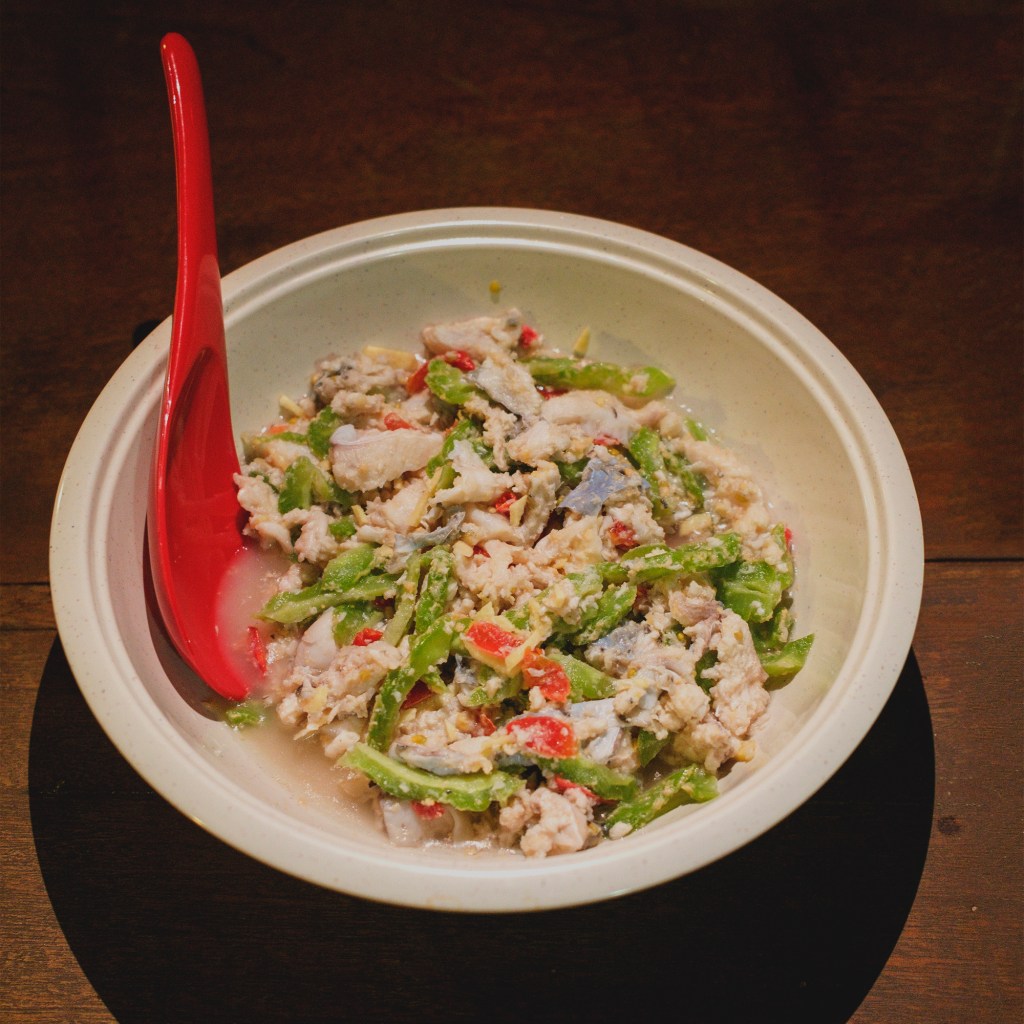
From traditional to contemporary, we look at the other side of Sabah culture.
Continuing on from Part 1, we learn about efforts to modernise traditional indigenous cuisine through fine dining. Raphael Jay Peter Lee is head chef of OITOM, a restaurant in Kota Kinabalu that aims to redefine what Sabahan cuisine is. But it turns out that instilling traditional cultural values into your restaurant requires more than just a menu change.
Credits
Hosted by Dr Noby Leong and Philip Gibson
Produced by Dr Noby Leong and Philip Gibson
Sound Design by Jack Barr
Satay? Okay! is produced by Kopi Productions Limited and supported by the Golden Chopsticks Scholarship, by the Oxford Cultural Collective Trust
Resources and References
A History of Malaysia (2016), Barbara Watson Andaya, Leonard Y. Andaya
Borneo: The History of an Enigma (2026), Olivier Hein
Druce, Stephen C and Nani Suryani Haji Abu Bakar. 2023. Brunei and the World Since 1984. Routledge Handbook of Contemporary Brunei, pp. 100-117. eds. Ooi Keat Gin and Victor T. King. London: Routledge.
The Making of Sabah, 1865-1941: The Dynamics of Indigenous Society, University of Malaya Press, 2000
Titas Chakraborty, Matthias van Rossum, Slave Trade and Slavery in Asia—New Perspectives, Journal of Social History, Volume 54, Issue 1, Fall 2020, Pages 1–14, https://doi.org/10.1093/jsh/shaa004
James Warren, The Sulu Zone 1768–1898: The Dynamics of External Trade, Slavery, and Ethnicity in the Transformation of a Southeast Asian Maritime State (Singapore, 2007)
Barbara Andaya, To Live as Brothers: Southeast Sumatra in the Seventeenth and Eighteenth Centuries (Honolulu, 1993).
Transcipt
Please note that this transcript may contain errors and typos
Welcome to Sate. Okay. A podcast about the foods
that have shaped Malaysia. I’m Dr. Noby Leong.
And I’m Philip Gibson. And this is part two of
our special episode on Bosol and Sabah. So in
part one, we went to the interior of Sabah. We
went into the jungle where we met Dr. Richard
Gunting, who shared his story on revitalizing
his local community through ecotourism and agriculture.
In part two, we’re picking up right where we
left off, but we’re looking at the other side
of the coin now, the contemporary part. Because
Philip, as we all know, culture is not stagnant,
it’s always changing. And I think I’m really,
I’m guilty of not always exploring the contemporary.
part of Malaysian culture. Well, you say that
but then like, you know, it became this kind
of running joke. It’s like, do we want coffee
or do we want third wave coffee? Yeah. And so
therefore, like, you know, the coffee scene in
Malaysia is obviously exceptional. They grow
their own beans. True, true. And it’s that way
we’re kind of like, no, I really don’t want a
coffee seat. I actually want a flat white. And
you would go to these places with, you know,
stainless steel furniture and polished concrete
and, like, very trendy music and, like… you
know, interesting light fixtures, what have you.
Do you know what I mean? You can take the boy
out of Australia. Yeah, come on, South Yarra.
You know, but there’s always such large gaps
between my visits to Malaysia that when I do
return, so much has changed that I yearn for
the stuff that’s been lost or I really want to
explore, you know, those memories I had in childhood
and just like basically relive my childhood.
So does that mean that you’re expecting Malaysia
to say the same for your benefit? I’m just…
I just want the nostalgia of it. And I think
anyone that has a second home yearns for this
slice of time that it existed where you just
have some happy memories. I will say, though,
that some things I’m nostalgic about are a bit
weird. Like, you know, I was born in Malacca.
I go there quite often. And I see lots of changes.
But one thing that hasn’t changed my entire life
is the hard rock cafe. Have you ever been? No.
Right. But there’s something about seeing the
hard rock cafe that equally calms me. And also
I feel slightly irritated by. Yeah. It’s quite
a prominent spot. Yeah. Right on the river. Next
to the bridge, next to the old fort. Yeah. Yeah.
But that’s not really what I mean by contemporary
culture. And this time when we visited Sabah,
I really wanted to explore how the cuisine has
evolved, how the culture has evolved. So we went
to the Hard Rock Cafe in Kota Kinabalu. No, we
went to Kota Kinabalu, the capital city of Sabah.
And there’s a fantastic restaurant there with
a very contemporary expression of Sabahan cuisine
and culture. It’s a fine dining restaurant called
Oitom and we went there on our very first night
in KK. Yes. Oh, let’s let’s set the scene. So
we were walking through what was a bit of a kind
of like mixed use development. Like, you know,
there was this kind of strip mall retail kind
of thing on the first two floors. And I think
it was just apartments above it or something.
And it just kind of looked like any other mall
that we’d been in in Malaysia at this point.
And then, you know, there’s a nice frontage and
you see the word Oitom and then you kind of
go through this door and then you are all of
a sudden not where you expect to be. Totally
transformed from this exterior concrete to then
this very calming. um mood lit restaurant where
like everything is open so you had the dining
on the left where all all the guests were seated
and then on the right it was like the kitchen
for the open plan yeah yeah yeah it was it was
very very contemporary and such uh different
weirdly not different though because when you’re
in a hawker center and stuff like that the kitchens
are right there in front of you as well it was
just dressed up yeah to me in a very kind of
like western immaculate modernist not modernist
um modern setting with beautiful kind of you
know scandinavian furniture i think and um just
very very chic yeah with air conditioning well
no but they have about 100 fans so you know the
hair is moving so oito prides itself on its traditional
sabahan foundations they use local seasonal ingredients
but with their own twist We spoke to head chef
Raphael Jay Peter Lee about the unexpected beginnings
of the restaurant and showcasing Sabahan cuisine
to the world. My name is Raphael Jay Peter Lee.
First name is Raphael, definitely. Jay is middle
name. And Peter Lee is my dad’s name. So most
of the people call me Ralph instead. I was born
in Keningau. So it’s like a south part of, is
it south part of Sabah? So mostly game, mostly
forest vegetables, game meat. However, I grew
up in Sandakan, which is the east side, east
coast. Raf’s formative years in Sandakan, with
his heavy influence of Cantonese cuisine, came
to influence his early food preferences. I’m
half Chinese and half Kadazan. However, most
of the time of me growing up is… having that
Cantonese cuisine. I didn’t grow up eating or
enjoying traditional cuisine. Hinawa, Bambangan,
this sort of ingredient. So at a young age, my
mother asked me to eat. I was having trouble,
problem. It’s too sour. It’s too funky. Yeah,
it’s not something for me. At some point of time,
I couldn’t really handle it. It’s these formative
experiences that perhaps influenced the earliest
menus at OITOM. He opened OITOM in 2019. The
name means black in the Kadazan language. Before
focusing on contemporary Sabahan food, OITOM
served up a menu that was quite different. Initially,
I thought, oh, okay, Italian food. And then I
needed to find an identity as well to myself.
So I started to purchase book. And I remember
my friend chefs, wah, no ma, no ma, no ma. and
i remember noma okay maybe i have a look i started
to buy the book and started to read the journal
etc etc i was like oh so i started to inspire
and then started to feel by the words in the
book though i never work in fine dining i never
inspired by other mental chefs that teaches me
anything about philosophy and etc So I think
100 % it came from the book. Though he was inspired,
Raf still needed to find his own direction, a
journey that was not straightforward. It was
a struggle because, okay, I wanted to do something
which is meaningful because doing pasta in Italian
is something similar to what restaurants are
doing everywhere, right? So I needed to do something
meaningful. And then at that point of time, okay,
maybe I use local ingredients. And so Raf set
about exploring the ingredients that he disliked
as a child. He blended modern European techniques
with local Sabahat ingredients. But the response
from these early attempts wasn’t what Raf was
expecting. We have a Japanese writer who came
in. He writes for Noma. He goes around, travels,
food journalists. And after he died, and then
he went back he sent the piece after he published
i i remember it very very clearly to say that
oitom was all about heritage uh quote by me however
the the flavor profile are more to hong kong
and beijing cuisine but then when i built this
restaurant is for the the heritage and it’s also
for the people around it work on it right so
i was i was i went back i was heartbroken because
there was it after so long there was 2023 i was
heartbroken because from 2019 and 2023 identity
is still the same there’s there’s nothing significant
so then i started to okay all right i need to
wake up Let’s work on something which is inspired
by the heritage. Learning about one’s own heritage
sounds easy enough, but with few books and resources
to consult, Raf needed to lean on his community.
We would ask a very, very, very, I would say
very professional opinion. There’s our friend
called Pison. Pison, he’s a guy, he has an Instagram
page. He’s an advocate for heritage cuisine.
He’s like the 100 % go -to guy if you’re looking
for heritage cuisine. So I would ask him for
reference, how it needs to be, what’s the proper
recipe. So then he would explain quite a few,
etc. So we would do one time traditional dishes
here based on what he wrote to us. And then from
there, we will take only the best tasting of
the dish. Like for example, there’s a dish called
Pinasakan, right? The Pinasakan fish. Mainly
using river fish, oily fish, mackerel. So Pinasakan
is a type of cooking where you braise the fish
with sour agent. Yeah, anything sour. The idea
is to preserve the fish so that they can have
it tomorrow or the next day. yeah so then we
could not serve it in in 100 sourness right so
what we would always do is we want to serve the
fish as tasty as possible uh and then in incorporate
the sourness there’s one fruit called takob akob
the the berry you can and then the asam keping
etc and then you use that perhaps cook in a stock,
just to have that nuance to the broth, and then
you would serve it together with the fish. So
it is modernised, but we take inspiration from
that cuisine, from that dishes. While Raf was
able to develop a new menu, there were bigger
changes that needed to be addressed in order
to fully embrace traditional culture. I was working
and growing. in a you know 80s 90s chef’s environment
swearing and yeah i was growing in that environment
when i was working in singapore and melbourne
so that has grew in me and then the way how i
teach people it’s it’s that in that sense so
so that was another issue because in in general
sabah people don’t enjoy that You have to be
very gentle and then you have to be very patient.
So we have a very high turnover. One, two months,
they left. One, two months, they left. So we
were struggling in the sense that it’s hard for
us to improve the menu when we are struggling
keeping stuff. So we are at that breaking point.
Me and my team had a lot of feedback. we sit
down together and then they told me oh you cannot
do like this you cannot swear most of the time
which back then to me i feel like it’s a normal
thing because back when i was working in singapore
it’s such a normal thing yeah and then learn
about learn learn about myself that i need to
improve in in my in improve myself as well how
am i able to be a better mentor to to them Raf
has been on a big journey to develop and transform
OITOM, but he admits that he’s still in the early
days of his journey. I would say I’m still infant
in this category. I’m still infant because I
only started this journey last year to really
read about it. And most of the people have it.
since they were born because that’s where they
grew up like for example Pi Son right yeah so
I’m nothing compared to him so that’s why it’s
very important for me to look for reference and
what how it should be and etc so that I’m more
really I’m able to relate my work yeah and not
being swayed too much into the modernity of the
cuisine As Raf grows, he hopes his fine dining
approach will help to shine a light on Sava’s
unique culinary heritage. I think number one
is that when you bring value onto the table,
people will start to focus. So even if the total
amount of bill, the menu that you’re going to
pay for it, you would take it very seriously.
because it’s not something which is affordable
so you put a lot of emphasis on that experience
that’s why some some people what it’s like like
you go to salt bay and you pay two thousand dollar
for a steak when you it’s just a steak right
so there’s an emphasis in that experience because
there’s a weight into the cost paying it so i
believe that we are pushing in this direction
it makes it more worth it for people to fully
enjoy it, I would say. Because if we do it in
a more casual way, people don’t take it seriously.
And that was Raphael Jay Peter Lee, owner and
head chef of OITOM. Philip, I love how honest
he was about his journey in this, of starting
off… Hating kind of traditional cuisine when
he was a kid then opening Oitom with Italian
cuisine and then going on this really big journey
to learn about himself and he’s really open with
The fact that he used to, you know, yell at his
staff because that’s how he learned. But then
he had to kind of, you know, disentangle that
whole idea of what fine dining was and bring
traditional cuisine in its entirety to Oitom.
Yeah, no, I’d forgotten that he referenced, you
know, like Noma and Salt Bae and those kinds
of like ultra high -end restaurants. And I think
he’s done an incredible job of replicating those
sorts of spaces, not that you and I frequent
them, but from what you see on social media,
etc. When you walk into Oitom, it is. is a very,
very high -end looking restaurant. So massive
credit there. I think his journey, as you say,
has been quite an incredible one. A lot of introspection
and self -reflection. I think probably forced
upon him by, as he says, the turnover of staff
or all of these kind of pressures I think that
he’s faced. But then the sort of, like yourself
perhaps, the kind of existentialism of kind of
like… How do I, who am I? How do I differentiate
myself and things like that? Because I think
the idea of opening like a spaghetti kitchen
and a coat of kinder blue to me is just kind
of like, what are you doing? Like, let somebody
else do that. Like, you’ve got all of this training.
You’ve obviously got a really good. comprehension
of your mixed race background whether it’s coming
from the Cantonese influence or the Kadazhan
influence and I think he’s turned that around
and turned it into a really great experience
as a consumer in the restaurant to be introduced
to all of these native ingredients for the first
time because I definitely think it’s the sort
of place the international folk will go to as
a gateway into it because to them it feels safe
because they’re in a setting where they immediately
feel comfortable because of the atmosphere and
the environment and then somebody is gently walking
them through now you’re about to try this and
this is where this comes from and but i mean
it’s also more much more accessible because it’s
in Kota Kinabalu below right a city that’s obviously
not in the jungle but it’s a city that also doesn’t
have that many uh traditional restaurants either
so oiton does fill that niche as well definitely
but it was great to see how open he was to feedback
over the years and open to growth and so i’m
quite excited to see how the restaurant changes,
how people’s perception of Sabahan cuisine changes
over time as well. Yeah, and more than happy
to reach out to people like Pisan, who of course
we spoke to as well and things like that. He
was from episode 12, all about ginger, Pison
Jaujip. So go back to listen to that episode
if you haven’t already. I think what I really
find having spoken to a number of people across
Sarawak and Sabah now is that their enthusiasm
for the… the the native foods and what have
you is like um they’re emotional about it it’s
visceral like it like it really does kind of
hit you you’re kind of like oh this passion is
so infectious and like um really gets you excited
even as somebody who’s got for me anyway yeah
absolutely bugger all to do with yeah part of
the world i think that’s where this interesting
contrast sits you know um raf talked about his
inspiration being noma And Noma, for those that
don’t know, a restaurant in Denmark specializing
in very hyper -local, hyper -regional cuisine,
talking about foraging, fermentation, all those
things. Really interesting that Raf credits that
with his inspiration. When foraging, fermentation,
that is Sabahan cuisine. Every single country
has a version of that. Yeah. It’s interesting
that he had to kind of read a book about a restaurant
in Denmark. to get that same experience. It’s
all very interesting but yeah like chefing and
restaurant tours and what have you it’s a really
interesting thing and you can see why again it’s
his ambition much like Richard’s ambition of
kind of like I want to bring that here like we
can do that here there’s nothing stopping us
so that ambition and drive and enthusiasm was
absolutely inspirational. And we have to say
thank you again to the Sabah Tourism Board for
sharing a meal with us at Oitom, introducing
us to Raph Jay Peter Lee. If you want to know more
about Borneo food and culture in general, and
you can’t visit Sabah anytime soon, there is
this great book called Tamu by Brian Koh. I think
that might be the most accessible book that you
can get in UK, US, Australia. I think you can
buy it online. It’s a really in -depth cookbook
that features a variety of Borneo dishes, not
just Sabah. And the recipes haven’t been adapted
for a Western kitchen. So you’re still reading
about the local ingredients and the methods,
and it’s all very local. Yeah, unfortunately,
you’re just going to have to imagine what a lot
of these ingredients taste like that’s kind of
the fun of it isn’t it it’s like almost like
reading a fantasy book about food i think your
inclinations are different to mine i think i
would probably just rather taste it but sure
if you’re enjoying this episode follow us on
social media at satay okay we’ve got more stories
and more food to share you can also find links
to give us a donation or tip We’re an independent
podcast and every ringgit, dollar and pound goes
directly to supporting our work. So give us a
follow and say hello at SatayOK. Now, if we talk
about the food of the day that we introduced
at the beginning of part one, that is bossol.
And Bosou is a really intrinsic part of so many
of Sabah’s indigenous communities. It represents
the flavor, it represents the sea, and also the
survival. And then we see that over the centuries
that the people of Sabah have had to endure so
much hardship at the hands of other peoples that
would seek to control their destiny. The food’s
all about preservation, and this is all about
the preservation of their culture. There’s your
metaphor, Noby. now if we continue on our you
know historical journey of malaysia over these
past four episodes we’ve done a huge kind of
backstory of the island of borneo we sort of
started off with borneo being this island that
wasn’t an island wasn’t an island that was part
of a much larger landmass in southeast asia to
the rise of brunei and then to the different
colonial histories of sarawak and saba And in
the 10 episodes before that, we went through
the history of the Malay Peninsula, learning
how the people there have fared over the years.
It’s now time to bring those two worlds together.
Here we go. And we’re going to see how both the
Malay Peninsula and Borneo began to change from
the mid 20th century and how this led to the
formation of a new country called Malaysia. We’re
going to be discussing all that. beginning with
the next episode entitled Nasi Lemak and the
Dawn of Malaysia. We’re going to look at World
War II and how that played out in Southeast Asia,
which is something that’s always never talked
about. Whenever I hear about World War II, it’s
always in the context of what was happening in
Europe. Or Pearl Harbor. Yeah, even in Australia,
we kind of didn’t learn that much about what
was going on. Which is ridiculous because Darwin
was bombed. Yeah, we didn’t learn that much about
that, I’m not going to lie. Yeah. Very small
part of the curriculum. Okay, fair enough. So
we’re going to dive into all of that and much
more. So don’t miss the next episode of Satay
Okay.

