
14. Tuak and the White Rajahs Part 2 – Satay? Okay!
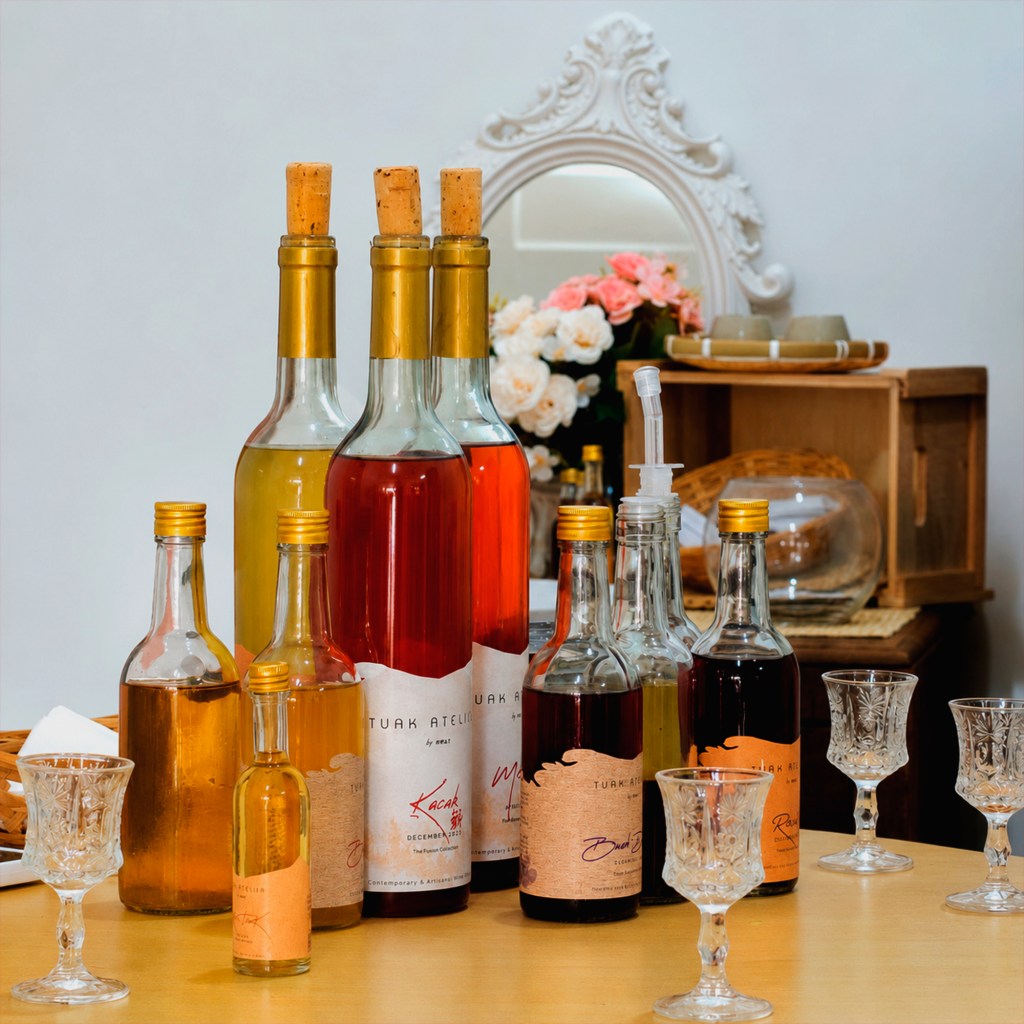
A new generation of Sarawakians are breathing life into the burgeoning tuak industry. But can they take this drink worldwide when brewing tuak is technically illegal?
Continuing on from Part 1, we look at the future of the tuak industry in Sarawak.
Arif Abdul Rahman co-runs the Borneo Tuak Festival. He shares how the industry has transformed over the past ten years and the challenges it faces in the future.
We also hear from Martiana Chia who contemplates Sarawak’s food future. Can the state live up to its reputation as City of Gastronomy?
Credits
Hosted by Dr Noby Leong and Philip Gibson
Produced by Dr Noby Leong and Philip Gibson
Sound Design by Jack Barr
Satay? Okay! is produced by Kopi Productions Limited and supported by the Golden Chopsticks Scholarship, by the Oxford Cultural Collective Trust
Resources and References
A History of Malaysia (2016), Barbara Watson Andaya, Leonard Y. Andaya
Borneo: The History of an Enigma (2026), Olivier Hein
Druce, Stephen C and Nani Suryani Haji Abu Bakar. 2023. Brunei and the World Since 1984. Routledge Handbook of Contemporary Brunei, pp. 100-117. eds. Ooi Keat Gin and Victor T. King. London: Routledge.
The Rajahs of Sarawak, The Spectator, 1940 https://archive.spectator.co.uk/article/29th-january-1910/40/the-rajahs-of-sarawak
The little-known tree that revolutionised global communication, BBC Global https://www.youtube.com/watch?v=6rLTixi7pOo
A Land of Rice and History — The Role of Tuak, the Traditional Fermented Rice Drink, in Sarawak, Malaysia by Anna Sulan Masing, Good Beer Hunting, 2022 https://www.goodbeerhunting.com/blog/2022/7/20/a-land-of-rice-and-history-the-role-of-tuak-the-traditional-fermented-rice-drink-in-sarawak-malaysia
Transcipt
Please note that this transcript may contain errors and typos
Welcome to Satay. Okay. A podcast about the foods
that have shaped Malaysia. I’m Dr. Noy Leong.
And I’m Philip Gibson. And this is part two of
our episode on Tuak. In part one, we looked at
the importance of tuak to Sarawak. And now in
part two, we’re looking at its future. The tuak
industry in Sarawak has grown immensely since
COVID. And brewers are now contesting with new
challenges in bringing this very traditional
drink to the global stage. The main challenge
is that brewing tuwak in Malaysia is largely
illegal. And if you’ve just joined us for part
two, definitely go back and listen to part one
for the full details on that. So there are a
lot of conversations in Sarawak at the moment
around the growth of Tuak. And one group that
is helping to steer these conversations is the
Sago Group. They are dedicated to supporting
food entrepreneurs in Sarawak. And they also
run the annual Borneo Tuak Festival, something
I was very keen to learn about and I would love
to visit one day. We need to time our next visit
to coincide. I think it coincides with my birthday,
so I think I just have to. I think you just have
to. We spoke to one of the founders, Arif, about
getting Tuwak to the masses and what that would
mean to the local culture. I am Arif Abdul Rahman.
You can call me Arif. Born and raised in Miri,
Sarawak, the northern part of Sarawak. We’re
basically just right next to Brunei. So I am
the director of Sarawak Gastronomy Group, or
for short, we call it SAGO Group. Before I begin.
I want to acknowledge that I am not ambassador
or an elected spokesperson for Tuak, nor does
my own ethnic background have a direct cultural
or historical practice of brewing Tuak. What
I will be sharing today is what me and my co
-founders or even my friends, what we’ve gathered
from our discussions, our research, personal
exchanges with friends. My role here is just
to share a hypothesis that we’ve explored but
haven’t really proven. So I hope everybody take
it a pinch of salt but I also encourage you guys
to come to Sarawak and find out for yourself
by tasting tuak and also ask questions to the
viewers. The rise in popularity of tuak is perhaps
due to Malaysia’s own awareness of itself, as
Arif explained to me. When Malaysians start to
travel, They go to other countries and they start
to appreciate drinks from other countries. Go
for wine tour, sake tasting or whatever other
drinking experience that they experienced when
they were traveling. So I guess the conversation
of… among other travelers or even the producers
there. Oh, where are you from? Oh, I’m from Malaysia.
Oh, I’m from Sarawak. Oh, do you guys have, you
know, what’s your version of local alcohol produce?
So I guess that’s when people start to like,
huh, you’re right. What is our local produce?
Malaysia being majority a Muslim country, it
is a taboo. still we don’t talk about drinking
as much it’s not it’s not a culture even but
for example it is still somewhat a culture but
it’s not being talked about as openly When people
start to appreciate it as not just an alcoholic
drink, not just a drink for you to have fun and
be extra confident and have a party. So that’s
when you see people are starting to enjoy the
drink because of the taste, because of the culture
and because, oh man, this is something that is
produced in my own home country. So the awareness
level, the intellectual level increases. And
that’s when people start to appreciate Tuak more
than just like a party drink. From this popularity,
the Borneo Tuak Festival was born. The festival
showcases local brewers, hands out awards and
facilitates discussions about Tuak’s future.
However, when the festival began in 2024, reactions
from the public were mixed. I guess when people
hear Borneo Tuak Festival, the first thing that
comes to their mind is like, oh, it’s a drunken
fest. It’s going to be a lot of… people drunk
off their mind rowdy yada yada even when we posted
the poster on social media you can see the comments
of there’s actually a lot more negativity to
what itself is to sell an alcoholic beverage
and and alcoholic beverage itself as much as
we you know call it it’s like it’s our culture
it’s our heritage it is also a slippery slope
when consumed too much tension can arise, right?
That’s when we want to prove to people that this
is not a drunken festival. Hence why the festival
itself is. Yes, the majority part of the festival
itself is the stalls that sell tuak. Our Borneo
Tuak Festival 2024, we boasted about 40 different
tuak brands. It’s actually the biggest tuak gathering,
I would say, in the whole of Malaysia, with 100
variations of tuak. 100 more. So, for example,
one tuak brewer, she sells five different versions
of tuak. The sweet one, the bitter one, maybe
the mango one, cinnamon, or maybe the vodka version.
Borneo Tuak itself has become a platform for
tuak brewers to test the tuak and give it to
the market. After running it for two years, you
see how certain tuak brewers, they return, they
came back and they’ve changed in terms of branding,
for example. An example, first year, one of the
tuak brewers only use a normal glass bottle and
the only sticker that is on the bottle is a thank
you sticker. No branding, no phone number, nothing
else. But last year, after a year, when they
start to get inspiration, they look at other
tuak brewers, branding and stuff like that so
they have their own logo now they have their
own branding they have a nicer bottle now and
you even see some of them even produce t -shirts
or stickers so it creates this like creative
momentum as well uh happening in the uh uh to
the scene itself as much as the festival is about
celebrating tuak there are many more important
discussions to be had namely about the legality
of tuak and the challenges in taking tuak to
the global stage We found a way to do a policy
dialogue. Tuak itself is still in a grey area.
It is an alcoholic beverage but it’s also considered
a heritage product, a heritage produce. So having
that policy dialogue is when we invited Tuak
brewers. We invited suppliers, we invited restaurants
or bar owners even and we also called experts
from Australia or from Thailand even to share
how they managed to convince the government to
produce micro brewing license. So I guess that’s
something that we aspire to have as well. It
is still quite unregulated. Before the government
tells us what what to do what not to do why don’t
we study it from the bottom from the grassroots
we recommend what should be done because you
cannot restrict all tuak brewers you know some
tuak brewers only brew for their own consumption
but for certain tuak brewers they probably brew
so that they can export and sell so maybe we
can decide on a certain amount of litre This
is a microbrewing license, this is not. So I
guess that’s the conversation that we will continue
to have in our next Bono Tuak Festival. These
conversations include details on the economics
of commercializing tuak because it’s only recently
that tuak has been sold widely. Back then, there
is no such thing as commercial tuak. It’s so
hard to find tuak. I’m just talking about like
seven years ago even. Wow, that’s so very recent.
Yup, so you can only find Tuak if you know a
person. Oh, this person Bruce Tuak, so he doesn’t
even have a social media account or whatever,
he just has a WhatsApp number that you text that
person and he’ll send it over. So back then,
Tuak was, a bottle of Tuak was cheap. And with
that said… Tuak is becoming more expensive
now. Yeah, so back then it was just like a bottle
is RM25 or RM30. Now people wants to do branding.
You know, they have a proper produce. They start
hiring people. So now you can see bottle of tuak
can sometimes cost even up to RM100 or RM200.
And even some of it has like a sparkling element
into it. So yes, there is a lot of this that
is happening. We’re very happy to see this burst
of innovation that is happening among Tuwak,
new Tuwak brewers. These rapid changes to the
price and availability of Tuwak has prompted
conversations on appropriately valuing Tuwak
for global markets. When we did the Borneo Tuwak
Festival, we called in wine and sake experts
because the topic itself is how can we export
Tuwak. How can we bring tuak on the international
level? How can we follow the step of sake and
wine? That’s the inspiration. So throughout the
panel discussion, that’s when we found out about
all the other little things that you want to
increase the value, you have to take into account
the water that you use, the type of paddy or
rice. Do you filter? One by one, which rice is
good, which rice is not good, and stuff like
that. And the temperature, the climate. Malaysia
is a very hot country. How can you really make
sure the climate is as consistent as possible?
So that’s when, in my opinion, if the brewer
takes into account all this and produces a certain
amount, I guess I can somewhat try to accept
it, but I need to see the justification. I am,
however, a bit upset that when people start to
charge tuak because it’s famous, it’s trendy.
So let’s charge it double. And that’s when I
feel, that’s when you see people will be a bit
more, it’s like, are you taking my culture and
making money out of it? And I guess that’s the
thing. Us Sarkans who is familiar with the price
range, price bracket, We know what’s expensive
or not. But for those who are not familiar, RM200
for a bottle of tuak is cheaper than any whiskey
out there. It’s cheaper than most of the alcohol
out there. So they start to charge those kind
of price in a bar setting, for example. But as
I said, it’s unregulated. So how can you control
it, right? Economics are just one aspect. Amidst
all the discussion on commercialization, tuak
is still at its core a traditional drink. with
deep cultural significance. So how do you preserve
the cultural importance of tuak while also commercializing
it? You do have people who still wants to protect
and gatekeep, who feels very strongly about this
shouldn’t be commercialized. Usually I’ll say
this, I guess more for the old timers, I guess
they’re a bit afraid. of their culture will be
turned into something else, rather than the real
reason why tuak is brewed. It’s for celebration,
not necessarily for celebration. Certain tribes,
certain practices, it’s for funeral, for example.
And certain things, it’s actually not for drinking,
it’s actually for cooking or even to pay homage
to the elderly, for example. So I guess that’s
when We can’t escape modernization. In any case,
it will either be swallowed by modernization
or somebody else take it up and innovate it and
twist it into something else, which is what’s
happening a lot right now. The young people take
it up and have their own twist into it. Although
we do have a bit of back push from people who…
who thinks like tuak should just be at its original
state but you can’t stop people from mixing mango
and tuak if they want to mix it right so there
is that a bit of a push but what we’re trying
to do is also to convince them that what we’re
doing is cultural preservation albeit it’s not
the way you imagine it to be but this is how
it is And that is Arif Abdul Rahman from the Sago
Group. So really interesting to hear that the
industry in Tuak is so young and that early up
until about 17 years ago, could you just not
find it? Like you’d have to know a guy, WhatsApp
someone. And it kind of reminds me how people
used to obtain durian. Because durian used to
be like that. You either like stumbled across
it from a market store or you kind of called
up someone who knew a guy who’s got a tree. Yeah,
yeah. And now, of course, Durin is this, you
know, mega industry. Yeah, no, I thought it was
so interesting how dynamic it is in Sarawak.
And I think what also I hope comes across with
our interview, both with Mars and with Arif there,
was the infectious enthusiasm that they have
for the beverage, the state, the preservation
of culture. The wanting to change the policy,
like, you know, obviously it impacts their livelihoods.
So, of course, they have a vested interest in
it. But like, I just I could have spent more
time in their company. They were just both really,
really engaging and interesting individuals.
And I loved how passionate they were. Yeah. And
I think the conversations that we had with both
of them is sort of a reminder of the stakes at
play. It’s a really pivotal moment in Sarawak
with Tuak. as it goes from this exclusively
homebrew drink to what’s probably now a cottage
industry, I would say, to what’s perhaps going
to become a really international industry where
Tuak could potentially be used as a tool of culinary
diplomacy. Because, you know, I compared Tuak
to other heritage drinks of other countries that
are now very regulated industries with major
international businesses, a lot of government
interventions like, you know, Scotland. People
visit Scotland. just to drink whiskey. To go
to a distillery, yeah. Scotland exports a lot
of whiskey and earns a lot of money, a lot of
tax revenue. Same thing can be said of Japan
and the sake industry. Yeah. No, they’re huge,
huge economies and huge opportunities, I think,
for local economies. And I think what was quite
obvious to me is, as you say, it’s kind of like
a cottage industry, although I would maybe say
it’s coming out of the cottage industry because
it started in the longhouses. to me it’s in the
cottage, do you know what I mean? Now it’s becoming
more commercialised and industrialised or whatever,
but not really, but getting there. What my hope
is that a lot of the local players actually still
are invested in the game as this industry continues
to grow because I think it would be pretty rubbish
if, you know, it gets a bit of a… brand for
itself and then one of these like big multinational
corporations comes along and just like buys up
the branding rights and the recipes to these
drinks or whatever and tries to mass produce
it and kind of pushes out so many of these young
individuals that are trying to be enterprising
and trying to sustain themselves. So it’s quite
complicated and it’s more complicated than just
you would think. And I think that’s why the Borneo
Tuak Festival is really important and all these
conversations and discussions on its legality,
its value, its cultural heritage are important.
And I like that this is happening from the ground
up, as I was saying, that this is happening from
the grassroots level before some of those international
big players impose definitions on them or impose
a value system on them that they don’t want.
Yeah. If you’re enjoying this episode, follow
us on social media at SatayOK. We’ve got more
stories and more food to share. You can also
find links to give us a donation or tip. We’re
an independent podcast and every ringgit, dollar
and pound goes directly to supporting our work.
So give us a follow and say hello at SatayOK.
Of course, it’s not just about Tuak in Sarawak.
Sarawak has a really incredible food scene. Although
I think my food knowledge is quite limited. Yeah,
I mean, if yours is limited, then you can only
imagine how ignorant I am. We talked about some
of the foods that we really enjoyed in our time
in Kuching in episode 11, rice. Just a quick
recap of some of the amazing foods in Sarawak.
Sarawak laksa, which is like spicy prawn broth
with noodles. Padas? No, that’s delicious. No,
padas is spicy. Padas is spicy? Yeah, yeah, you
got it. Uh -huh, yeah. Yeah, yeah. We went to
this one place in Kuching where I thought, ah,
you know, I’ve been travelling around Malaysia
for like seven weeks or so now. They asked me
on a scale of one to three how spicy I wanted
my laksa. I said, I’ll go for a two. When you
go to a proper Malay restaurant for laksa and
you want spicy, just proceed with extreme caution.
It’s like how many chilies on a Nando’s menu.
It exceeds the menu. It was a lot. I couldn’t
handle it either. Yeah, it was a shame. I looked
really disappointed because it was my breakfast
as well. And you have your mouth all shaved because
you’ve got an absolute, you know, an empty stomach
that you want to kind of devour this thing. And
you’re like, I just looked so disappointed while
my mouth was on fire. And then I was scared about
the repercussions when it comes out the other
end. Oh my God, Philip. Anyway. So yeah, Sarawak,
Kuching, it’s delicious. Yes, we also have kek
lapis. Oh yeah. That delicious cake. With a bit
of a Dutch influence, apparently. Yeah, the Dutch
layering technique to make this cake so moist.
Yeah. I mean, is it a cake that’s made more with
oil than butter? I don’t know. I think it’s a
cake that’s made with a colossal amount of egg
yolks. And so you get this really luxuriously
fatty texture. And the cake actually lasts for
quite some time. And on our trek into the jungle…
Yeah, we kept snacking on new bits of it. Yeah,
we brought sort of a whole cake with us into
the jungle and just ate it over the course of
three days when we needed an energy boost. Yeah,
it was quite beautiful as well, though. I had
like a kind of lattice kind of… like design
on it. There’s so many ways that cake lapis can
be arranged before it’s sold. Yeah, there’s a
beautiful artistic aspect to making cake lapis.
Yeah, I mean, if Europeans got as far as Battenberg
cake, then I think this is considerably more
intricate. Yeah, yeah, yeah. Lots of other dishes
that make use of local ingredients, I suppose,
mid and fern, that’s my favourite. It’s like
these sweet. tips of a fern that are stir -fried
quite simply. Yeah, I mean, it was, as we said
in a previous episode, the abundance of the fresh
ingredients. Due to all these really unique foods,
Kuching, the capital of Sarawak, was recently
recognized as a city of gastronomy by UNESCO.
So what we’re seeing at the moment is the world
becoming increasingly aware of Sarawak’s food
scene and its culture. I think with that awareness
and popularity, the state overall is facing challenges
of modernization and commercialization just like
Tuak. So we wanted to find out more about the
food scene of Sarawak overall, the challenges
it faces today and where it’s heading in the
future. So we asked Arif as well as Maaz who
we spoke to in part one for their thoughts on
this burgeoning food scene. There’s a lot more
Sarawak cuisine that is not really known and
it’s not really commercialized because it is
I guess because Sarawakians it is a staple to
Sarawakians that To us, it’s our everyday food,
so there’s nothing special about it. We don’t
highlight it as much. Only when our friends from
abroad, our friends not from Sarawak come over
to Sarawak and ask us about the local food, that’s
when we realise, oh, actually our food is quite
unique. Some of the vegetables or fruits that
we consume or we put in our recipe, especially
the… local recipe, it’s harvested from the
forest. So it’s not properly agricultural cultivated
in a controlled environment. It’s very much they
go and forage for these ingredients in the forest.
And because of that, sometimes it’s seasonal.
And sometimes it gets quite difficult because
you need to forage deep into the forest to look
for certain ingredients. So there is that, I
could say, inconsistency in terms of availability
and also accessibility. But so far, we still
have abundance of it. I’ll give an example. Sayur midin.
I guess you could say it’s a family of fern that
is grown wildly in the forest. Actually, not
even in the forest. You can actually get midin
by the roadside. So midin itself is becoming
more and more popular. It’s also something that
you go to any restaurant that serves rice and
dishes, there’s always a midin dish. But this
is very much a Sarkian ingredient. We can’t really
find it in Semenanjung or in KL, but there is
a different version of it, a different kind of
fern. But sayur midin itself, it’s like a smaller
version of fern and it’s still crunchy and it’s
good to eat it stir -fried. Though we are also
seeing midin being exported to Singapore and
it’s being priced three to four times higher.
I guess that’s what happens when you allow things
to be exported. So there is a bit of In the market
itself, median is getting a bit lesser or we
only get the meat quality kind of median or the
good quality is being exported. So the same questions
arise with these unique Sadawaki ingredients
as tuwak. How do you encourage entrepreneurship?
How do you value it? And how do you preserve
it? I guess after a few conversations with my
friends in the food and gastronomy scene and
especially some of the chef who is familiar with
the ingredients and how hard is it to go and
forage certain ingredients. So in his words,
he is a little bit frustrated. I guess here’s
the situation that is happening right now. When
you mention things that is being foraged, it’s
like it has a higher in terms of value and quality.
So I guess because it’s such a norm here that
we do not appreciate the difficulty of going
to the forest to forage for certain ingredients
and hence why even though going to take certain
ingredients it’s difficult it can be quite risky
in terms of like life and you can get injured
but once you brought it out of the forest and
you put it in the market it’s being sold as something
cheap so the locals would think that this is
normal you should sell it at this price because
it has always been this price and this is our
ingredients right we can always find it in the
forest but and then you brought up how how this
you know the the act of the foraging itself there’s
value to it there’s there’s um there’s there’s
some there’s extra effort into it but how can
you calculate this and put it into the course
when when when when the locals still have that
mindset of this thing shouldn’t cost as much
So I guess there is that a small percentage of
people realize the value of things being foraged
from the forest, but a quite majority of the
locals feel why should you increase something
that is local. All of these conversations around
Sarawak’s local food has catalyzed a new generation
of food entrepreneurs. Mars explained more. Kuching
was awarded the City of Gastronomy not too long
ago by UNESCO and I feel like that motivated
even our hawker stalls. So you can see that everybody’s
more vocal about our culture now. I have friends
in the F &B businesses who are probably even
younger than me that I’ve met just from online.
they want to start out as a hawker, as a hawker
stall instead of working in a restaurant because
they believe that their food speaks volumes.
All you have to do is sort of post it online.
I mean, with the whole social media trend now
with TikTok and everything, it’s so accessible.
And I feel like whether it fails or not, the
heart of I want to try as a Starhawkian is so
strong, it’s so pure. And I think that’s what’s
so great. So there’s a palpable energy and a
pride in Sarawak at the moment. Part of this
may also be down to how other Malaysians view
the state. Mars explained to me some of the very
surprising stereotypes that she’s still fighting
against. Maybe we don’t live on trees. Because
I still get that. I’m 26 this year. And I feel
like every time I travel to KL, there’s going
to be at least like two. of those questions yeah
i went once for like a market and then out yeah
an auntie came up to me and blessed her she was
like i want to support you this is so good you
know you should really promote it more and then
she asked you can come over and visit and sell
over here anytime and then i kind of caught on
and like oh she doesn’t think that Like, I sell
it online. Like, she thought I fly just so I
could have the opportunity to sell it, like,
physically. And I was like, oh, you can find
us online. Like, we can always ship it over to
you. I have family here as well. Whenever I’m
visiting, like, you know, you could just let
me know. We update our socials. And she was like,
oh, you have socials? Like, you have Instagram,
Facebook, all these things, ah? And I’m like,
yeah, yeah, we have, we have. And I gave her
my name card. She was like… But how do you
post? And then how do you stay in touch? How
do I call you? Do I DM you? And she’s an auntie,
right? And I just went, yeah, we have Wi -Fi.
We’ll contact, we’ll reply you. So just send
us a DM anytime. And then bless her, she was
so embarrassed. And she was like, oh, okay, okay.
So Sarawakians are really still facing some very
basic stereotypes of who they are. But at the
same time I kind of don’t blame them because
you know just looking at our airline like AirAsia,
Maas, the way they sort of advertise us on their
videos and stuff it’s always like somewhere ulu.
Like they expect us to go like ulu. Like that’s
yeah so I understand in a deeper level I kind
of understand but then Like, come on. So the
quest to promote Sarawak’s traditional food and
drinks to a wider audience comes with many challenges.
But Mars has hope. My hope for Sarawak? To really
live up to that title that we got, City of Gastronomy.
I feel like we still kind of take it too lightly.
You know, when I look at Penang, for example,
or even our neighbouring country. um singapore
they do it so well that being said i do hope
that we sort of live up to it and not just i
feel like malaysians we have this habit of like
oh we’ve gotten it already so now we can rest
now like we’ve achieved it and i think that’s
such a bad habit because then you get lazy bones
right and then just because you’ve had it in
that generation that doesn’t mean that your kids
will will have it also like someone else will
get number one you know i mean yeah And then
for the Tuak community, I guess, to honestly,
no change. I feel like we’ve been doing a good
job. There’s only so much that we can do, you
know. And yeah, we’re not so quiet. We’re not
too loud. If we are, I’m sorry. But, you know,
we’ve been kept quiet for a really, for my family,
about 150 years. So if we’re too loud, like,
you know. It’s your time. Yeah, like. This desire
to take the next leap and have Sarawak recognised
worldwide is shared by Arif. Our selfish vision
is to see Sarawak food or even food entrepreneurs
or brands, food F &B brands from Sarawak to make
it out there. It’s in other parts of Southeast
Asia. It’s other parts of Asia. It’s in Australia
or it’s even in other parts of Africa, for example.
So I guess that’s the aim. And I guess it’s something,
in a way, it’s one way for us to be proud of
where we come from. But also in the same time,
I think it’s time for Sarawat to make that jump.
For us, we see the potential, but we haven’t
seen anyone taking the leap yet. And we hope
that by what we’re doing here, somebody who wants
to take the leap, we can help be the catapult.
Wow, so many interesting points made by both
Arif and Mars there. And I feel like we spoke
to them at a really critical junction in Sudawak’s
food journey. Because it’s recognised, but there’s
still a lot of ignorance. but they’re not as
well known internationally you can sort of sense
that they’re on the cusp of a precipice of kind
of like going mainstream in a bit of a way where
they’re like okay this is good but like how do
we like go into this conscientiously yeah like
the lessons learned by like other cuisines that
have gone out into the world and been so heavily
bastardized and yeah that depends on what your
school of thought is about like should food be
bastardized or not How to value our own food?
How do we ensure we’re not getting exploited?
Yeah, how to make sure that we, like everybody
else in this podcast, how do we write our recipes
down just now so that we at least have something
to refer to 50, 100 years from now when things
have evolved? To at least know that at a point
in time, that’s what something should have tasted
like or the experience of it or whatever it would
be. But it was so refreshing, I think, to hear
them both talk with enthusiasm, if a little.
They’re being smart about it, do you know what
I mean? Yeah, there’s concern. There’s valid
concern about what the future is. But again,
they’re so punk. They’re going to write their
own story no matter what. Yeah, yeah. No, both
of them are just so kind of infectiously enthusiastic
in their own ways and could absolutely sit and
go for a drink with them and just talk rubbish
for hours and hours and hours. And can I tell
you, Philip, the amount of times I think about
that conversation with Mars… When she told
me that people still think she lives in a tree.
Yeah. I think about that conversation all the
time. Yeah, yeah, yeah. No, I love that story
about not having Wi -Fi, like just the ante over
in the peninsula. No, it’s so funny. I mean,
having… been to Kuching a couple of times now
it’s funny that I seem to be less ignorant than
the people that like you know share this share
a passport with these people. It reminds me when
we were in the jungles of I think we were in
Sabah actually but we were in the jungles of
Borneo and you were getting taken around by a
guide through trekking and she was just on her
phone the entire time doing a tiktok live without
looking at the ground which is covered in vines
and slippery leaves and yeah and like jagged
rocks and stuff like that and she’s just like
one of these ibex goats or whatever you call
them it’s just like scaling up a cliff and i’m
like how are you live streaming because we had
to like concentrate so hard not to fall we’re
on all fours puffing and panting like you know
just trying to survive and this girl was running
up this like sheer cliff yeah and then there
was then there was like a torrential monsoon
and she’s in a boat with her anorak over her
still like live streaming if you’re enjoying
this episode follow us on social media at satay
okay we’ve got more stories and more food to
share you can also find links to give us a donation
or tip We’re an independent podcast and every
ringgit, dollar and pound goes directly to supporting
our work. So give us a follow and say hello at
SatayOK. Anyway, so let’s go back to our food
of the day. The reason why we’re here this episode
and that is tuak. Tuak is a symbol, I guess,
of indigenous communities across Sarawak and
communities that are really making us rethink
what the history and culture of Sarawak is today.
It’s a region that in a lot of Western writing
gets this really unbalanced view of its history,
in my personal opinion, and one that’s also underrepresented
more widely in Malaysia. But hopefully Tuwak
is also a catalyst for us to reframe how Sarawak
thinks about itself, how it reflects on its history
and culture and brings that to the forefront
today. now philip it’s been a massive two -part
episode on tuwak and sarawak and at the very
start of episode one we talked about the history
of sarawak from the beginning And we talked about
James Brooke, the White Rajah of Sarawak, and
how this guy basically came to colonize large
parts of the island of Borneo in the 19th century.
And the end of the book’s rule really coincides
with World War II. Right. Japanese occupation.
Exactly. And we’re going to explore that in future
episodes. But in the next episode, we’re going
to continue our story, but looking at events
happening in Sabah, which is on the other side
of Borneo. Because while the White Rajahs were
out, force in sarawak a very different colonial
story was taking place on saba so we’re exploring
that in an episode entitled bosol and the fight
for saba and if you don’t know what bosol is
you’ll have to listen to find out so don’t miss
the next episode of satay okay

