
13. Tuak and the White Rajahs of Sarawak Part 1 – Satay? Okay!
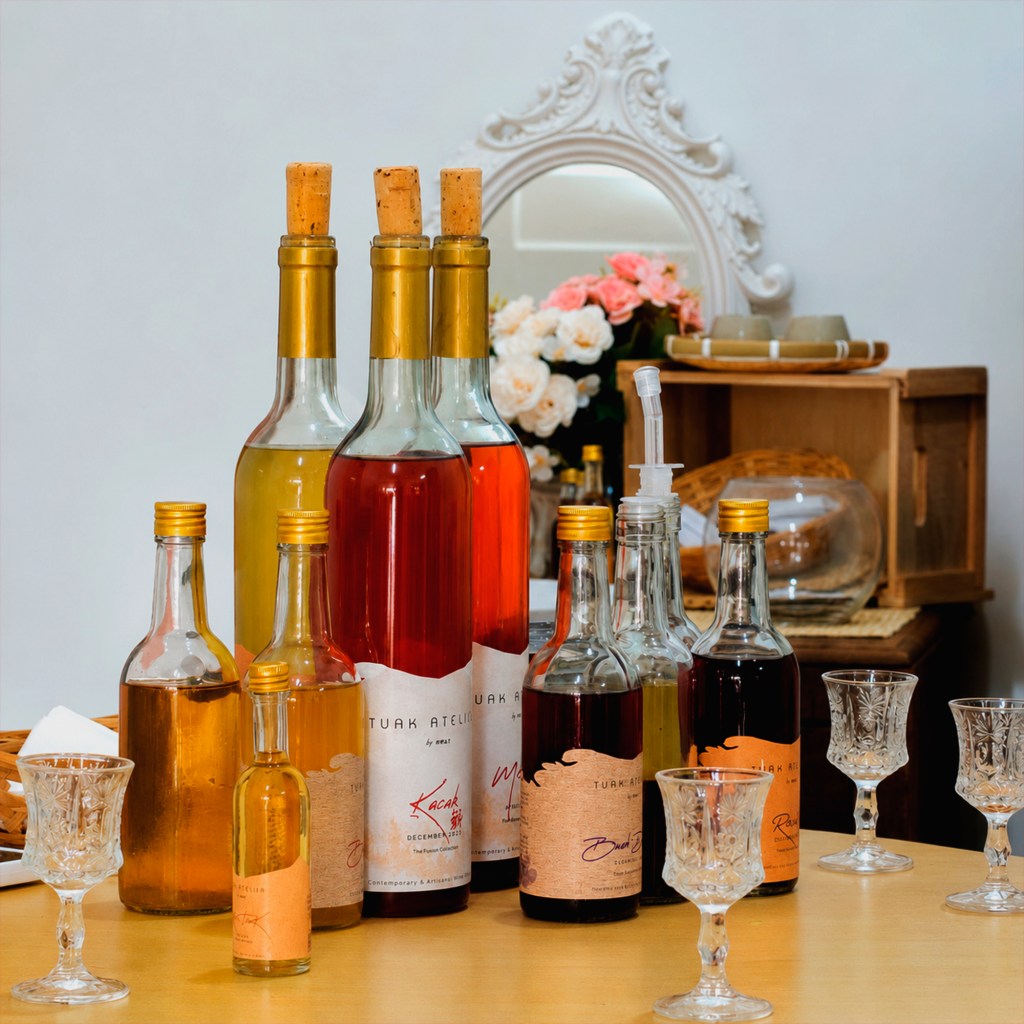
Tuak is more than just rice wine, it’s a core part of indigenous identity in Sarawak. But can the traditions of tuak be upheld if the drink is commercialised?
The golden age of Brunei ended from the 16th Century, leaving a weakened empire ripe for exploitation. Enter James Brooke, a so-called private individual who colonised his way to become the first White Rajah of Sarawak.
Academic, food writer and poet Anna Sulan Masing talks about the importance of tuak to Dayak culture, while Martiana Chia of The Rasa tells us what it’s like to start a tuak business with her grandmother.
Credits
Hosted by Dr Noby Leong and Philip Gibson
Produced by Dr Noby Leong and Philip Gibson
Sound Design by Jack Barr
Satay? Okay! is produced by Kopi Productions Limited and supported by the Golden Chopsticks Scholarship, by the Oxford Cultural Collective Trust
Resources and References
A History of Malaysia (2016), Barbara Watson Andaya, Leonard Y. Andaya
Borneo: The History of an Enigma (2026), Olivier Hein
Druce, Stephen C and Nani Suryani Haji Abu Bakar. 2023. Brunei and the World Since 1984. Routledge Handbook of Contemporary Brunei, pp. 100-117. eds. Ooi Keat Gin and Victor T. King. London: Routledge.
The Rajahs of Sarawak, The Spectator, 1940 https://archive.spectator.co.uk/article/29th-january-1910/40/the-rajahs-of-sarawak
The little-known tree that revolutionised global communication, BBC Global https://www.youtube.com/watch?v=6rLTixi7pOo
A Land of Rice and History — The Role of Tuak, the Traditional Fermented Rice Drink, in Sarawak, Malaysia by Anna Sulan Masing, Good Beer Hunting, 2022 https://www.goodbeerhunting.com/blog/2022/7/20/a-land-of-rice-and-history-the-role-of-tuak-the-traditional-fermented-rice-drink-in-sarawak-malaysia
Transcipt
Please note that this transcript may contain errors and typos
Welcome to Satay. Okay. A podcast about the foods
that have shaped Malaysia. I’m Dr. Noby Leong,
a scientist, food writer and broadcaster. And
I’m Philip Gibson, photographer and closet sommelier.
And in this series, we explore the history, cultures
and cuisines of Malaysia. In today’s episode,
we take a look at Tuak and the White Rajas of
Sarawak. So check your privilege and get ready
for satay. Okay. We’re on our grand tour of Borneo.
And in the last episode, we looked at the rise
of Brunei, that great empire that would have
a lot of influence, particularly over the northern
part of Borneo, regions that would later be governed
by Malaysia. From the 16th century, Brunei started
to decline, not least because Europe had now
entered the region. And we’re going to continue
this history lesson today and focus more on the
region of Sarawak and the events that took place
there in the 19th century. Now we have a massive
episode today. We’ve got so many stories that
we’ve split up this episode into two parts. Now
let’s kick off part one by looking at our food
of the day, which connects us to the history
and the culture, and that is Tuwak. Beverage
of the day. So before any of this, did you ever
actually know what tobacco was? No. No. I think
I encountered it, well, we both encountered it
for the first time, I think when we visited Kuching
a few years ago. Yeah. And… i think i read
about it on the plane yeah that feels like an
in -flight magazine sort of kind of like discover
cyroax native beverage or something like that
i’m not sure how it was written but uh yeah i
didn’t really know what to expect i didn’t know
what it was going to taste of i didn’t know if
it was going to be like smooth or kind of rough
or like how just like if it was distilled or
not so if you’re like philip and you’re like
me as well and you’re not sure what talk is we
thought we’d bring in our first guest a little
bit earlier in the episode her name is martiana
chia but she kind of goes by Mars most of the
time and she is a Tuak maker in Kuching. So let’s
hear from her about what Tuak actually is. So
Tuak is… okay this is kind of subjective but
I feel like to translate it… basically means
um rice wine but i feel like personally when
i promote it to people who don’t know what is
you know it’s the same as how you don’t say oh
sake is rice wine when essentially and sake is
sort of the same thing right and so i feel like
why should we categorize and like white translate
it to rice wine just so people could understand
it rather than just accepting it as it is So
as Mars said, it’s a type of rice wine, very similar
to sake, but also as Mars says, Tuak is Tuak.
Tuak is Tuak, which is possibly why I’m sitting
here now, even having sat in on that interview
over a year ago now, struggling to define it.
Yeah, it’s one of those things that if you are
new to something, you automatically want to know
a little bit more functionally of what it is.
You want to know what it tastes like, what its
constituent elements are. But at the same time,
I kind of do understand what Mars is saying.
Yeah, I guess when I’m thinking of like, you
know, Scotch whiskey, for example, I just kind
of think it comes from the mountains. And when
I was, you know, younger, learning about whiskey
for the first time, I don’t think I ever asked
someone, what is whiskey? Whiskey was whiskey.
Whiskey’s whiskey. And the same thing with like
beer. Beer is beer. And I didn’t need any further
translation. And I would probably sound like
an idiot if I asked someone, what is beer? And
to be honest, I don’t think many people could
actually answer that question. If you ask someone
on the street, what is beer? I don’t think they
could give you an answer. Yeah, yeah, that’s
true. If you’re going to drink alcohol, I think
the majority of people that do are probably,
you know, blissfully ignorant. They’re not really…
investigating I think once it hits your lips
it’s definitely having its desired function which
is to relax you uh -huh yeah yeah so in terms
of the taste though I thought I’d bring in food
and drink expert to explain what the flavor is
like because she’ll do a much better job than
me so this is Anna Sulan Masing she’s a food
writer amongst many many other different hats
and she’s written a lot about tuak and this is
what she had to say about the taste tuak is a
brewed rice uh that gets referred to as wine
it’s kind of the abv of of wine or a lighter
wine heavy beer like wine but it’s drunk so much
like i would say much more like a wine and it
tastes like a sherry a good to taste like a sherry
like a sherry to be honest philip i’ve actually
had more tuak than sherry so now i’m registering
that the taste of sherry is actually like to
work okay yeah I guess we’ll have to get on some
Bristol cream or something. Other brands are
available. It’s also lots of different flavours
nowadays. So we’ve had ginger tuak, pineapple
tuak. And so some of those are like sweeter and
maybe easier to drink if you don’t like strong
alcoholic tastes. Yeah, I think as we went to
Kuching, I was quite surprised actually by the
scene around tuak. But it’s kind of… in a muslim
country and it’s more political than i think
i thought we’re going to unpack all of that as
we get through this episode so let’s keep twark
in the back of our heads as we kind of go through
the history of salawak in the 19th century so
remember philip in the last episode we were talking
about the rise of brunei from the 10th century
right so it’s a trade empire not as big as some
of those other really large ones like malacca
and which we’ve talked about in previous episodes,
but it was a wealthy sultanate. At the time,
Brunei was centered where present -day Brunei
is, but its territory back then expanded across
much more of northern Borneo. And so the people
here were a really large and diverse assortment
of communities. Some were traders, some procured
jungle products, and so you had a lot of smaller
chiefs and sultanates too that all came under
the loose banner of Brunei. From the 16th century,
however, Brunei begins to fade. We’ve got the
arrival of Spain, civil war, and we’ve got tensions
with neighboring sultanates. The Dutch are there,
so their power begins to decline. And that’s
where we’re going to kick off today’s episode.
So from the late 16th century through to the
17th and 18th century Brunei’s power over northern
Borneo diminishes and control loosens. When the
19th century comes around Brunei is pretty weak.
Rebellions are common and they struggle to contain
them. And a major rebellion would break out in
the western fringes of the Brunei empire that
would change the region forever. So this region
is known as Sarawak. And it was there that large
antimony deposits were found and subsequently
mined. Okay. So antimony is a mineral, a type
of metal. It’s used for lots of different things.
At that time, it would have been incorporated
into different metal alloys. It’d be used as
a pigment in glass, ceramics, and that sort of
thing. Okay. And also as a medicine. For instance,
the antimony pill was used to revitalize the
bowels. Cool. Love that. I think we could all
use a bit of antimony pills every now and then.
I don’t know that my bowels have ever been revitalised,
but yeah. That’s because you haven’t had any
antimony pills. Better go back to Kuching then.
Brunei wanted revenue from this growing industry,
but the locals were not having any of that, so
they rebelled. And in an effort to quash the
rebellion, the Sultan of Brunei sought help,
which eventually came in the form of an Englishman
named James Brooke. James Brooke is described,
I guess, as like an ordinary private citizen.
Okay. He’s not technically part of the British
government or the British East India Company.
Historians kind of talk about him as this ultimate
adventurer. He was born in India, served in the
British armed forces, and eventually made his
way to Borneo, arriving in the town of Kuching
in 1838. Okay. So Kuching had already been established
as a settlement on the river at this point? Yeah.
Okay. So at this time, Kuching was administered
by the uncle of the Sultan of Brunei, a man known
as Pengiren Muda Hashim. Hashim strikes up a
deal with Brooke, saying that if you help us
with this rebellion, I will grant you administrative
rights over Kuching and you will become a Raja.
Okay. Hashim did not necessarily have the authority
to do this. But when has that stopped anyone?
Yeah, no, I do love how… Like, you know, we
obviously didn’t have the methods of communication
that we have today, but you can instantly get
in touch with somebody a thousand miles away.
And he’s kind of like, just do it. I’ll give
you land. The act of desperation. Yeah, that
would be it. So Hashim and Brooke agree. And
in 1840, Brooke borrows a unit of Britain’s China
Squadron to help in this campaign against the
rebels. This again just strikes me about how
unserious the whole administration of the British
East India and the Royal Navy and things like
that. I don’t really understand how you could
just… I don’t know what, been sitting on a
deck at some point and just like having a chat
with, you know, the rear admiral or something.
I’m thinking about going in this little excursion,
go up the coast and just go on a bit of an adventure.
And they were kind of like, yeah, okay, whatever.
Westminster doesn’t need to know. Yeah, yeah.
I mean, I wondered like, you know, is there a
number you can call when you just need to, you
need the China squadron? I don’t know. Because
we talked about Francis Light in Penang last
season as well. And that seemed like a bit of
a kind of rogue deal as well. He was striking
up deals with sultans. There’s a lot of rogue
deals. People that don’t have permissions or
authorities to do certain things, but doing them
anyway. A lot of handshakes and back slapping.
Yeah. Yeah. Look, somehow… brooke gets a hold
of britain’s china quadrant maybe because he
was part of the british army so he had connections
probably but he he gets this squadron and the
rebellion is quashed brooke then expects to be
given his title of rajah but it never comes because
again hashim doesn’t actually have the authority
and he also doesn’t really want to sign over
these official documents so there’s a bit of
a standoff but Fortunes flow to Brooke’s favour
in what I can only describe as the height of
white privilege. In 1841, a British East India
Company ship called Diana was passing through
the area, and they were actually there to help
a shipwrecked crew. However, Hashim didn’t know
this. He was confused and assumed that the ship
was a threat from Brooke. Sensing that he could
not win a battle against this, you know, British
ship, Hashim made Brooke a deal and Brooke became
a Raja. It’s the height of white privilege to
just stumble upon becoming a Raja because some
boat just showed up at the right time. And it
sounds like a sitcom if it wasn’t so serious.
It does sound as though, like, poor Hashim might
have been slightly out of his depth and maybe
not actually qualified to hold the position of,
you know, administrator of that region if…
he kind of bowed down or whatever a little bit
too easily maybe. Yeah. You know, send out a
couple of boats with some guys and see what they’re
all about first instead of just going like, oh,
just take it. A bit of a connoissance. Yeah,
you’d see the Royal End sign on the back of a
ship and just immediately go, oh, damn it. This
is it. Yeah. Cannons. We’re buggered. Where’s
the due diligence, Hashim? Yeah. Sorry, Hashim.
anyway so begins the time of the white rajas
so unlike other forms of british colonialism
at the time where you have various administrators
appointed on behalf of the british crown or the
government this style of leadership was a dynasty
so the british government wasn’t technically
involved at all and instead the entire administration
of the region was by private individual, as it
were, James Brooke. He has all the control and
all the power and he can pass down his title
through a bloodline. So it’s kind of like he
made his own monarchy. Yeah, which makes me wonder
how on earth did the British monarchy feel about
this when this happened? I think the reason why
historians call Brooke a private individual,
because at this time… Britain and the Netherlands
were in a bit of a standoff. They had already
signed the Anglo -Dutch Treaty of 1824, which
separated Southeast Asia into the British sphere
of influence and the Dutch sphere of influence.
Borneo wasn’t really part of that agreement,
and the implicit meaning from that treaty was
that neither Britain or the Netherlands would
touch it. So, Brooke being a quote -unquote private
individual… but still British, means that Britain
can have influence over that region without having
influence over that region. Okay, yeah, by proxy
almost. Yeah, yeah. So Brooke, as the White Rajah,
his first mission is to quell further rebellions
in the region. His power is loose, he’s very,
very new, so he needs to shore himself up. This
is a time when… Brunei is very, very weak.
So a lot of minor players in the region can now
take it upon themselves to grab land and grab
resources for themselves. And these minor players
are often called pirates in historical sources.
And, well, piracy in Southeast Asia is a lot
more complex than many history books will tell
you. And it doesn’t necessarily follow the same
definition of piracy as in English. And what
we think of as pirates of the Caribbean and swashbuckling
and drunkenness and raiding. So prior to the
19th century, piracy was kind of a legitimate
activity in the region. For hundreds of years,
pirates were basically part of sultanates. They
helped sultanates to shore up their trading ports,
fend off rivals, and it wasn’t like a disgraceful
activity. And because power was centralised in
Brunei, a lot of the acts of piracy were kind
of semi -governed. So they weren’t rogue players
in this region. So this all changed though in
the 19th century when Brunei became so weak and
power was so decentralized that acts of piracy
increased from really small local chiefs or runaway
princes or people with opportunistic ideals.
And this was, of course, a threat to Brooke and
other European powers. It threatened their own
way of doing trade, which you could argue was
also a form of piracy. So Brooke went about a
campaign to eliminate pirates, something he could
do very easily with his steam -powered ships,
gunpowder and support from the Royal Navy. So
how did Brooke target pirates? And how did he
identify a pirate from, say, a naval force of
a local chief or local prince? Well, for Brooke,
it was as simple as labeling someone as a pirate,
which is very reminiscent of medieval Europe,
where if you encounter a difficult woman, you
would just call her a witch and then she’d be
hanged. Honestly. Okay. So one example of this
is in Brooke’s fight against the Ibans. Okay.
Who had rebelled and resisted Brooke’s rule.
To quash this rebellion, Brooke labeled all Ibans
as pirates, except the ones that liked him. and
brought them down that way. And in one campaign,
Brooke summoned four naval ships to kill 800
Ibans and their Malay allies. Goodness. So he
was very, very ruthless and also very effective
in this. And this is how he quashed piracy. I
think there’s lots to pick apart here, and particularly
these early days of Brooke’s rule. For me…
So much moral hypocrisy from Brooke. Yeah. As
with all, you know, colonists condemning piracy,
but also committing piracy because you’ve morally
justified it. And I mean, I don’t even like to
use the word pirate. It feels colonial in many
ways. Because pirates in a lot of history books
are used to describe all seafarers, no matter
who they were. And so it was a really easy descriptor
to flatten all cultures and communities and also
leads to a lot of stereotypes about what these
seafarers were like. And as you were saying,
with Brooke being called a private citizen, like,
come on, which private citizen can just call
up the British Navy whenever they need something?
Yeah, he was incredibly well connected. He was,
yeah, had a good start in life. Do you know what
I mean? Born with a silver spoon in his mouth.
And I think, you know, another thing that I reflect
on and think about these early days of Brooke’s
rule is that his campaign against piracy ends
up radically changing a lot of these seafaring
communities and their traditions and cultures.
So that whole region has so many indigenous groups
where the sea is their lifeblood. So in earlier
episodes, we talked about the Orang laut communities,
but in this area, you also got the Sama bajau
people. And so the elimination of piracy activities
means that these communities could no longer
necessarily live out their lives at sea as they
would normally. It’s probably also worth considering
that… the method of transport for a lot of
these communities is Borneo has some quite enormous
rivers and these rivers act as the highways for
a lot of these people. And like, you know, I
guess a lot of them are probably semi -tidal
as well. So it’s not just as though when we’re
talking about people being seafarers necessarily,
they’re not all along the coast of the island.
Like they’re going inland quite some way as well.
And, you know, the further up river you go. So
anybody on a boat could be considered a pirate.
Yeah. If you kind of were interrupting Brooke’s
activity, stands to reason that you probably
got lay with a pirate. Yeah. So it’s not just
people on the coast. It’s basically everybody.
Yeah. Anyway, back to the history. Over time,
more and more area comes under the dominion of
the White Raja and his territory begins to resemble
that of modern day Sarawak. Brooke ends up dying
in 1868. and then the title of the White Raja
transfers to his nephew Charles Brooke and that
is a whole nother story. Charles Brooke died
in 1911 and then that title passed to his son
who was also called Charles but more commonly
known as Vyner and Vyner Brooke would be the
third and final White Raja. So this was a three
generation dynasty of White Rajas in Sarawak.
The legacy I think of James Brooke and of this
whole White Raja dynasty I think is clouded by
a lot of colonial gaze recounting of these events.
Right. Because he’s known as being an adventurer,
an accidental rajah. And he’s got this interesting
reputation for being a benevolent colonial force
along the same lines as Stamford Raffles of Singapore.
And I’ve read some pieces about how Brooke’s
rule was forward thinking and progressive and
that he spoke Malay, he spoke Iban, that he cared
about the people. I don’t think he even ignored
the reality of what he did there. Yeah, yeah.
It was a lot of bloodshed to kind of establish
that order and control and power. Some people
will point to the fact that in his administration,
he was progressive because he had Iban, Chinese
and Malay in his administration. And then that
was a… That was evidence of being forward thinking.
But that’s how the British crown ran its colonies
at the time. That’s how the Malay Peninsula was
run. They did that because it was the cheapest
way to do it. And it was a way to ensure local
ways of doing business were preserved so that
you didn’t have to quash a rebellion every single
time someone disagreed with you. Right, okay.
I don’t think you can say that he was benevolent
because he used local people in his administration.
Yeah, it’s not a get -out -of -deal -free card.
I also think Brooke has this reputation in a
lot of modern writing as being this curious,
wanting to engage in dialogue, wanting to get
to know local culture and preserve it. And perhaps
that’s true to some extent, but his willingness
to, I think, preserve local culture always ends
when he needs something that he can’t get, you
know? he he never stopped the opium trade okay
you know um he didn’t clamp down on that he facilitated
britain’s role as the world’s biggest drug trafficker
and also he always wanted to extract resources
to their full potential and think the clearest
example of this is the decimation of sidewalk’s
natural environment under the white rajas right
gold and diamond mines expanded incredibly and
so too did deforestation yeah and one tree in
particular was highly desired and that was called
the gutta percha tree from which the highly desired
product also called gutta percha was derived
oh this is like a kind of rubber no yeah it’s
a type of latex that you get from the sap of
the tree okay it could be molded like rubber
into any shape and was used to make undersea
communication cables golf balls through souls
lots of lots of different things oh yeah is it
not like when you talk about undersea cables
like is it not the sort of thing that like the
transatlantic telegraph line the first one and
stuff like that couldn’t have happened if it
wasn’t for gutta percha because they tried so
many different materials to wrap around these
cables to preserve them and only this material
worked yes i believe so such was the demand yeah
for this sap to make this product yeah because
unlike rubber it didn’t degrade in salt water
yeah yeah yeah so huge demand for gutta percha
but the issue was that the tree was not very
high yielding. And so you would have to cut down
a lot of trees to get a small amount of the latex.
And so from 1854 to 1875, 3 million gutta percha
trees were cut down. Wow. And these trees would
have been on indigenous land. They could have
been within burial grounds, for instance, amongst
longhouses. or other important parts of the jungle.
So I think in examining this part of history,
I think we do need to be mindful of the perspectives
of the local people, the situation that they
found themselves in, and not just look at this
kind of benevolent slice, as it were, of Brook,
that very segmented part of his personality.
Yes, his happy little colony on the banks of
the river. And so part of today’s episode is
an attempt to balance the books. get a more nuanced
understanding of sarawak look closer at the indigenous
communities and we started this episode by talking
about tuak which is a very important drink to
many indigenous folks in sarawak so we’re going
to continue our discussion on to work with anna
who talks about the importance of the drink to
dyak communities what is what is so important
about it is that because it continues this like
this this indigenous identity of what rice is
and what rice means to a community and this is
a quote actually from my dad he wrote for an
article about like iban value systems it’s called
iban value systems in the new reality it was
written quite a while ago but i think it still
talks to this idea of how do you incorporate
indigenous identity and rituals and practices
within a kind of modern world so when it comes
to rice there is a value system uh placed on
the paddy culture. And it’s not because paddies
and rice is an essential food crop. It’s more
that there is a really strong belief still that
paddy has a spirit which must be pacified through
cultivation. So you are doing the rice, the paddy.
um a service by cultivating it by looking after
it by harvesting it and then replanting it and
keeping that cycle in place you are looking after
the spirit and so that then extends to whatever
comes from the rice right like so the tuak becomes
such a big part of your um rituals and your everyday
life um and and ceremonies and things like that
and like obviously we’re in gawai season at the
moment so which is a harvest festival for for
diox And it is crucial for any Gawai celebrations
to have tuak, but it’s also for every party you
want to have tuak. You know, like, it’s super,
super important. And I think understanding that
drinks are an agricultural process, that are
a cultural, you know, thing as much as food is
really important. to me and thinking about this
idea of how we connect with the landscape and
the cultivation of the agricultural products
that we make. So Tuat is so much more than just
a drink. There’s this really deep significance
of Tuat to indigenous communities of Sarawak.
And the more I spoke to folks in Sarawak, the
more I realized that. So let’s go back to our
interview with Mars. So Mars, as we mentioned,
is a young Tuaak maker. And she started her business
of making Tuaak with a very unlikely business
partner. Hi, I’m Martiana Chia. You guys can
call me Mars, it’s easier. And I’m the founder
of The Rasa, which is a local tuak brand here in
Kuching. And my business partner is my grandma.
Mars and her grandma started their business just
a few years ago. But her family has been brewing
tuak for much, much longer. So we don’t actually
know if it’s been 200 or 300. But yeah, so we
could trace back all the way to my fourth grandpa.
Yeah, my great -great -great. So growing up I
actually didn’t see the importance of tuat not
until maybe six years ago so you know when you’ve
grown up with something so like common and it’s
like an everyday thing you kind of lose its like
importance in your life you don’t see as a big
deal Because it’s such a norm, right? And then
only after I’ve graduated from uni, I was like,
you know, there has to be something more to life
than just waking up every day, opening my laptop
and getting to work. Like, what else is there
that is actually me and my roots? And so, yeah,
that’s how I started. So, throughout making,
throughout brewing, my family kind of skipped
a generation. So my grandma’s kids, my mum, and
her cousins, they all just don’t brew. They’ve
never picked it up. They had no interest in it.
I’ve spoken to my uncles, my aunties, and they’re
like, no, just didn’t feel like it. And they
actually said, one of my uncles actually said,
oh, it’s so old -fashioned. And he’s in his 50s.
I’m like, no, you’re old -fashioned. So then,
yeah, with that, like, unsaid. pent up anger
because I was like, well, how could you say that?
It’s like part of our family tradition. And so,
you know, I sort of proved to them that, like,
I could do something with this. Mars and her
grandma make two types of tuak, a ginger one
and a rosella one. Mars described the process
of making tuak, which follows a two step fermentation
process. So for us, OK, for our ginger, so we
use glutinous rice. Previously, like before,
we actually commercially. um sold it we use like
local rice but so yeah glutinous rice just because
the glutinous speeds up the process of the fermentation
and you cook it you lay it to rest and then we
use our homemade yeast balls so my auntie’s relatives
in bintulu actually make these balls and they
ship it via bus so i pick it up at the bus station
on the next day And so my grandma would dry it
under the sun for like maybe an hour or two just
to get it crisp. Now get on the outside. And
then we, well, she pestle and mortise it. I just
kind of blend it. Blend it. And then we spread
it across the glutinous rice. And that’s the
first process. So natural liquids will come up
after two or three weeks, depending on your personal
taste. To me, the first, second week is sort
of a little bit sour. towards the third week
it’s a lot sweeter so then you’ll have like a
at least half of your um of our ceramic um container
like jar would be filled up so then that comes
fermentation process number two which is where
you boil your sugar water your sugar water and
then you add in your sliced ginger so you’re
basically brewing tea all right like ginger tea
right and then you let that sit so it’s very
very important for you to make sure it’s like
in cool, chill temperature. Because if it’s too
hot and you pour it into the rice, essentially
your microorganisms will die. And your tuak won’t
survive. You kind of let that sit for, for us,
we let it sit for two to three weeks. That’s
when the alcoholic percentage sort of go up a
little. So all in all, it’s about at least five
weeks. But that depends on the weather. Because
we’re not a distillery. We don’t use big machinery.
We brew very traditionally. So weather plays
a part. While tuak brewing has clear steps to
follow to convert rice into an alcoholic drink,
there’s much more to it than just that. So my
grandma has four big rules. No gossiping around
the tuak, because then you’re basically upsetting
your ancestors, and so they’ll curse you with
a tuak curse. Three, no citrus allowed in the
house when you’re brewing. No citrus? No citrus.
So no oranges, no langsat, no pineapples, no
nothing. Third is, ladies on their period cannot
touch the brew, even if it’s left to ferment,
you cannot touch the jar. So that being said,
if you trip around the tuak or you accidentally
knocked against the tuak jar, you’re cursed.
You have a sour, sour batch of tuak. We got sidetracked
with superstitions and forgot to talk about the
fourth cardinal rule. But I believe her grandma
doesn’t open the tuak jar during fermentation.
Anyway, Ma’s got the idea to start a business
selling her family’s tuak. But initially, she
didn’t tell her grandma that that was the plan.
So she started it in secrecy. Yeah, so she brews
every two months. Like that’s her schedule. So
there was this one day, I think it was four years
ago, I think. I knew she was going to come over
to my parents’ house because she stays alone
with my auntie -in -law. So every Sunday she
comes by my house and brews. So I knew she was
coming and I thought, you know what, this is
the day I’m going to learn her recipe. And I’m
not going to tell her. I’m not going to ask her
about it. So she started cooking the rice and
measuring it by heart. We call it agak -agak.
So every time I ask her how much rice, how much
water, how much sugar, she’s like agak -agak,
agak -agak. So then the first day of me trying
to pick it up, trying to learn, didn’t work so
well because I was like, what on earth? How do
I get this recipe down? And two months later,
I waited. And then every time she poured something
in, I’d stop her and I’d measure it. like pour
it into a separate container to measure it and
i write it down and then she finally asked like
what are you doing like you’re interrupting my
piece and then i had to just tell it i’m like
i want to learn so that i could sell it and then
she just stopped and she’s like no don’t like
don’t record me don’t ask me and i just that
kind of demotivated me a little bit and i kind
of understood like why my mom just didn’t want
to be in the same kitchen when she brews Yeah,
like childhood trauma things, you know? And then…
What was behind the hesitation from her initially?
My grandma is just a naturally secretive person,
I guess, because she, out of all of her siblings,
she was the oldest. She’s the oldest. And she
was the only one that sort of grew closely to
my great -grandpa. So maybe, I assume it’s like…
her thing with my grandpa, you know? So because
she’s so naturally secretive, she doesn’t share
this emotional part of her. So all, like, what
I feel about her decisions are honestly based
on just assumptions. But I would like to think
that, you know, through these sort of unset conversations,
it’s how she and I kind of got closer. So yeah,
because, you know, Asian parents, they don’t
say I love you. Yeah, they don’t tell you that.
Still waiting. Yeah. So how did you convince
her in the end? After she said, no, you’re not
doing this, and she stopped everything. How did
you, I guess, rebuild that trust? Oh, no, I didn’t.
I just, the next week, I started the Instagram
account. I posted, like, a coming soon post.
And then I started selling. I did gigs, even,
for, like, the next three, four months. And then
she caught on and she’s like, why are you drinking
so much buah? Like, I brew for everyone. Why
are you asking me for like 8 litres, 10 litres
every few weeks? And I’m like, oh, because I’ve
been giving it away to people. She’s like, why
are you giving it away to other people? Because
it’s supposed to be just for the inner family.
And then I just, I’m selling it. I’m selling
it to my friends, my customers. And then she
just didn’t speak to me for like… Two days.
Two days and then I started going through my
DMs asking for feedback and I read it out to
her one day and then after that she was like,
well what are you doing? Let’s brew. Tuwak has
become incredibly popular in Sarawak over the
past few years and the Vasa is just one of many
Tuwak brands that have emerged. I asked Mars
why there’s been this sudden burst in popularity.
I feel like Honestly, I feel like that so -called
trend kind of popped up during COVID. I felt
like people were just bored, right? I mean, everybody
was pretty bored at home and they just wanted
something new. And although tua is from Dayak,
like native culture, I feel like tua itself is
a very Sarawakian thing. It’s part of our Sarawak
identity. So even if you have Chinese relatives,
I’m sure your Chinese auntie will introduce you
to tuak no matter what. So I guess that’s also
kind of how it started. But also because young
people nowadays, they like dangerous things.
You may be asking yourself, dangerous? What can
be so dangerous about brewing tuak? Well, despite
this drink being a cornerstone of diet culture,
and despite it being brewed for generations,
making and selling tuak is actually illegal so
um yes to what is um illegal if i’m not mistaken
even if you brew for personal use um there is
a certain limit but who goes around the track
right what if i have a big big ass family right
um commercially um you know like all fmb businesses
you’re not allowed to brew from home right because
kkm you need a certain certificate you need to
pass the test So that in its sense is already
illegal. And then there comes like, tuak is alcohol.
And alcohol in Malaysia, even craft beer is not
allowed in Malaysia. So what more to say, a native
drink that most Malaysians don’t even know. So
yeah, I know that there are a very few brands
in supermarket shelves right now. But that being
said, it took a lot and a long time to get the
license because technically that license does
not exist so then that conversation then goes
to where do they get it no one knows and then
it becomes a bigger picture like so who’s running
it who’s giving it who’s allowing it who’s supporting
it even if you’re not the one brewing but who’s
yeah you know like who’s the back end that is
supporting this and then it boils down to the
community because it’s great that you’re selling
it on shelves but then what about the true brewers
like my grandma you know who have been brewing
for so many years and we’re still in a way brewing
in secrecy that being said like I’m truly truly
truly so proud of being a Sarawakian not because
we’re going we’re going against our government
but it’s because I feel like for us we’re so
And that was Maaz Chia from The Rasa. Fascinating
discussion. So punk. Like, you know, listening
back to that interview, punk is the only thing
that is kind of running through my head. Or just
the kind of rebellious and defiant kind of approach
to it. Yeah, no, I found it inspirational. I
liked how kind of rogue she was. And yeah, no
other way to put it than no fucks given. Yeah,
yeah. And I think such an interesting dynamic
between Mars and her grandmother. And we hear
so many stories about cultural preservation being
contingent on… older generations and younger
generations coming together and here’s the perfect
example of that happening which is a really nice
story definitely it’s kind of amazing to think
that here’s a grandmother that doesn’t want to
pass on like the family culture and the family
recipes and things like that uh why why would
you be so kind of like gatekeepy about that given
particularly so many other communities that we’ve
met who they’re I think of the Malacchettis and,
you know, kind of banding together to write a
book. Speaking of the Malacchettis, I enjoyed
all of these rules about what you can and can’t
do while you’re making twak and you can’t gossip.
All the superstitions, yeah. No, I thought that
was quite funny and how there’s so much reverence
in these cultures. So no, no, I kind of love
that observation during the process. If you’re
enjoying this episode, follow us on social media
at SatayOK. We’ve got more stories and more food
to share. You can also find links to give us
a donation or tip. We’re an independent podcast
and every ringgit, dollar and pound goes directly
to supporting our work. So give us a follow and
say hello at Satay Okay. So given that Tuak is
illegal, you might be thinking that Sarawak is
kind of living in prohibition times, where if
you want to get Tuak, you have to go to some
black market or speak some secret code or something.
That’s really not the case. Tuwak is very, very
publicly available on the street. It’s marketed.
It’s everywhere in Kuching. Not so much on Malay
Peninsula. It’s a bit harder to find in KL in
the sense that you have to actively go and search
for it. Yeah. So in Sarawak, Authorities are
broadly supportive of it, just not formally so.
But the rise in Tuwak popularity, particularly
in young people undertaking this culture, almost
bucks the trend that we’ve been talking about
all season. And we’ve spoken to so many people
that felt aspects of their culture were dying
and that young people weren’t taking up the culture.
So it was really, really nice to see that in
Sarawak, the opposite is happening. The other
thing I wanted to pick up with Mars… is that
she was saying that Tuwak is not really widely
known outside of Borneo. And again, there’s possibly
a colonial reason for this. So I was reading
an article by Anna Sullen -Marsing, and in an
article in Good Beer Hunting Guide, she writes
about Tuwak. And she says, quote, the global
south was and still is a space to provide the
global north with produce and a place where capital
could be gained for colonial powers. Traditionally,
Alcoholic drinks like Tuwak had no value in that
structure and were left well enough alone, except
when missionaries attempted to curb drinking
in indigenous communities. She then went on to
say, quote, but now there is energy by Sarawakians
to rethink what Tuwak means and how it fits into
their contemporary ideas of society. Yeah, no,
I appreciated that. And I kind of think like,
you know, it’s funny, like as a Scot going over
to Sarawak and starting to kind of draw upon
all of these. comparisons that I felt that there
was battles that Sarok was having that I feel
like are kind of aligned with some of the battles
that Scotland’s having. albeit we’re in a wildly
different situation with certain things, but,
you know, you’re kind of beholden to all of these
rules that are not really made in your country,
i .e., you know, Scotland versus Westminster
sort of a thing. And we’ve got whiskey and loads
of oil and gas, and they have two ac and loads
of oil and gas. Some people want independence
from the Malay Peninsula. plenty of people in
Scotland want independence as well. So I definitely
felt an affinity for the Sarawakians because
I was kind of like, yes, we will fight together.
But, you know, that’s the way where, like, to
me, with Tuak being so kind of unknown outside
of Sarawak, where it’s like… Scotch whisky,
as I say, is one of our biggest exports. It’s
like five billion pounds a year to the economy
or something like that. It’s insanely massive.
What champagne is to France? And so why would
this not be a massive money earner for the state
or the country even? Get some export duty on
that and start getting revenue from it. Well,
that’s a part of a much larger conversation that’s
happening in Sarawak at the moment of how do
you actually bring Tuwak into… the global community.
How do you sell it? How do you market it? How
do you define what Tuwak is? And so that’s what
we’re going to be talking about in part two.
We have a fantastic interview with Arif Abdul
Rahman, who co -organizes the Borneo Tuwak Festival,
as well as more insights from Mars about the
future of food and drink in Sarawak. So stay
with us for part two of Satay. Okay.

