
21. Rendang and the Dangers of a National Cuisine – Satay? Okay!
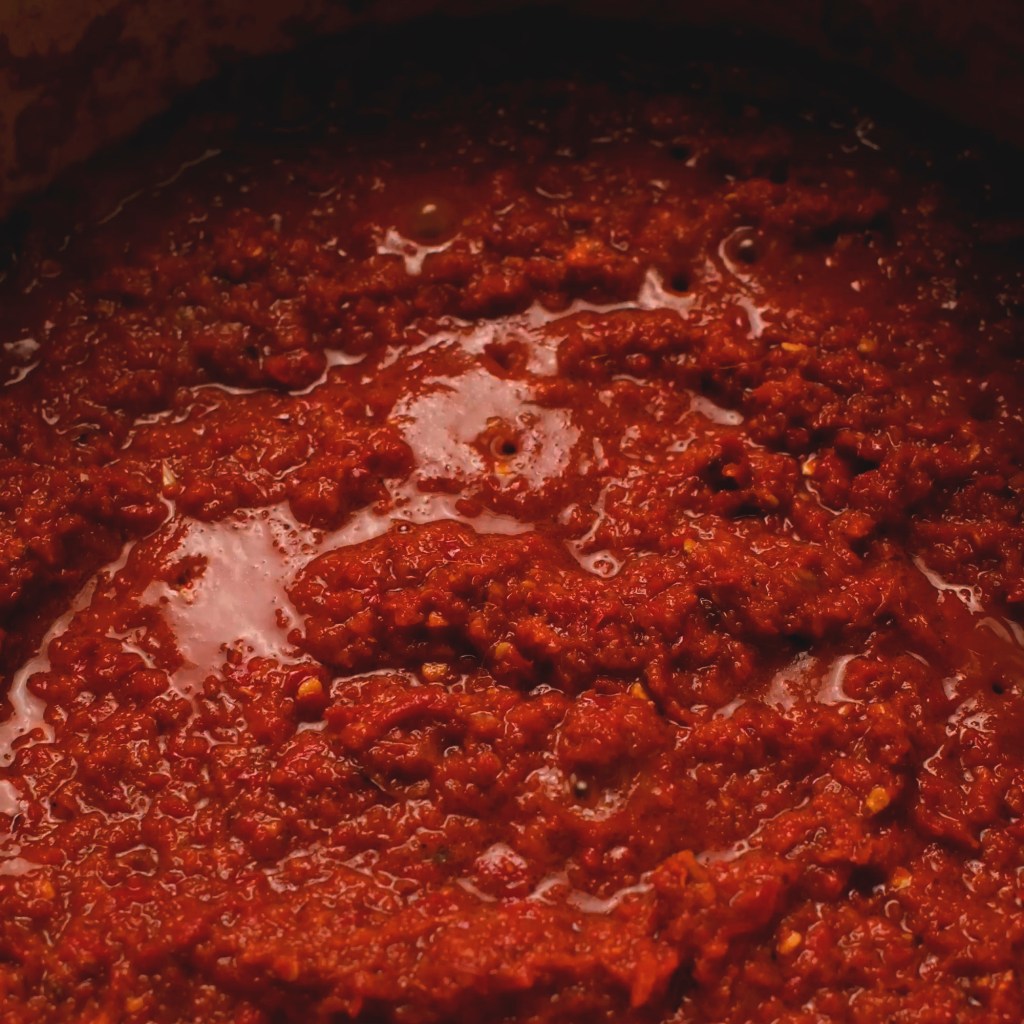
Rendang is eaten across Malaysia but it’s often described as an Indonesian dish. Turns out, this unassuming nomenclature has deep political and economic consequences.
In the 21st Century, Malaysia is contending with its own national identity. Just what makes up a national cuisine? In post-colonial states like Malaysia, Singapore and Indonesia, who gets ownership over dishes like rendang?
Renowned food historian Fadly Rahman’s research into the origin of rendang led to him being labelled a ‘betrayer’. Turns out, the famously Indonesian dish may not be solely Indonesian after all. Fadly warns of the dangers of national cuisines and the importance of acknowledging shared histories.
Credits
Hosted by Dr Noby Leong and Philip Gibson
Produced by Dr Noby Leong and Philip Gibson
Sound Design by Jack Barr
Satay? Okay! is produced by Kopi Productions Limited and supported by the Golden Chopsticks Scholarship, by the Oxford Cultural Collective Trust
Resources and References
Rahman, F. Tracing the origins of rendang and its development. J. Ethn. Food 7, 28 (2020). https://doi.org/10.1186/s42779-020-00065-1
Scottish Exports: Here are Scotland’s 10 biggest exports – according to latest figures, David Hepburn, The Scotsman, 13 August 2024 https://www.scotsman.com/business/scottish-exports-here-are-scotlands-10-biggest-exports-according-to-latest-figures-4740076?page=2
The Hainanese chicken rice debate: Singapore and Malaysia both lay claim to it – who’s right, or are they both wrong?, Bernice Chan and Alkira Reinfrank, South China Morning Post, 27 February 2021 https://www.scmp.com/lifestyle/food-drink/article/3123221/hainanese-chicken-rice-debate-singapore-and-malaysia-both-lay
Singaporeans and Malaysians at odds over hawker culture, The Straits Times, 22 August 2018 https://www.straitstimes.com/asia/se-asia/singaporeans-and-malaysians-at-odds-over-hawker-culture
Malaysia’s durian national fruit bid turns thorny as dream clashes with Indonesia’s claim, The Star, South China Morning Post, 19 November 2025 https://www.scmp.com/news/asia/southeast-asia/article/3333329/malaysias-durian-national-fruit-bid-turns-thorny-dream-clashes-indonesias-claim
Transcipt
Please note that this transcript may contain errors and typos
Thank you. Welcome to Satay. Okay. A podcast
about the foods that have shaped Malaysia. I’m
Dr. Noby Leong, scientist, food writer and broadcaster.
And I’m Philip Gibson, photographer and extreme
eater. And in this series, we explore the history,
cultures and cuisines of Malaysia, from the ancient
lands of Southeast Asia all the way through to
the creation of a modern day nation. In today’s
episode, we take a look at Rendang and the dangers
of a national cuisine. So get your knives out
because it’s time for Satay. Okay. Bit of an
evocative title today, Philip. What could possibly
be dangerous about national cuisine? Well, with
the rise of nationalism at the moment across
the world, here we go, Noby. Stoking the flames
of division. Go on, pray tell then, how on earth
is rendang divisive? What could be so dangerous
about rendang in national cuisine? Well, I quite
like it. Yeah, it is pretty good. But before
we get into that, before we get into the food…
That was an aggressive segue, but sure, carry
on. Over the course of this series, we’ve been
talking about the history of Malaysia. And in
the last episode, we finally got to the 21st
century, a time of relative stability and peace.
Don’t jinx it. I know, right? Yeah, I’ve got
my fingers crossed. Malaysia has been an independent
country for several decades now, having gained
independence from Britain. And we’ve got a whole
generation of people that have never lived through
those colonial days or those tentative first
few years of independence where there was a lot
of civil unrest and conflict. I would say you
probably have more than one generation at this
point. Yes, yes, yes. So these comparatively
peaceful times, I guess, have given people a
chance to reflect on what it actually means to
be Malaysian. Because the country is so new.
What does that mean? What’s Malaysia mean? What’s
the culture? To ruminate. The identity crisis
sets in. I know, yeah, but for a whole nation.
So today we’re going to look at that in the context
of the national cuisine of Malaysia and what
that means. And we’ve got a really insightful
interview with renowned food historian Fadli
Rahman for you. But before we get into that,
let’s look at our food of the day. And that is
Rendang. Yeah, well, I think if I’m carrying
on my series of I remember the first time I had
this, which used to be happening a lot in all
the episodes this season, I remember having Rendang
for the first time and it was in a colonial bungalow
in North Adelaide. We were invited to a dinner
party with some friends of Noby’s and the partner
of… your friend is Singaporean. Yeah. And I
believe his mother had come over and, as mothers
do, decided that she was going to be a good mother
and take care of her son and do a big amount
of batch cooking and cooked a ton of this rendang.
So as much as a lot of the meals that were cooked
that evening were prepared fresh, I think they
were worried that perhaps they were one dish
short for a dinner party and dug out one of the
tupperwares of rendang. Now, I think it was that
way where I put the first mouthful of this beef
covered in chilli and spices and what have you
into my mouth. and time stopped and I then spent
many months trying to harass this poor woman
to get this recipe off of her mother -in -law
to no avail but eventually came across a couple
of cookbooks and was able to sort of recipe test
it and get something close to this flavour memory
that I have, which is very distinct, which I
feel like I’ve never experienced with another
dish. For those that don’t know what rendang
is, I guess it is a type of curry, but there
are so many different styles that just to call
it a curry doesn’t quite do it justice. Curry’s
a political word these days as well. Yeah, so
rendang is sort of on this wet -dry spectrum.
On the dry end of the spectrum, you have a rendang
that is kind of like… a jerky where a meat
has been cooked in a spice paste sauce for so
long that it becomes very dry and the meat because
it’s lost all its moisture is preserved somewhat
like a jerky would be then on the other end of
the spectrum is the wet style where you’ve got
meat cooked again in a spicy coconut based gravy
and this rendang is commonly called kalio okay
so this one is a lot wetter you can spoon the
gravy over rice and enjoy it that way huge variation
in the types of spices that you use sure um some
are very heavy and star anise some are not and
depending on which region you go they’ll kind
of do their own thing. Yeah, I’m sure from Kampong
to Kampong they have different family recipes
and what have you. My mum’s version was, I guess,
a semi -dry style of rendang that she used to
make. Not so dry that there was no moisture,
but it was quite dry that there was no gravy.
Sure, okay. Yeah. It wasn’t, rice couldn’t soak
it up. No, no. Yeah. And it had a lot of desiccated
coconut in it, which kind of absorbed whatever
else. Like the oils coming out of the chillies
and what have you. Hers is what I would think
of as a classic rendang that’s served in most,
places in your opinion in my opinion yeah so
she would make a spice paste which had a lot
of chilies a lot of star anise she’d cook that
spice paste then add chunks of beef along with
coconut milk and cook that right down for about
three to four hours okay and then add the desiccated
coconut at the end to be totally honest with
you philip i really didn’t like this dish growing
up chalk and cheese like my mum was very good
cook very good at most dishes rendang was not
one of them Just trying to be honest, the beef
was always so tough that I think I lost several
baby teeth eating it. So I actually grew up disliking
rendang. Traumatized. A long time. for me to
find as an adult a rendang where the meat was
tender. And I was like, oh, this is what it’s
supposed to taste like. So every time I was like
recipe testing it, did you just wince at the
thought of it? Did you have to kind of psych
yourself up to sit down to it? No, I think it
was after we had that shared meal together at
the Singaporean house. And I was like, oh, this
is what rendang is meant to taste like. Yeah,
yeah. And, you know, when I was growing up in
Australia, rendang wasn’t a well -known dish.
It’s really popular now. Like, it’s to the point
in Australia where you can get packets of chips,
crisps. Oh, right, yeah. Rendang flavour. Yeah.
And I know that rendang hit the mainstream in
Australia when I turned on the radio. It was
there a few years ago. And the radio host, these
very ochre Aussies, was like, oh yeah, so I had
rendang the other day on the weekend. Well, they
call it rendang. I had rendang the other day
and just casually talking about their day. And
I was like, oh wow, this is now part of mainstream
Australian life. Yeah, I can only hope that that
sort of gastronomic diversity really does penetrate
the UK domestic market in a way that it has in
Australia. How much variety there was in Australian
restaurants. Yeah. But also people were willing
to eat it. It wasn’t niche. Well, yeah, in UK,
rendang is not that popular, though there has
been a very, very famous rendang incident in
the UK. How could I forget? In 2018, Malaysian
home cook by the name of Zaleha Kadir Olpin,
she made chicken rendang on MasterChef, the TV
show competition. One of the judges, Greg Wallace,
ate it and he described it as follows. I like
the rendang flavour. There’s a coconut sweetness.
However, the chicken skin isn’t crispy. It can’t
be eaten. And all the sauce is on the skin, so
I can’t eat it. Let me tell you, Philip, this
created a social media storm. And you had all
these Malaysians and Indonesians around the world
blasting Greg Wallace because of these comments.
Yeah, I think I quite like that. I think her
Twitter handle is thatrendanglady. Yeah, thatrendanglady.
And then, did she not go on to publish a book?
Yeah, she did. It’s called My Rendang Isn’t Crispy
and Other Favourite Malaysian Dishes. This is
a level of pettiness that I kind of absolutely
love. I mean, good personal branding for sure,
you know. And I think, and given that Greg Wallace
is on the out, she must feel incredibly vindicated
by all of this. I bet. I mean, so if you’re not
sure why this caused such a backlash, it’s not
supposed to be crispy. It’s a curry. It’s a wet
-ish dish. It’s a stew. It’s saucy. There’s nothing
in this description that would suggest that the
chicken should be crispy. It’s not like she made
fried chicken, which you expect should be crispy.
Furthering my point about the general ignorance
of rendang and other flavors in this country.
We need the population to be more educated. It’s
sort of like if you made a chicken pot pie or
something and you ate it and you’re like, oh,
there’s skin on this chicken and it’s not crispy.
I can’t eat it. That’s how ridiculous it sounds.
Yeah. No, it’s utterly mind -blowing. Yeah. So
yeah, Malaysians, Indonesians, I think we were
just bewildered. Confused. Why should it be crispy?
And I don’t know. I don’t think a lot of people
know what’s going through Greg Wallace’s mind,
though. But I think all of this points to how
important rendang is to Malaysians, but also
to Indonesians. Because as popular as rendang
is in Malaysia, I think rendang has somehow become…
one of Indonesia’s national dishes. And some
people go even further to say that it’s not just
an Indonesian dish, but a dish from Padang, a
place in West Sumatra, which is the heartland
of the Minangkabau community, sometimes called
the Minang community. So people often say that
rendang is a Minang dish. And so I remember a
friend of ours, Faiz, his dad is Minang, and
he was so fiercely proud of this fact that rendang…
is a Minang dish. And I remember distinctly having
a conversation with Faiz and he was really protective
of Minang’s origins. And he was like, that’s
definitely ours. I remember him just saying,
that’s definitely ours. So there is this ownership,
a feeling of ownership. Yeah, a dish grab for
one, instead of a land grab. Yeah, there’s this
like protectiveness. But it does kind of lead
to this discussion of what is a cuisine? What
is a natural cuisine? Who gets to own? certain
dishes because like malaysians also eat a lot
of rendang so why can’t we say it’s ours let’s
not forget the first time i had it it was made
by a singaporean yes well yeah it’s very popular
there too can’t deny that and yeah oh my god
so does that mean the best rendang i’ve ever
had is a singaporean rendang oh well maybe up
the singaporean you know good for you guys But
in terms of national cuisines, I’ve said this
before in the podcast that I don’t think Malaysia
has a singular unified cuisine. I think there
are multiple cuisines that all come from the
many different cultures. And if anyone has taken
anything from this podcast, I hope it’s the fact
that… It’s complicated. Well, that Malaysia
is diverse. Sure. And you have many, many diverse
communities. But when we have these conversations
about national cuisine, I think all that nuance
is lost. Right. you know no matter if we’re talking
about malaysian cuisine or you know italian yeah
i also think it is probably not to be a white
man white explaining here but it must be a post
-colonial response I mean, almost everything
in Malaysia is a post -colonial response. But
that’s what I mean, though. It’s like, you know,
if Nusantara had been allowed to exist in ad
infinitum or whatever, then, you know, nobody
would be sitting there shouting across the Strait
of Malacca, each other going, no, it’s mine.
Yeah, yeah. I mean, food is absolutely political,
as you know, that famous saying. And when it
comes to cuisine, when it comes to ownership
of food, there’s often a deeper political undercurrent
happening. in the subtext of these conversations.
And rendang is, I guess, a really good dish to
unpack what we mean by this political undercurrent.
And I’m getting to this danger. I’m getting to
the danger part of a national cuisine. Yeah,
we’re about to have like a World Cup or something
like that of ministries of culture. So in order
to unpack the concept of national cuisine and
how dangerous this concept can be sometimes,
we thought we would speak to an expert in the
field. So we packed our bags and headed to Indonesia.
We visited the city of Bandung on the island
of Java, where we met with food historian Fadli
Rahman. So he’s probably one of Southeast Asia’s
most renowned food historians. And everyone in
Indonesia knows him. Malaysia and Singapore,
he’s very, very highly regarded. And often when
I watch panels with Fadly Rahman, let’s say there’s
like three people on the panel. And if there’s
like a difficult question, all the panelists
just like turn to Fadly. Because he knows so
much. He’s written numerous books and published
various articles. And among his works… He wrote
a paper in 2020 titled, Tracing the Origins of
Rendang and its Development. So who better to
talk about food ownership than the man who wrote
the paper on Rendang’s origins? Here we go. Hi,
my name is Fadly Rahman. Now I’m working as a
food historian and also a lecturer at the Department
of History in Padjadjaran University in West Java.
And I’ve published three books about the history
of Indonesian food. and some pieces of articles
in media and also in scientific journals. So
when it comes to rendang, what does the evidence
tell us about its origins? Rendang first recorded
in the historical sources in the 16th century
in the state of Malacca. So it’s not from West
Sumatra or Malaysia, but in the state of Malacca.
When the people of… West Sumatra or Minangkabau
claim this from their land. Actually, this start
recorded in 19th century in the colonial sources
about the wandering culture of the Minangkabau.
And when we try to prove before 19th century,
the historical record is not available. So if
Rendang isn’t necessarily from West Sumatra,
why has this claim become so widespread? I never
found about this food claim in 20th century.
But in 21st century, people can share false history
about their food culture. Fadly’s discoveries
on Rendang are a reminder of the difficulties
in determining a food’s origins. When we talk
about food in history, most of the historical
narration is not recorded in literature. it’s
not easy to find since when rendang exists in
malay archipelago and who is invented rendang
there is no clear information about who invented
this food so that was just a quick overview of
rendang’s origins from fadli ramen i just want
to summarize and expand upon what fadli just
said sure so the first written record of rendang
was from the early 16th century in a text from
the malacca sultanate so not from anywhere in
the Indonesian archipelago. The text is called
Hikayat Amir Hamzah. It mentions rendang, but
it doesn’t describe it. Okay. This text is being
used to spread Islam in the region to encourage
Malaccan soldiers to fight and rise against the
Portuguese invasion, which was happening at the
time. And it’s in this that meat consumption
practices are mentioned and rendang is described.
And goat meat rendang is specifically mentioned.
So the existence of this text is already contradicting
this idea that rendang belongs to Indonesia,
that rendang belongs to West Sumatra and the
Minang community. And in fact, in the 16th century,
eating meat wasn’t actually very common in West
Sumatra. During this time, the diet of most people
was rice and fish because animals weren’t raised
extensively as livestock. and you also had hinduism
and buddhism being much more prominent at this
time which also discouraged meat consumption
okay rendang does start to appear in west sumatra
from about the 18th century and we know that
from european texts but the conclusion that fatally
makes is that the rendang being prepared here
is prepared with the intent of preserving food.
And importantly, this version of rendang has
many influences from the Malay world, but also
from the Indian and Portuguese cultures. Of course,
because they didn’t have chili, and the chili
was what was actually preserving the meat. And
there’s also the stewing cultures in Portugal,
of which, you know, there’s parallels with how
rendang is made today. I mean, I’m gonna… I’m
just going to kind of like advocate for probably
the noose and turns here and I’m saying that
the idea of stewing things probably wasn’t a
uniquely European phenomenon. From the 19th century,
rendang starts to become associated specifically
with the Minangkabau people of West Sumatra.
And at this time, there’s this widespread migration
of Minang people to the Malay Peninsula. These
journeys may have taken a few weeks and a dish
like rendang becomes perfect for these long voyages
because the meat is being preserved. So undoubtedly
rendang becomes a very important part of this
Minang culture and identity, though the dish
has lots of influences. This research is actually
quite sensitive because of the popular narrative
that’s been spread through the internet and like
Bradley said just at the end, it’s only been
in the 21st century that people have started
to say that Vinod belongs to Minangkabau people.
Right. 20th century and before that, there was
no such ownership. You know, no one was sort
of being overly protective about their dishes.
So when information like that uncovered by Fadli
appears and it contradicts this widely held belief,
people get understandably defensive. Yeah, fake
news. Yeah, I feel like this episode is going
to be quite rage -baity. But I think it’s important
to understand that as vocal as people can be
on the internet, and as much as this can seem
like an attack on people’s personal identity,
there is a deeper colonial narrative, which you
sort of alluded to at the beginning of the episode.
I don’t think I uncovered the concept of post
-colonial drama. No. But, you know, there’s a
deeper narrative here about how Malaysia, Singapore
and Indonesia’s independence movements in the
20th century have now shaped how countries think
about their own cuisine and how countries claim
food as their own. And so let’s go back now to
Fadli Rahman for more on this topic. We have
the term gastro diplomacy. to use food as the
diplomatic tools for the peoples in Southeast
Asia. This related with the national pride of
course. When information flow so easy, true or
false, and they feel that we need to claim this
Sendang or rice to make their national identity.
After independence, Indonesia, Malaysia and Singapore
has their own desire to make their own national
cuisines and the cookbook author made national
cookbook and share this to public and they believe
the foods like rendang is owned by Indonesia
or Malaysia and Singapore and this of course
the fallacy of the national identity because
When we talk about national cuisine, this is
about the imagination that food represents the
spirit of nationalism. This does not exist in
the 19th century or in the long centuries before.
This shows that the desire of the nation -states
in Southeast Asia is about how to reduce their
ego to claim this food as their own all right
so just a quick recap there because there was
actually quite a lot in that very short segment
there with fadly Basically, for Southeast Asian
nations like Malaysia, Singapore, and Indonesia
that only gained independence in the mid -20th
century, there’s this huge desire for the governments
of these countries to develop their own national
identity that distinguishes them from their neighbors.
So cuisine then becomes part of nationalism.
And that then leads to erroneous claims that
certain foods belong to certain cultures to the
exclusion of others. This has been a particular
issue in the 21st century when the internet’s
come about and people could spread false claims
really, really easily. Yeah. I think there’s
probably also something to be said about academic
institutions or even governments that are…
funding research in such a way that obviously
favors themselves. And I mean, I know that academic
bias is probably not supposed to be a thing philosophically,
but I’m sure it absolutely is a thing. I’m sure
there are people that might be doing this, but
I think there are much more… Bad actors. Yeah,
there’s bad actors in everything, but… We don’t
actually need to look that deeply to see this
nationalism. The prejudice almost. Yeah. So there
have been lots of examples in the political arena
where governments have sort of had slinging matches
with other governments based on national cuisine.
Sure. So in 2009, the Malaysian Minister for
Tourism said that Hainanese chicken rice was,
quote, uniquely Malaysian and had been, quote,
hijacked by Singapore. This is our most controversial
episode yet, maybe. Well, it’s not, it’s not,
it’s about, I think I’m actually doing the opposite.
I’m not trying to stoke controversy. I’m actually
trying to stoke togetherness. Harmony. Harmony,
because like in chicken rice, that is a Malaysian
and a Singaporean dish. Why can’t it be both?
That came from China. Another example of governments
engaging in these nationalistic cuisine debates
ignited in 2021 when Singapore successfully bid
UNESCO to grant intangible cultural heritage
status to its hawker centres. Hawking is not
remotely unique to Singapore, of course. And
so this did upset Singapore’s neighbours. And
then another example more recently was a spat
over durian. In November 2025, the Indonesian
Coordinating Minister for Food Affairs claimed
durian is more Indonesian than it is Malaysian.
And their evidence was that Indonesia has larger
exports. So in each of these examples, the disagreements
over food providence and ownership is often a
smokescreen for a deeper underlying tension.
because of either political disagreements between
countries or often because of economics. Right,
of course. So food is not just food. It does
contribute a lot to the economy. And if you think
about why people visit Malaysia or Singapore,
it’s often because of food. Right, yeah. So if
countries and governments can claim that certain
dishes are theirs, that can help to attract tourists.
Sure. And it can also help to boost exports.
So for instance, if Malaysia… is known as the
heartland of durian. Right. That will allow durian
exports to potentially earn more money. Yeah,
I guess I could associate prestige with those
particular crops as well. You don’t want to eat
durian from there, you want to eat it from here.
Yes, exactly. So, you know, in 2018, the Chinese
market for durian was estimated at $1 .1 billion.
A lot of durian. We’re not talking about small
amounts of money or trivial sums here. This is
why gastro diplomacy becomes such a big thing.
Yeah. And I guess another good comparison is
if we take a look at Europe and if we take a
look at Scotland. Right. What are some of Scotland’s
most iconic foods? Salmon beef whiskey. And why
do people visit? Because of those things. Don’t
think people are exclusively coming here for
haggis. I think that’s got a pretty nasty reputation.
Well, they come here certainly to try whiskey.
They visit the distilleries and the whole industry
around this. Sure. And Scotland’s main export
is whiskey. It’s worth 5 .6 billion pounds per
year. And it’s the second biggest export behind
oil. But it’s a… Bigger export than gas. Well,
that’s probably to do with the geology of the
North Sea. But yeah, anyway. But there’s also
Scottish salmon and other seafood worth £1 billion
per year in exports. Yeah, I think our langoustine
and things like that are probably revered. And
so what would happen then if England suddenly
started to claim that whiskey is English and
it’s always been English and that Scotland has
hijacked its culture? That actually put like
a surge of rage through me there. So I think
something actually happened recently where there
was trying to be like kind of English whiskey
distilleries. And don’t get me wrong, I’m sure
like you can make whiskey in England. Of course
you can. But like, you know, let’s just focus
on like bourbon and rye from America, Japanese
whiskey and Scottish whiskey. Can we not just
have something England, please? So I think from
the outside, all of these food wars, whether
they occur on the internet or whether they…
occur on the… Houses of Parliament. Yes. Can
seem funny to an outsider. Yeah. But there is
that deeper seriousness that’s going on there
between these post -colonial states in particular.
And so I guess you do have to ask yourself, is
there a better way? Are you about to extend all
the branches across all of the various seas between
islands in Nusantara? Why not? Okay, good for
you. If you’re enjoying this episode, follow
us on social media at SatayOK. We’ve got more
stories and more food to share. You can also
find links to give us a donation or tip. We’re
an independent podcast and every ringgit, dollar
and pound goes directly to supporting our work.
So give us a follow and say hello at SatayOK.
There’s this… A concept in Southeast Asia called
Serumpun. This is a concept that Fadly Rahman
talks about as an alternative to the food wars
and a way forward to quell tensions between different
countries and to bring these countries together.
Right. So let’s go to Fadly to explain this concept
of Serumpun and how it can help. Serumpun is
the same roots of culture, language, and also
a culinary culture in Southeast Asia, especially
in… Indonesia, Singapore, Malaysia, Southern
Thailand, and also part of Philippines. We can
find the same food with the same lexicon, but
we can taste the different tastes, of course.
But the lexicon is the same, such as cendol,
we can find in Indonesia and also in neighbor
countries. And also laksa, bingka, bingka, kue
bingka, and… rendang of course when we talk
about a srumpun or semrut culture we must try
to comprehend this term not only in present day
but also from the pre -colonial colonial to the
post -colonial because the term of srumpun is
relatively new not an old term yeah this relatively
new and used since 1960s, after the political
tensions between Indonesia and Malaysia. While
the term Serumpun is new, the spirit of Serumpun
is ancient. And in the pre -colonial times, before
the establishment of country borders, there was
a harmonious spirit across the archipelago. As
a historian, I read historical sources in the
pre -colonial era, and I try to compare with
the colonial and post -colonial era. And, you
know, living culture at the pro -Canada era in
Malay countries is so harmonious. They try to
make connections by the trade activities and
also the political cooperation between kingdoms
in Malay countries. Commodities such as palm
sugar, rice, and spices, they move inter islands
and used by the people. This represents about
the spirit of srumpun at that time. If we refer
to some of historical works just like by Anthony
Raitt and also Akira Matsuyama about the condition
in Southeast Asia in the context of food culture,
it’s so wonderful because people move so freely
and there is no border or boundaries between
peoples in the archipelago and this is the context
of the Serumpun. But you know during the colonial
era when British rule in Malaysia and also in
Singapore and Dutch rule in Indonesia, gradually
the condition is changed. When the colonizer
doing the separations between regions, making
border in Southeast Asia. This shape the constructions
of the peoples and the identity of peoples that,
yeah, we have difference. And this influence
also the daily culture, including food. So colonizers
embellish differences between different communities.
However, European colonizers, as well as other
foreign influences, are in some ways also part
of the Serumpun spirit, because all of Southeast
Asia was affected. When we talk about the influence
from the Chinese and also Indian and Arabs and
actually Europeans here, the people in archipelago
accept their culture to be part of the food culture
today. When we mentioned… For instance, Roti
Canai from India and also Martabak Indonesia
from Arab and dining etiquette such like in Indonesia
Prasmanan. This is not originally from Indonesia
but absorbed from European culture. We have to
clarify this foreign influence as a part of our
food culture because in the context of food culture
there is no pure culture. Despite this shared
history, the spirit of Serumpun has been forgotten,
replaced with nationalism. So what’s the way
forward to acknowledge this shared history and
shared culture? We need to sit and discuss together
how to rebuild the concept of shared or same
roots culture in Southeast Asia. the first thing
is how to deconstruct the history of the national…
identity because when the countries after colonialism
they try to invent a new identity as the nations
and they forgot about the shared identity that
has already existed since long long time ago
this is a dilemma i say because many countries
after independence has their own national identity,
including in their national cuisine. This accumulated
to be a conflict, of course. I concern to the
political tension between Indonesia and Malaysia.
Because since 1960s until today, the tensions
between these countries always happen, not only
in politics, but also in the cultural life. In
the case of Rendang, in 2019, I wrote and published
the article of rendang. And I tried to clarify
this between people in Malaysia, Singapore, and
Indonesia. This proves a shared culinary culture.
What’s funny, the Indonesians here say that I’m
a betrayer. Because why didn’t claim this from
Indonesia, especially from West Sumatra? Despite
the need to acknowledge this shared history,
there’s pushback. So the challenge is to untangle
food from other aspects of national identity.
Politics and economics has a huge influence to
change our mind. Can you imagine if we compare
with the national anthem and also national flag?
Yeah, it’s different. This created after independence.
But food is created long, long time ago before
national. flag or national anthem. This kind
of logic, historical logic to make a differentiation
between food and national flag or national anthem
as the part of national identity is different.
Food is very different. The centuries before
pre -colonial era, there is no discourse about
food as the national identity of the Malay people.
No. So things are messy. National cuisine, Flags,
anthems, they all contribute to identity. But
in some ways, how we compartmentalize cuisine
isn’t a symptom of nationalism per se. It’s actually
a symptom of colonialism. colonial cookbook to
be national cookbook. So this is the process
how national identity in the context of cuisine
has emerged after independence. So complex, you
know, so complex. So colonialism didn’t just
create borders and exploit resources and people.
Colonialism completely altered how Southeast
Asian people viewed themselves. The legacy of
colonialism is so complex, you know. we need
to try to clarify and purify about historical
context behind our food culture yeah how to deconstructing
the history yeah and make the fresh history to
with the awareness for the peoples that yes we
have the same roots in our food culture Another
quick summary, Philip, because I know that there
was a lot there as well. We’ve got this concept
of srumpun, and this is a concept which kind
of means the same root. So like stalks of a lemongrass,
we’re all connected to this same root because
of our shared history. The islands of archipelago,
all those peoples and all those cultures have
that shared history. But with the arrival of
Europeans, our understanding of ourselves changed.
Notably, we had the Anglo -Dutch Treaty of 1824,
which separated Ireland, Southeast Asia into
a British sphere and a Dutch sphere. And so effectively,
you cut off contact between the Malay Peninsula
and the islands of Sumatra and Java, which ended
up creating new cultures and countries, Malaysia,
Singapore and Indonesia. So when we think about
colonialism, we often think about resource exploitation.
So rubber and tin and spices. Or the exploitation
of people. We think about lives taken away. But
it’s also the case that colonizers changed people’s
perceptions of who they are. Through their creation
of borders, they divided people and made people
see themselves as different from each other.
Yeah, distinct. When previously they thought
of themselves as… together the same malaysia
singapore and indonesia are products of colonialism
and how we view our own cultures and our sense
of selves is also a product of colonialism when
we interviewed family and he was talking about
this so it’s sort of this quite uncomfortable
idea well the fact that he was branded a traitor
yeah i mean yeah you know having sat through
the interview with yourself and fadley and listen
to all of this and become educated myself on
his paper and what have you and then speaking
to other Indonesians about it some of them just
completely flat out just won’t have it they won’t
accept yeah there’s a possibility that it could
be anything else yeah very absolute in their
belief so I can totally understand that if that’s
the level of resistance that you’re facing to
the idea of rendang of rendang yeah and it’s
you know country of origin but surely then his
paper and his own belief system is that we should
almost disregard any of that because it’s such
a post -colonial concept that it is actually
all about yeah the fact that there were sea traders
going between the islands and what have you and
actually like you know as much as there was distinctness
between a lot of the ethnic groups that live
across those islands i mean if we’re going to
say you had thousands of years of shared history
and shared passing of yeah ingredients and recipes
and culture yeah um that actually it’s It’s more
straightforward, but also more complex at the
same time. Yes, that’s what’s going through my
head too. There’s two phenomenons going on here.
You’ve got European distinctness, and then you’ve
probably got Southeast Asian distinctness, as
in inter -island, inter -culture, inter -ethnicity.
Because on the one hand, for me, I’m like, oh,
this is deeply uncomfortable to think that my
whole identity is shaped around colonizers. Right.
But on the other hand, it’s comforting knowing
that there is something else there. based on
a very ancient shared history that goes back
thousands of years of people living quite harmoniously.
I think there’s a lot of ways that you can view
this and interpret what pre – and post -colonialism
looks like on national identity, and even just
the concept of it. And I think that what seems
to be happening is that they are breaking down
the barriers of post -colonialism. Well, some
people are, because what’s interesting is that
the systems that we have today to kind of protect
our culture and our traditions are actually perpetuating
this colonial legacy as well. So not to complicate
things any further, but we continued our discussion
with Fadli Rahmon, who spoke about intangible
cultural heritage programs. So these are programs
run by UNESCO and all these other different organizations.
So international organizations as well as national
governments? Yeah, with the intent of… preserving
tradition, but sometimes it can perpetuate colonialism.
Because it’s reinforcing distinction, which is
what you’re trying to unpack. So here’s Fadli
Rahman again, sharing his thoughts on preserving
intangible cultural heritage. patented the food
because they worry the ancestor culture will
be lost will be disappear in the future but because
the consequence is very serious in the last time
in malaysia success to patent nasi lemak to be
interchangeable heritage breakfast culture in
malaysia yeah and indonesia you know we have
same breakfast culture here So in an effort to
preserve culture, organisations like UNESCO can
actually perpetuate colonial legacies. But there
are alternatives, and Fadli went on to speak
about the spirit of ASEAN, the Association of
Southeast Asian Nations. We have ASEAN, of course.
The spirit of ASEAN actually is very good to
rebuild the spirit of this Serumpun. When we
talk about ASEAN, we just talk about… political,
economic, talk about the macro issues. But we
never try to approach the daily life of people
in ASEAN. We can approach it by food culture,
of course, because every day we eat. When we
talk about rendang or nasi lemak, we can say
this as the common culture between countries.
And we can propose together to UNESCO. Not only
from Minangkabau, not only from Malaysia, but
we can propose together. There is a model in
the fasting culture in some countries in Turkey
and also Arabic countries. They propose together
and UNESCO has agreed with their purpose to be
the common culture. So we can do this like this
in Malay Archipelago of course. The mission of
ASEAN when founded in 1960s is about to make
connection between countries but the issues about
the claiming of food culture at that time before
2000s not existed if we compare with present
situations so we need a new narrative one that
acknowledges our common ancestry and thankfully
there are people already dedicated to sharing
this story In Singapore, Khidr Johari has been
doing the Malay -Singapore cookbook. And this
is not only about Singapore’s identity, but he
shares about the spirit of the same roots between
Singapore and the other neighbour countries in
Southeast Asia. This is such an important model
to spread by… Everyone, not only through the
literature, but also documentary, popular media.
This is so good for ASEAN to use this as the
cultural diplomacy in Southeast Asia. And that
is Fatley Rahman, food historian and all -round
expert. I remember sitting in that interview,
and as he was talking, I could… feel my whole
world view of food shattering before my eyes
because he offered this perspective that I just
hadn’t considered before of how we think about
food and how we think about ourselves. Yeah,
no, definitely. And I think as an outsider, I
think it definitely kind of made me think about
my own upbringing and the food that I eat and
how national identity and national cuisine works
in Europe. French versus Spanish versus Greek
versus Italian versus whatever. No, really, really
interesting and really insightful. And thought
-provoking. So I think in this 21st century,
there is that symptom of the fact that we’ve
got a whole generation, a whole two generations
that have only ever known what Malaysia is in
this relatively peaceful and stable time. We
sort of forget that there was so much before
that. A massive shared history. So I guess to
go back to our food of the day, rendang. Well,
kind of to some degree, I suppose. Nobody Noby.
Nobody owns it. Nobody and everybody. All cultures
across Southeast Asia have a connection to Rendang.
And it’s better that we acknowledge that shared
history, that shared culture, than it is to start
grabbing things for ourselves. Yeah. I think
we’d all be better off for it. And so Nobby’s
message is, if you live in Malaysia, Indonesia,
Singapore, write to your local MP and tell them
to stop it. What could this campaign slogan be?
I don’t know. I don’t think it’s my place to
comment. I think I’ve said enough on that matter
today. No, Phil, it’s been a pretty monumental
season. Sure. At the start of the season, we
looked at the history of Borneo, exploring the
unique cultures and foods there. In the middle
of the season, we looked at the events of the
20th century, the Japanese occupation, the emergency,
independence. And then we’ve come to the 21st
century. when Malaysia is a fully formed nation.
Yep. Next week is our final episode of the season.
And we’re going to naval gaze even more. Oh God.
The 21st century, particularly the last few years,
I think, has seen a rise in identity crisis,
I think. And not just me. I think, you know,
the collective diaspora are kind of wondering
who we are as individuals, as cultures and as
countries. Okay. But why? Where did this sort
of… Yeah. Is this a, I’m not Gen Z, but is
this a Gen Z thing? Is this a millennial issue?
No, I think it’s a human phenomenon, Noby. But
why now, you know? So in the next episode, we’re
going to look directly in the mirror in an episode
entitled Street Food and the Missing Malaysian.
So please join us for the final episode of the
season, the last time we’re going to be together
this year. Don’t miss Satay. Okay. Thank you.

