
18. Hawkers and the Aftermath of Independence – Satay? Okay!
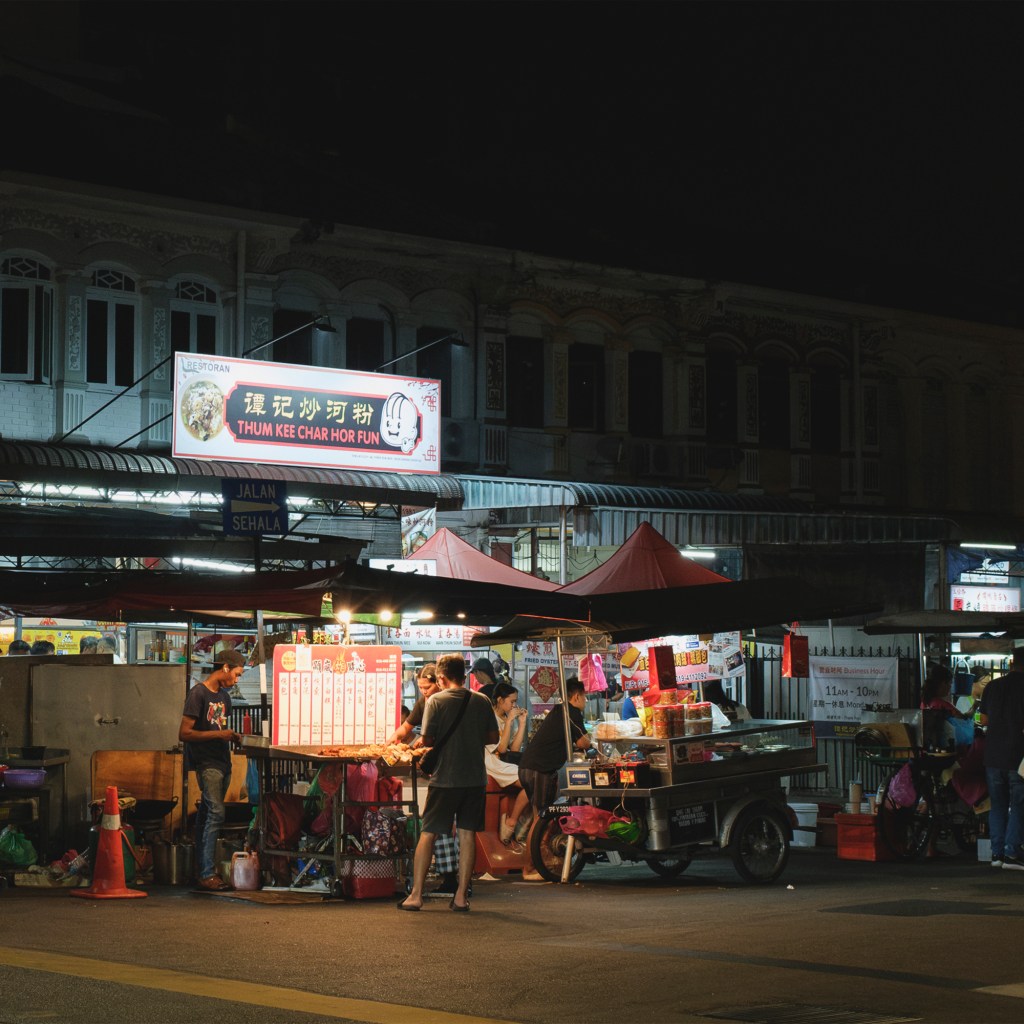
Hawkers are the life blood of Malaysia’s cuisines and custodians of some of the nation’s most iconic dishes. Yet few realise the important role that hawkers played in the post-war years when the fledgling nation was on the brink of starvation.
After Japan surrendered and World War II ended, Britain regained control of Malaya. Calls for independence grew, yet Britain did not want to let go of its most economically-important colony. And so, conflict continued and an Emergency was declared.
Academic Kar Yern Chin is the author of Modern Pangs. His research into the politics of food and hunger reveal the enormous challenges in feeding a starving population after Malaysian gained independence.
Credits
Hosted by Dr Noby Leong and Philip Gibson
Produced by Dr Noby Leong and Philip Gibson
Sound Design by Jack Barr
Satay? Okay! is produced by Kopi Productions Limited and supported by the Golden Chopsticks Scholarship, by the Oxford Cultural Collective Trust
Resources and References
A History of Malaysia (2016), Barbara Watson Andaya, Leonard Y. Andaya
Borneo: The History of an Enigma (2026), Olivier Hein
Modern Pangs: The Politics of Food & Hunger After Merdeka, 1957–1969 (2025), Kar Yern Chin
Malaya – Britain’s forgotten war for rubber, Mark Curtis https://www.ehm.my/publications/articles/malaya%E2%80%94britains-forgotten-war-for-rubber
How Britain fought a guerrilla war during the Malayan Emergency, Imperial War Museum https://www.iwm.org.uk/history/cold-war/end-of-empire/malayan-emergency/how-britain-fought-a-guerrilla-war
British Malayan capitalism, 1874–1957: An economic-historical perspective
Dr Elsa Lafaye de Micheaux https://www.ehm.my/publications/articles/british-malayan-capitalism-1874%E2%80%931957-an-economic-historical-perspective
Clairmonte, Frederic F. “Malaysia: Development for Whom?” The Malaysian Economy: Structures and Dependenceby Khor Kok Peng. Economic and Political Weekly, vol. 19, no. 29, 1984, pp. 1146–49. JSTOR, http://www.jstor.org/stable/4373434. Accessed 23 Aug. 2026.
Revealed: how Britain tried to legitimise Batang Kali massacre, Mark Townsend, The Guardian 6 May 2012 https://www.theguardian.com/world/2012/may/06/britain-batang-kali-massacre-malaysia
Relatives lose fight for inquiry into 1948 Batang Kali ‘massacre’, Owen Bowcott, The Guradian 25 November 2025 https://www.theguardian.com/law/2015/nov/25/relatives-lose-fight-for-inquiry-into-1948-batang-kali-massacre
Transcipt
Please note that this transcript may contain errors and typos
Thank you. Welcome to Satay. Okay. A podcast
about the foods that have shaped Malaysia. I’m
Dr. Noby Leong, scientist, food writer and broadcaster.
And I’m Philip Gibson, photographer and Waukei
whisperer. And in this series, we explore the
history, cultures and cuisines of Malaysia, from
the ancient lands of Southeast Asia, all the
way through to the creation of a modern day nation.
In today’s episode, we take a look at hawkers
and the aftermath of independence. So grease
up those tricycle wheels and get ready for Satay.
Okay. So Noby, what are we talking about today?
War crimes. Oh, good. Yeah, it’s a bit of an
intense episode today, Philip. That’s all I can
really say. Not another one. Yeah, I can’t really
prepare people any other way, but not to dissuade
people. It’s, of course, very, very important
to talk about this history because a lot of this
history is covered up, I’m going to say. Right,
yeah. Even if it isn’t covered up, it’s not talked
about in the same way that other, you know, Western
wars are talked about. Oh, so the West have covered
it up. Of course, Philip. Not again. So in the
last episode, we looked at Malaya during World
War II and the Japanese occupation. Today, we’re
going to continue that history to examine what
happened after that. So we’re looking at the
period from about 1945 to the 1960s. Okay. So
spoiler alert, obviously, it was not a rosy time.
No. But before we get into that, let’s look at
our food of the day, that symbol that connects
us to the past. And in this episode, it’s not
a food at all, but the chefs that make the food.
We’re talking hawkers. Oh, yeah. So hawkers are
probably Malaysia’s most prominent food ambassadors,
I’d say. Like, if you’re a tourist and you’re
about to go to Malaysia, chances are one of the
reasons why you want to go to Malaysia is to
eat hawker food. Yeah, so I suppose for most
Westerners, they’re… most recent insight into
Eastern culture has probably been through Crazy
Rich Asians. And when they arrive in Singapore,
the first thing they do is go to a honker centre.
So that immediately sort of, and actually that
scene like for a couple of minutes or whatever,
when Henry Golding’s running about, let’s get
this, let’s get this, let’s get this, let’s get
this. Like it’s such a celebration of this kind
of food. serves up Southeast Asia on a plate
kind of thing. And that really is what it’s like.
Like whenever I land in Malaysia and the first
thing I do is normally go to a hawker center.
And if I’m with my uncle, he will just like get
up and start ordering everything to the table
because he loves eating with people. He loves
seeing people eat. And it just becomes like a
buffet and you’re still recovering from jet lag.
Yeah. I’m not complaining. No, and neither of
us speak Malay or Chinese properly. And we have
absolutely no idea what the hell is going on
when he’s just basically putting wads of notes
into people’s hands. You’re like, well, what’s
going to come out? Whether it’s satay, whether
it’s, you know, hockey and me, whether it’s,
you know, wonton and dosu for anything. So for
those not familiar with hawkers. I would say
a hawker is an independent vendor that sells
good quality food at affordable prices. And it
can be ingredients like a green grocer, but typically
most people think of like cooked food. Right.
So hawkers typically specialize in just one or
maybe a small handful of dishes. And they can
be found in established hawker centers, night
markets, within businesses like copy TMs. Yeah.
And also just like pop -up venues on the side
of the road. Yeah. I feel like for most people,
the version that, is probably the most touristy
is like the ones that are like you know probably
undercover thanks to the equatorial rain and
uh yeah it’s it’s like little kind of pigeon
holes almost like they’re they’re only like what
two by two meters like they’re tiny tiny kitchens
and they’re literally just holes in the walls
but it’s just like you know if you’ve got like
a hall it’s literally wall like lines the walls
yeah and it’s just communal seating in the center
of it and um like a food center food court sorry
in in western cultures but yeah but the hawkers
that are there are just experts in what they
do and to me often like old school mum and dad
sort of things that have just been doing it forever
like i think younger people are definitely coming
into it but yeah i feel like whenever i’m there
it just seems to be old folk just uh -huh you
know taking your money and giving you something
It’s taken. No, no, it’s a transaction. You’re
right. Yeah, I don’t know. I just feel like when
I’m in Singapore, it’s always some sort of cantankerous
old woman that’s standing there and she just
kind of barks a number at you and you just put
the notes in her hand. And then two minutes later…
Yeah, something gets thrown down at the table.
Well, you know, when something is that cheap,
you can’t pay for like… I’m not expecting to
pay for service. I’m paying for delicious food.
What are some of your favourite hawker dishes?
Okay, so chakwe chow is a big one. I feel you
can’t go to a hawker centre and there not be
at least one satay vendor. And so meat on a stick,
baby, and name of the podcast. So it’s pretty
ubiquitous. What else? I guess you could probably
get laksa at a hawker centre. Yeah, definitely.
When I’m in Penang, they have curry mee, right?
Which is their kind of take on… Well, they
have their own Penang -style laksa, but it’s…
They have Hokkien mee, which is a noodle soup.
Right, I know. And I’m going to get absolutely
blasted for my ignorance here. I definitely am
like pro Hokkien mee. I should probably know
what it is. But what the hell am I thinking of?
What’s this soup? It’s like a coconut cream soup
and it’s got like… No, that’s a different dish.
What’s that called? See? It’s on a t -shirt.
You bought the t -shirt. No, that’s not that
one. I know what you’re talking about. It’s not
that one. Curry mee. Wonton ho. Is that what
that is? Wonton ho. Is that how I’m saying it?
Ho. Ho. Ho. Ho. Wonton ho. Which is another kind
of noodle -y soup with wontons in it, of course.
Wait, are you talking about… No, what’s the…
I don’t know. We went to that green… Okay,
there’s Wat Tan Ho. We went to that green tiled
cafe. I think I then got… That’s white mee.
White curry mee. Yeah, but there’s red curry
mee. No? So there’s Hokkien… One of these is
dry and one of these is wet. You’re talking about
the dry dish. Okay, so in Penang, you’ve got
Hokkien mee. Uh -huh. But you also have Penang
white curry mee. Which is their version of laksa.
Well, it’s not their version. Their version of
laksa is asam laksa. But it’s adjacent to laksa.
I guess so, yeah. Okay. In the sense that it’s
just like a spicy noodle soup. I think this all
goes, like, hawker food is so regional. Right.
And so sometimes you’ll talk to someone about
the same dish, what you think is the same dish,
because they’ve got the same name. Particularly
fire. Yeah. But they’re radically different dishes.
Okay. What else is good? I’m trying to think.
But even just like going out for breakfast, I
feel like you go to these places and kaya toast.
I guess you’d get that in like a small, well,
that’s more like a kopitiam, isn’t it? Yeah,
yeah. But that’s like a scaled down version of
a hawker centre because sometimes you go into
a place and they maybe have two or three vendors
with little carts that just sort of do little
noodley dishes or do the toast. Like one stall
only does drinks. Yeah. So, okay. So if you’re
going to Malaysia and you’re going to a hawker
centre, this is how you order at a hawker centre.
Find a table, sit down, right? Then wait for
someone to come. That person isn’t taking your
food order, they’re taking your drinks order.
Yeah, okay. There’s usually like a really big
sign somewhere with the drinks. And it probably
has a hundred options on it. Yes, but most of
the drinks are like standard across Malaysia.
Yeah, you’ve got your copies and your teas. Yeah,
you’ve got very soft drinks if that’s your thing.
I always like limu ice, which is like a lime
drink. Oh yeah. They will come take your drinks
order, pay them in cash. Generally, these places
are more cash driven rather than car driven.
Well, that could be changing. That could be changing.
And then you can go order your food. So hopefully,
you know, either reserve your table somehow or
get your friend to sit down at the table with
you. Then go around to all the stalls, pick out
what you want, then point to the table that you’re
at. And then you either pay that hawker vendor
up front or you’ll pay them when you get the
food at the table. Usually you pay when you get
the food at the table. It goes to show how utterly
oblivious I am when I’m in these centres. Yeah,
because you don’t pay for the food. Eh, that’s
not true. Sometimes I’m a big boy and I go up
and get my chocolate chow or whatever. So that’s
how you would probably order. So there’s your
insider tip. How many times have I eaten at Hawker
Centre? Anyway. I think we’re probably romanticising
the Hawkers a lot. Obviously, the food is fantastic.
And as a visitor, it’s so exciting to see Hawkers
cook in front of you because, you know, all the
kitchens are right in front of you, basically.
Right. But there is sort of like, you know, being
a Hawker chef, such hard work. Right. It’s long
hours, low pay. Usually you’re often up really
early. But this is the other side to hawking,
which like hawkers actually provide a very important
like social function in that they provide good
quality, cheap meals to the public that are very
accessible. Yeah. So my uncles and aunties, for
instance, would always buy hawker food for my
grandparents. Well, when my grandma was alive.
Oh, okay. Every day she would be delivered hawker
food. Oh, right. As a very cheap way to feed
her. right basically because she couldn’t cook
anymore yeah yeah yeah and this is the case for
like so many people around the country whether
they’ve got caring duties whether or not they
just work really long hours and can’t cook for
themselves so hawkers really make food accessible
for a lot of people in malaysia they do also
feel like quite egalitarian spaces when you go
into them because you’ll see people like you
know coming out of the finance centres and just
spilling into a market that’s at the bottom of
the building, like this 80 -storey building or
whatever. But then you also just have old folk,
young folk families, interlopers like me. I mean,
it really is that… third place where everyone,
no matter your socioeconomic background goes,
because everyone knows the food is always going
to be good. Yeah. I also think it’s the sort
of place that you can probably spend as much
or as little time as you want in there. Like
some people literally just go in there, eat and
go. Or some people actually probably go in there
and they just sit and whatever. Yeah. We went
to one in Penang again and there was karaoke.
So it was absolutely… Actually, Michelle Yeoh,
that little short film that she was just in.
Sandy Wara. was the film um i think they went
to the same hawker center i can’t remember dragon
blue dragon something like that i don’t know
it’s it’s it’s near the blue mansion in penang
if ever you’re there um and i’m pretty sure the
singers that we saw were in that little short
film but yeah uh we just kept ordering long necks
of tiger and uh sat there and ate our food yeah
Not all of them are licensed venues. Sure. Some
of them are only open, you know, in the morning
or during the day. Some of them are open at night.
Some of them are halal. So you’re not going to
get Chinese vendors and you’re not going to get
alcohol at those places too. Yeah. Now, to some
extent, hawking is a really old profession and
has been around for as long as there have been,
you know, merchants in Southeast Asia. Sure.
So, you know, we’ve talked about in this podcast
before about the role that Malaysia’s played
in global trade. more than a thousand years merchants
come from all around the world and so with all
these transient peoples there probably were some
kind of hawkers selling wares of some kind whether
or not it’s cooked food or uncooked food or things
like that sure i mean but let’s be honest i feel
like most cultures have had a version of this
yeah you know like think about turkish bazaars
or like even just um Even in Europe, I’m quite
sure, the central markets. Maybe you don’t call
them hawkers here, but they are. Just people
that just… You get them today. A farmer’s market.
But hawkers become a huge part of Malaysian history
in the lead up to independence in the middle
of the 20th century. Especially in the post -independence
years of Malaysia. And they become a really important
part of the recovery effort. So if you remember,
Philip, in the last episode, we talked about
Japanese occupation in World War II. How could
I forget? Britain basically abandoned Malaya
during that time. Sure. And they only returned
when the tide in the war was turning and Japan
surrendered. After World War II ended, lots of
calls for independence because, you know, people
were just pissed off by Britain. What’s the point
of being part of the British Empire if you’re
not going to protect it? Sure. Yeah, yeah. But
Britain did not want to give up Malaya. No. Tin
and rubber were some of the most lucrative exports
in the world. Well, to Britain anyway. Yeah.
Malaya was worth a lot of money to Britain, and
Britain had a lot of debt to pay. They had accrued
this massive war debt that they owed to the US,
and they couldn’t really pay it. using funds
just from their local economy because that was
crippled during the war. So they needed that
money from elsewhere, elsewhere being their colonies.
And Malaya was particularly important because
it had become the world’s largest producer of
rubber and tin. Many of these rubber estates
and tin mines were owned by British companies.
So in the 1950s, 70 % of rubber estates were
owned by Europeans who were mostly British, while
29 % were owned by Asians. I’m going to say that
was a lot of Chinese ownership, some Malay ownership.
I doubt there would have been Indian ownership.
Sure. So it was through these companies that
sold rubber and tin that Britain generated massive
amounts of profits. And it’s important just to
state that in Malaya, as in many other colonies,
there was no tax on profits. There was also no
personal income tax. So all those profits that
Britain was getting just went straight back to
Britain. Right. And I want to put into perspective
the value of these profits. And I’m just going
to quote a colonial officer from Britain who
wrote, quote, Malaysia has the greatest natural
resources amongst colonial countries. In 1926,
exports from British Malaya were worth more than
all the other British dependencies combined.
More than India, Ceylon, Nigeria, the Gold Coast,
Uganda, Kenya, Egypt and Fiji put together. Wow.
So much money. Here’s another quote for you,
Philip, from a different colonial officer. Malayan
rubber exports saved the UK from bankruptcy by
earning more dollars in the critical five years,
1946 to 1951, than all the industries and trades
of the metropolitan country put together. So
not only was Malay worth more than all the other
colonies, it was also worth more than Britain’s
domestic economy. That doesn’t surprise me. I’m
just going to read you one final one. A note
from 1954. This is from a British Lord who was
making a statement in Parliament. He said that
Malaya has, quote, very largely supported the
standard of living of the people of this country
and the sterling area ever since the war ended.
What we should do without Malaya and its earnings
in tin and rubber, I do not know. So Malaya was
holding up Britain. Which is nuts. And I want
just to also remind people, what was going on
in Britain after World War II ended. In Britain,
that marked the beginning of the welfare state.
Well, it was, yeah, NHS, right? Well, yeah, you
had the NHS was founded in 1948. Heavy industries
and railways were nationalised. You had pensions,
sick benefits, unemployment benefits, childcare
benefits, and all of that was basically funded
by the colonies. We also had a massive reconstruction
effort because most of the UK was bombed to smithereens.
Well, the cities anyway. and all of the new towns
and yeah i can imagine like a great deal of redevelopment
yeah yeah if you live in the uk look around at
what you have or what was built in those post
to kind of like you know tell a fuller picture
britain really created this massive economic
surplus for itself while stripping any mechanism
away from income distribution in malaya So because
there was no personal income tax and because
there was no company profits tax, there was no
way that money could circulate to Malayan people.
So wages for local workers remained low. You
couldn’t invest in infrastructure or healthcare
or education or a robust food system. There was
just no money in Malaya because Britain took
it all. And so when we talk about the impact
of the British Empire and how it continues to
impact countries today, This is sort of what
we mean. This is where it started. We’ve been
put behind the starting line for decades and,
you know, had to catch up and are still catching
up. Yeah, yeah, yeah. It’s kind of insulting
that so many people in the UK, which is part
of the reason you’ve made this damn podcast,
can’t find Malaysia on a map. But it was so utterly
important to… people still living in the uk
today like you know my my grandparents you know
would have been around as you know children and
adolescents to benefit from this money they didn’t
know where it was coming from from a colony on
the other side of the planet you’re welcome everyone
yeah if you’re enjoying this episode follow us
on social media at satay okay we’ve got more
stories and more food to share you can also find
links to give us a donation or tip we’re an independent
podcast and every ringgit dollar and pound goes
directly to supporting our work so give us a
follow and say hello at satay okay anyway so
that’s a historical background and i wanted to
mention it because it does explain britain’s
response to the events that happened in malaya
after world war ii because no sooner had japan
surrendered and britain returned that more civil
unrest was breaking out And this was largely
occurring between Malay and Chinese communities.
There’s lots of reasons for these tensions, some
of which we’ve explored in previous episodes.
But the one that I want to focus on today is
independence. And when the independence movement
was intensifying, Britain kind of had to agree
and set out some form of timeline for it because
people were just so angry. So they set out a
draft plan for what an independent country could
look like. And they called this the Federation
of Malaysia. Okay. And part of this was laying
out plans for citizenship and who would be eligible.
And under their plan, all Malay people would
automatically become citizens, but only 10 %
of the Chinese population would be eligible.
And a lot of Chinese people were pissed off by
this. Yeah, because they’ve been there for centuries.
Not only, I guess, had they been there for a
long time. But a lot of Chinese people during
World War II fought for Britain. They fought
on behalf of Britain against Japan. So they thought,
well, we’re part of this country. We fought for
this country. Yeah. Is that not sort of a bit,
for some individuals anyway, a bit murky with
communism? Because the whole reason that they
were able to sort of rally the Chinese onto the
British side to fight against the Japanese was
because… Japan had been at war with China where
communism was starting to kind of like simmer.
Yeah, so during the occupation a group called
the Malayan Communist Party formed and they fought
against Japan. They were basically the guerrilla
rebel group. They launched attacks primarily
from the jungle. They could hide in the jungle
basically and then launch, you know, surreptitious
attacks. A bit like probably what most people
think the Viet Cong were like during the Vietnam
War. Yeah, yeah. And most of this Malayan Communist
Party, they were Chinese. So you had some that
were Malay, Indian and Orang Asli too. Okay.
So you had this Malayan Communist Party. They
get this draft saying most Chinese people are
not going to become citizens. And they, of course,
feel betrayed and pissed off. So they start to
retaliate. This rebel group, very well armed,
very well organized as they had been throughout
the war. They launch attacks on mines and estates.
They destroy infrastructure. They attack military
and police units. And in terms of police, well,
the police are mainly Malay. So you end up having
this Chinese guerrilla army versus a majority
Malay police force. And so violence reached a
crescendo in 1947 when three European estate
managers were murdered. This triggered the British
government to announce a state of emergency.
Right. So the declaration of an emergency was
basically a means to crush these guerrilla groups.
And an emergency gives governments certain kinds
of powers to stop them. Yeah. It’s interesting
that they called this an emergency and not a
war. If they called it a war, and this is just
like the craziest thing, Philip. It’s bureaucratic,
isn’t it? If they called it a war, it would invalidate
the insurance of British estate owners that are
operating plantations and mines. Oh, God. And
so the reason why they called it an emergency
and they labeled Chinese guerrilla groups as
bandits and murderers rather than an army is
to protect insurance. It’s crazy. It’s always
covering the white man’s ass, isn’t it? They
wanted to protect those profits. They wanted
those rubber and tin mines to keep operating.
So under the emergency, Britain had various different
powers they enacted to defeat the rebels. Firstly,
they banned membership to the Malayan Communist
Party, that guerrilla group. And if you were
suspected of being part of this group, then they
could arrest and detain you without trial. So
there was no habeas corpus act happening. in
British Malaya at this time. And this is all
the way back in 1947. Yes. Which is well before
the Vietnam War, which is what we think about
communism in Asia. Yeah, yeah. Or Southeast Asia.
Well, speaking of the Vietnam War, Philip, another
thing that Britain sought to do was to identify
the jungle bases of these rebels. Right. And
the way they did that was by clearing the jungle
using… agent orange so agent orange is that
infamous chemical weapon used in vietnam by the
us but it was actually first used by britain
in malaya oh yeah we sort of set the precedent
on using this chemical weapon yeah yeah so the
idea was that agent orange would destroy a lot
of environmental covering uncover different areas
of the jungle that they might be able to see
where these bases are. How does it kind of function?
Is it basically like an industrial weed killer?
Or is it more than that? It’s probably more than
that if you’re able to kind of destroy large
swathes of jungle. It’s highly toxic. Yeah. But
Agent Orange wasn’t even like the worst thing
that Britain did. Okay. So one of the major actions
that Britain took to undermine the rebel group
was to basically target all Chinese people. Great,
love that. Because the rebel group was a communist
group and because communism was largely associated
with Chinese people, if you were Chinese, you
were therefore a suspect. What an insult to the
Chinese people in Malaysia, given that, you know,
you look at Chong Fatsi and people like that
who had been allowed to become very successful
businessmen and entrepreneurs in Malaya and the
straight settlements, going back hundreds of
years, really. Only for them to turn around and
be a bit like, well, you know, racially, you
know, you’re associated with your motherland.
And so therefore you must all be communists.
Yeah, it’s obviously a very egregious act. And
probably the most atrocious example of their
targeting of Chinese people was what’s known
as the Batang kali Massacre. So I’m going to go
into a war crime film. It was pretty intense.
On the 12th of December, 1948, 16 soldiers from
the Scots Guard stormed a village near the Batang kali
River. which is just north of Kuala Lumpur. Okay.
No one in the village had any links to the communist
guerrilla party. That kind of didn’t matter because
they were Chinese. The British troops opened
fire. They killed 24 unarmed villagers, mutilating
others, and then they burned the village to the
ground. If that wasn’t bad enough though, what
followed next was a series of cover -ups that
continue to present day. So the following year,
in 1949, British authorities passed a retrospective
law that gave soldiers permission to use lethal
force to prevent escapes. So if you were hypothetically
suspected and you were going to get detained
and you tried to escape, whatever escape means,
they could just kill you. Wow. So this was a
retrospective law. And so they then held a public
inquiry into the massacre and the soldiers were
exonerated of all crimes. Another inquiry was
held in 1970 by a Scotland Yard task force, but
this was shut down by the government. Then in
1990, a Malaysian inquiry was set to take place,
but this was stopped after foreign office intervention.
It’s crazy that the UK foreign office still has
sway over its former colonies. It’s crazy. I’m
not done yet though, Philip. Okay. In 2012, thousands
of documents were declassified relating to the
time of the British Empire. Okay. All of the
documents relating to the Batang kali massacre
had been lost. Apparently. Oh, okay. Lost, destroyed,
who knows. This is part of Operation Legacy?
Quite possibly. Right. Then in 2015, the families
of the victims made another attempt to push the
British government into holding a formal inquiry,
but this was rejected, citing that the event
happened too long ago. Don’t believe that there’s
a statute of limitations in war crimes, Philip.
The idea that, you know, this happened so long
ago that you couldn’t possibly launch an inquiry.
to have some kind of accountability or responsibility
for it. And closure for the victims, yeah. Exactly.
The families of the victims are still alive and
they deserve justice. Yeah, or recognition. So
I think this Batangkali massacre demonstrates
what Britain was prepared to do to shore up Malaya
as a colony, as a cash cow. All for the wealth,
yeah. And they kind of didn’t stop there. Oh
boy. In 1950, a new phase of the emergency went
underway with the appointment of Lieutenant General
Sir Howard Briggs, who became the director of
operations in the emergency. And so he enacted
what’s called the Briggs Plan. So this was a
plan designed to prevent the Communist Party
from recruiting new members. Okay. And they did
this by the forced resettlement of people from
rural areas into what would become called new
villages. So they rounded up people, mostly Chinese
people, but also some Malay, Indian and Orang
Asli people. These new villages were basically
large compounds fenced off where life was controlled
by British authorities. They controlled where
you went, what you ate, who you could see. Families
were often separated from each other. So they
went to different villages. There were curfews.
There were soldiers at exits to prevent you from
escaping. And basically your entire life, if
you were round up, was just gone. Yeah. Britain
certainly doesn’t like to think of itself as
enacting authoritarian policies, does it? No.
Well, they sold this idea of the new villages
as this safe haven, I suppose, and you’d be better
off living there. But the reality is that conditions…
varied enormously amongst new villages and some
were referred to as concentration camps. Yeah,
if they have barbed wire fences and watchtowers.
Yeah. In terms of the scale of the Briggs plan,
there were an estimated 400 to 500 of these villages
housing about half a million people. This represented
10 % of the entire population at the time. That’s
insane. Britain rounded up 10 % of the population
of Malaya and just put them into new places.
Put them into camps. Put them into camps, yeah.
So the actions taken during the emergency by
Britain, the massacres, the new villages, that
obviously stoked tensions within the Malayan
Communist Party, within this guerrilla rebel
group, and so they retaliated. They stepped up
their attacks, and in October 1951, they killed
the British High Commissioner, Sir Henry Gurney.
This was probably the peak of the violence. In
the following year, the rebels started to lose
ground and started to lose influence because
the plans for… independence changed okay so
again these plans were the catalyst for this
guerrilla movement in the first place and the
new plans would expand citizenship to cover half
of the chinese population rather than just 10
i still don’t understand why they wouldn’t give
it to all of them who knows who knows And on
top of that, new political parties were forming
that promised to represent Chinese people specifically.
So the rebels’ influence was waning and eventually
in 1960, the emergency was declared over. An
estimated 500 soldiers were killed, 1 ,300 police
and 6 ,000 rebels. And you also had about 1 ,200
rebels that were captured and the resettlement
of 500 ,000 people. It’s kind of wild, particularly
when you think about some of these Chinese -dominated
centres like George town and Penang and Singapore,
that all of a sudden, potentially 50 % or 90
% of your neighbours might just… Where do they
go? They just become stateless, don’t you? Most
people that will round up were from rural areas.
Because I think that was where the guerrilla
groups were targeting their recruitment drive.
Okay. Within the kind of mining towns and the
plantation towns. Yeah. I will say those new
villages still exist today. This is not some
kind of like thing that happened in the past
and has stayed in the past. Yeah. They basically
evolved to become like, I guess you could just
call them suburbs. But, you know, the fences
were taken down and then, you know, the village
was integrated with the rest of society after.
however many years. And, you know, the people
that grew up in those new villages that, you
know, still alive today. We were in the Imperial
War Museum in London not that long ago for an
exhibition about the emergency. Yeah. And there
were some interviews with some of the villagers
and they were describing what that resettlement
program was like and then what happened after.
Yeah. First -hand accounts of them hiding under
the houses and things like that as they’re being
round up. Really important interviews. And I
believe the museum does a really good job of
digital archives. So I think you can go online.
Search their digital archive and you can find
those interviews still. Yeah. No, I would definitely
recommend doing it. It is quite horrifying to
hear it being talked about firsthand and how
frank I think the people are. They don’t really
hold back and they really tell it how it is,
which paints a very vivid picture. Yeah, yeah.
The other thing that the museum highlighted,
which I think was quite interesting, was I guess
the perspective of the rebel group once they’d
kind of quote -unquote lost. So many of them…
had, as I mentioned before, fought for Britain
during World War II. They fought against Japan.
And some of them actually got OBEs for their
services. One of them was Chin Peng. He was one
of the leaders of this rebellion. And there’s
this extraordinary photo of him shaking hands
with Lord Mountbatten at a merit ceremony because,
you know, he fought for Britain. He eventually,
you know, became the leader of the Malayan Communist
Party and a rebel. And he went on to say, quote,
between 1942 and 1944, the British actually came
to think of us as damn fine fellows. Not once
did they suggest that killing a Japanese would
make us murderers. I knew my old imperialist
masters would ultimately be my enemy again. So
it kind of sums up the sentiment of these largely
Chinese rebels. Yeah. OK, so that emergency is
happening. while discussions on independence
are occurring and I’m gonna skirt around basically
all of the details of Independence, but basically
it was declared in 1957 and initially it was
just the Malay Peninsula that was declared independent
Then in 1961 a merger was proposed to add Singapore,
Sarawak, North Borneo and Brunei Everyone was
broadly interested except for Brunei Brunei was
kind of happy to do its own thing. Okay. So in
1963, the merger took place and the Malaysia
Union was proclaimed with Malaya Peninsula, Singapore,
Sarawak and North Borneo. However, spoiler alert,
Singapore wasn’t happy with this arrangement
and three years later, they left the Federation
of Malaya. Yeah. I think if you want to learn
more about that, CNA, which is a Singaporean
television network, did a really great, I think,
two -part documentary on the Albatross files,
which I think is what that whole separation of
Singapore is. And I would strongly recommend
that you go and watch those videos because they
are told very vividly and go into a lot more
details than I think we’re going to go into in
this podcast about Singapore’s independence.
We should probably do an episode about it one
day. We probably should do an episode. We should
do an episode on the Albatross files and also
Operation Legacy. So season three, you know.
Maybe. I think this is a spinoff. I think we’ve
got so many Singaporean followers that probably
actually pays benefits to actually talk about
the Albatross files. So after independence, we
now have our Malaysia. Those new villages, concentration
camps, whatever you want to call them, have been
decommissioned. People are trying to kind of
go about their lives, but everyone’s pretty poor
and everyone’s pretty hungry. Like, you know,
my mum… Growing up, she would say, oh, we were
so poor. I never really interrogated what she
meant by this. Right. But I’ve sort of like picked
up stories over the years of like what she meant.
What poverty was like in the 50s and 60s. Yeah.
She didn’t grow up with a toilet. There were
no toilets growing up. She kind of went to the
bathroom, like in the drain outside her house
kind of thing. Not a lot of food going around
either. So I think my dad kind of said that.
when they were dating my mom would kind of produce
this like tiny bit of fish that was meant for
six people and asked my dad oh do you want to
share it with us and my dad was like i cannot
possibly share with you you have so little yeah
yeah yeah he said that in his head he just said
he wasn’t hungry and also probably the greatest
i guess demonstration of the lack of wealth in
my mom’s life was that she was the youngest of
six children and when she was born she was almost
adopted out of the family because they couldn’t
actually afford to keep her. So this situation
would have been pretty common. Malaya never had
a full -scale famine like other parts of Southeast
Asia. Jakarta and Manila had famines. So food
became a very important consideration for the
incoming government, which was led by the prime
minister, whose name was Tunku Abdul Rahman.
Sometimes you just call him Tunku. Tunku meaning
prince, because he was a prince of the Kedah
Sultanate. I don’t know much about the food responses
of the government at this time. So we decided
to interview someone who does know. Okay. His
name is Chin Kar Yern, or KY, and he’s the author
of Modern Pangs, The Politics of Food and Hunger
After Merdeka. Merdeka meaning independence in
Malay. So we spoke to him about those post -independency
years, the situation for ordinary people, and
the government responses to the issue of hunger,
including the importance of hawkers at the time.
Here’s Chin Kar Yern. My name is Kar Yern Chin.
I do research and I’m interested in research
about Malaysian food material culture and how
it intersects with questions of politics and
labor, primarily in the 20th century. Whenever
we talk about food histories, it sometimes tends
to boil down into cuisine histories without the
context of politics, labor behind it. And I want
to really put them all into the same equation
and present them in a new light. Part of the
reason why I was drawn towards the 50s and 60s,
besides it being like the period of Malayans
slash Malaysian, was that it was just coming
out of the era of the World War II. And also
in the midst of this period, we had the Malayan
emergency where British colonial empire was trying
to combat and contend with the Malayan Communist
Party resistance forces. We have a food economy
that has completely unraveled because of the
world wars. and then we also have a counter -insurgent
practices that have like upheaved entire communities
in the new villages and also like disrupted all
kinds of like food making practices that people
had like developed as a way to survive the starvation
period of world war ii in the post -war years
british malaya and then the new country of malaysia
had to contend with serious issues of hunger
long story short coming off 45 Up until the 60s,
the majority of people in the peninsula and also
to an extent East Malaysia were poor, they were
starving. It’s sort of this really interesting
terrain where we have both the structural and
systemic challenges and also problems that have
affected and plagued a lot of different communities
in the period, but also various kinds of food
waste strategies and ingenuity developed by community
members across the peninsula to kind of like…
cope with starvation, to contend with hunger,
and to really survive and make a living still.
This situation required a response from not just
the new Malaysian government, but the British
colonial authorities and the Global North. The
different kinds of state -based and global forces
were very cognizant of this problem of hunger,
not only in Malaya, but also across the world.
uh new development within this period is also
the establishment of the united nations the united
nations food and agriculture organization and
all these different kinds of like developmental
food based organizations that were trying to
solve the problem of hunger that were that was
affecting like uh different parts of quote unquote
the third world development world and there’s
definitely a lot of like charged politics behind
this question of hunger because different states
while they have only recently received independence
were also contending with the question of whether
they would want to receive aid and help from
former colonizers. And this is a very big question
that I think Malaya also had to contend with.
In many ways, Malaya was very receptive towards
aid and collaboration with US, UK and all the
kinds of globalist organizations. I think I go
back to the introduction of the book itself,
where one of the main talking points in, I think,
the 1959 discussion of the federal budget, Tunku
Abdul Rahman was like, which would you prefer
to choose, the weapons or food? I guess he was
answering anxieties of the rest of the Malay
members of parliament, where they were worried
that if we become too dependent on the Commonwealth
army, we will not have an army of our own to
be able to defend our own political and national
interests. But then for Tunku, the question was
much more about, we barely have enough money
to scrape by. We need to… channel these resources
to something that’s much more immediate which
is food which then I guess sets the tone for
what development or like what the kind of state
direction and policy making looked like in the
1950s. A raft of projects were implemented including
growing more food rather than just cash crops,
experiments with the dairy industry and of course
hawkers. Hawkers in many ways were it’s sort
of like drawn from this long history and legacy
of community markets and how community commies
work. Before we had shop lots and malls that
were dedicated venues to sell, people were just
selling things on the street or in any space
that was convenient for them to display their
wares and to attract customers. Hawking was about
this idea of access to a kind of labor that anyone
could turn to in very simple terms. just a way
to participate in community business markets
and economies. And at a time when these market
avenues were not as formalized as today, for
example, in the mining towns and plantation areas
of Malaya, you have people who also set up shop
to be able to cook up meals, to sell to hungry
workers returning from the mines. At the state
level, they did sort of understand that it was
in many ways a way that community members…
fought about and contended with hunger and even
with like when we think about hawkers in general
a lot of the times they were not really like
doing this business or like selling food because
they have this like broader idea that that’s
the national power of hunger that they’re trying
to combat i think a lot of these people were
just responding to very organic uh notions of
demand and supply a lot of them were trying to
get back like quite a lot of them were widows
or people at the margins who were basically did
not have access to conventional forms of labor
and spun this up as a way to make money for themselves
and to survive. And I think like in many ways
too, why hawkers or like hawking as a practice
thrive was in big part because there was big
demand for it. The idea of like being able to
cook your own meals in your own home and having
your own kitchen is quite that. a very far -fetched
and also like not as well known at the time within
especially like migrant populations who were
like living in particular living arrangements
and also like working in long enough hours that
they didn’t really have the kind of like I guess
quote -unquote luxury to be able to prepare their
own meals and then like go and get groceries
and do all that through the whole process of
making and eating food. One of the main time
savers and also like cost savers was just going
to these hawker stalls. and then a bowl of noodles,
for example. The rise in hawkers at this time
meant that the government took steps to define
and regulate hawking, because even though hawking
had become an essential part of life, it also
presented challenges to a developing nation.
Hawking was actually a very big public health
question at the time. This idea that hawkers
caused problems with sanitation, traffic, and
overall health in general. Part of the thing
about hawkers is that it’s so difficult to regulate
the food -making practices of hawkers, where
they source these ingredients from. And for example,
even leaving this food out to the environment
for too long might actually cause this food to
spoil. There’s a lot of concern towards making
sure that the food that is sold was safe to consume
and also would not cause an outbreak. And the
other problem that they were also concerned about
was traffic because these hawkers would be occupying,
taking up spaces that, and a lot of them could
be five footways, streets, paths that like would
be very important for like cars, motorcycles,
and just like passes by in general. Managing
the flows of like urban spaces at a time, like
had to contend with like, oh, how many hawkers
are there and what were they doing and how best
could you like manage them. While it was a concern,
the colonial office at the time too did not dedicate
that much resource towards creating an entire
regulatory form. It all got delegated to different
existing regulatory systems like policing, for
example. And because of that, they didn’t actually
figure out a way to really contain the hawkers
until after independence. But I think one of
the big touchstone points in life… the independence
period was the building of hawker centres in
KL and also market centres in Penang and then
like the building of just more and more market
spaces stalls across the peninsula it sort of
like was a thing before independence but i think
like post independence there was more and more
financial resources invested But at the same
time too, the Malayan government also stepped
up in regulatory operations. For example, they
would have policing operations that investigated
particular markets to make sure that everyone
is legal, to make sure that all the laws are
being abided by. So it’s both that these twin
things are like, oh, we are more supportive legally
and financially and also infrastructurally, but
then we are also increasing resources towards
regulating hawkers so that we are able to contain
the problem of hawkers more effectively. So you
have hawkers being a significant consideration
in urban planning, public health and policing,
aside from just hunger. And this was reflected
in the hawker licenses. I asked KY about what
was actually in these licenses. raw jack and
a kind of noodle. And then he was basically told
to choose between one or the other. He can’t
sell both. And so like the kind of dish that
you’re selling is one of the main categories
that they’re really interested in. The other
category that they were keen on regulating was
the vehicle or venue that you’re hawking at.
Are you using a stall? Were you using bicycle,
tricycle? motorcycles as a way to sell the meals.
They were really interested in regulating mobility.
In Trungana, for example, they had specific limits
of how many tricycles you could use, how many
motorcycles you could use in that state. So if
a hawker was to apply for a license and saying
that, oh, I use tricycle to sell my food, if
the limit is reached, the license would be rejected.
Some of these questions tend to be quite idiosyncratic
when you look at it now, but I think they kind
of are informed by the way the state worked at
that time. I think they were really particular
about whether a food is safe, contaminated, or
healthy, for example. Because at that point,
food -based diseases like dysentery, cholera,
and all the other kinds of contamination -based
diseases were still very rife. And I think they
really had to time down on that. But there was
also, I think, some licensing records that showed,
I guess, an inkling of an idea that they have
an idea of what market offerings should look
like. I think it was this Port Dickson market,
for example, where… They were like, oh, we
need more fridge licenses to balance out the
offerings in the market. And I was like, what
made this one official think that? And there’s
something about wanting to, I guess, have a variety
of offerings for the community food economies.
But it’s interesting because there’s no clear
opinions written by these officials about why
they made these decisions. As a historian, you
kind of have to infer from like, oh, interesting.
This is the reason that they gave about. wanting
to increase particular licensing and everything.
So a lot of like these accounts tend to come
from like you having to read in between the lines.
Some of these license restrictions appear to
influence hawking culture today. For instance,
most hawkers only specialize in one dish. And
so I asked KY if this was due to the licensing
laws in the 50s and 60s. I’m actually curious
to this day whether like this singular dish was
also informed by this long history of like legal
regulation where like oh you can’t sell one one
day i think there was this chinese hawker for
example who like lumped everything together as
me masa because she cooks apparently different
kinds of noodles but then she’s just like okay
cook noodles and then like i read the the which
is like well this is fine it’s sort of interesting
where like this is very i would say banal but
also like very arbitrary politics or like naming
that actually has a very a significant effect
on what hawkers were allowed to do. Although
I do think that another thing that’s also quite
significant was this pragmatic idea that I only
have so much space and time and resources to
be able to cook one meal. So therefore, I’m just
going to shape my entire practice and also my
stall around that. I can imagine that it would
be difficult to serve so many different things
at the same time as a single vendor. Fast forward
to today, and hawkers enjoy a very popular reputation
in Malaysia. Aside from the fact that everyone
eats at hawkers, hawkers and hawking have become
a symbol of Malaysian food culture. But is this
a positive? It’s this weird thing where there’s
this valorization of hawkers, but at the same
time too, there’s this notion where if you ask
someone, like a parent, if they would be willing
to let their children be hawkers, I think you
would probably hear like a resounding no from
a lot of these parents. But I think there is
this particular understanding that hawking was
in many ways a very contingent practice that
was informed by precarity, the struggle to survive
and to be able to feed oneself. It’s a practice
that’s informed by the difficulties at that time.
I would not be surprised and I would understand
it if people carry these particular notions of
like what a hawker is and what are the baggage
of being a hawker is. So I think that’s something
to think about for sure. I am particularly concerned
when people fetishize hawkers in the sense that
they feel that hawkers bring up a sort of distinguished
cultural cachet to Malaysia while at the same
time not realizing that these hawkers are doing
this because they are also struggling and also
coming from a certain particular background in
which hawking was probably the most successful
means for them to earn an income. I am always
concerned with, I guess, the commodification
of hawking that depends upon the exploitation
of the identity and also on the label of hawkers
without giving them their due merit. I think
that’s something that I’m always concerned about
and I hope that food spaces do better about this.
So what does the future of hawkers and hawking
look like? I think many parts of the world still
continue to have hawkers because wherever you
have someone who is just casually doing business,
selling their wares, be it at the homes, on WhatsApp
channels, in hawker stalls, and in different
kinds of spaces that are not the more mainstream
commercial venues. I see them as hawkers and
vendors. It’s sort of this very organic thing
that continues to happen and I think will continue
to happen in the future despite any form of formal
structures. I guess fundamentally, this is a
really interesting question about the ways in
which we connect with or we deal with people
in general. The fact that we know that if we
just make some cookies, message our friends or
like post a message on like Facebook groups or
WhatsApp groups. And I have this idea that yes,
someone will actually buy this. It’s an idea
of how we feel about the ways in which our community
members fundamentally think about human relations
and that connection. And I think that’s something
that’s like, I don’t want that to ever change.
Food practices continue to change. And I think
like we shouldn’t. be afraid of that. I think
it’s always this notion of, oh, things are not
as good as they used to be. Or like, oh, dishes
are disappearing. And then like, oh, we need
to really stick onto this idea of this one particular
dish. And I sort of understand the sentiment,
but I also want to highlight that a lot of these
dishes were very new back then. They came about
from, I guess, relentless drive or continuously
changing and evolving food markets. That change
and ingenuity of food waste. This actually was
indicative of Malaysian food. I don’t think the
dishes themselves are enough to constitute what
Malaysian cuisine needs. Being more thoughtful
about the ways in which food and foodways are
not static, that they are continuously changing
and that they are responding to the political,
social and cultural currents of the day. But
also being more thoughtful about what the context
of these changes are. And that was Chin Kar Yern,
author of Modern Pangs. Super interesting interview.
And I think it was a really great reminder that
so much of Hawking’s conversation today is talking
about food culture, how good the food is. But
his interview was a reminder that food and Hawking
intersects with every aspect of society and has
done so throughout history. Whether that’s like
access to labor, gender issues, he was talking
about, you know, women could become hawkers because
they couldn’t access other kinds of work. Yeah,
right. Urban infrastructure. finding places to
put hawkers, traffic, public health he was talking
about as well. So it’s a reminder of how food
really connects with every single aspect of our
society. Right. I thought it was super interesting.
how the government was kind of determining what
people could sell and you know some people just
kind of like basically inventing new dishes to
try and kind of like just use up what they have
i guess yeah um and how coming back to the point
the hawker centers are this like you know kind
of like postcard for like malaysian gastronomy
or whatever the actually these dishes might actually
only be 60 or 70 years old and they’re not really
historical it’s not to say that that’s a bad
thing necessarily but like totally get his point
about not wanting to over romanticize what hawking
is because it is actually inherently about survival
yeah and it’s not actually about postcards and
tourism it’s it’s putting food on the plate and
putting money in the banks of the people that
sell the food. And as he says, you know, our
food culture isn’t static, it’s constantly evolving.
It was a really interesting thing that you mentioned
that I didn’t include it, but he was talking
about cheapskate highbrow culture. Yeah. Which
is sort of what hawking has become, that we want
it to be so cheap, but it better be… super
high standard very specific standards of what
this food should taste like yeah and that in
some ways I think it’s impacting hawker culture
because we’re not acknowledging and not willing
to pay for for what hawkers offer sure and I
think what’s also really interesting when we
were chatting to so many other people when we
were over in Malaysia and Singapore actually
was that because Singapore’s GDP is much stronger
than Malaysia’s Singaporeans have more spending
power when they go over to Malaysia which of
course is a 1 .2 kilometer long causeway away
it’s not far it’s very accessible a lot of Singaporeans
that go over that are taking advantage of how
much more economical it is to go and eat in Malaysia
but then I don’t know I feel like you then get
a lot of Singaporeans and Malaysians too also
sort of saying that because of government intervention
in Singapore whether it’s through hygiene or
whether it’s through where the food comes from
or whatever whatever whatever that I’m going
to start a war here that food in Malaysia might
actually taste better than food in Singapore.
And you can look into that how and why that might
be. But I’m absolutely not responding to that.
No comment. Yeah, I might not be able to go back
to Singapore for having said that. But I’m not
saying that. I’ve just heard a lot of people
say that. And, you know, I just thought it was
an interesting thing that people kept commenting
on. I will say you don’t need to go to Malaysia.
or Singapore in order to enjoy hawkers. Because
as KY was saying, there’s a lot of digital hawking
these days where people are just setting up these
little businesses in their own home and selling
them through social media or WhatsApp. And that
is happening in UK and Australia and lots of
other countries as well. I’m part of various
different Facebook groups of Malaysians just
selling cookies that they’ve made or things that
they’ve made. So do a little bit of digging online
if you want to find some digital hawkers in the
21st century. yeah i’m sure that i remember there
was like a malaysians in the uk facebook page
where people were like selling pandan plants
and stuff like that and i was like how did you
get that here and also how on earth are you growing
it like you need to have a conservatory like
you know they have such like specific conditions
that they grow in that yeah you couldn’t just
have them as a house plant uh -huh yeah aside
from poking i just wanted to briefly cover some
other stuff that KY talks about in his book,
Modern Pangs, which looks at, you know, different
government policies that happening at the time.
One of them that I thought was so interesting
was that political parties in those post -independence
years held cooking competitions. Right. And they
did this to encourage, I guess, the betterment
of community. Okay. So it spurred you on to win.
It spurred you on to cook, develop new dishes,
especially if you were in a rural community.
They were kind of trying to teach home economics
how to kind of like, make food for cheap that
was also delicious. So in the 1960s, there was
a competition to cook the best meal for six people
under $2 .50. And that’s two Malayan dollars,
the currency at the time. Okay. It’s now defunct.
And so the six people were supposed to be mother,
a father, two school -aged children, an infant,
and an elderly relative, which I guess is your
ideal nuclear family. The family unit. Yeah.
Okay. So you had 15 minutes to prep. You had
an hour to cook and serve. An hour to cook? I
don’t know. I think of like flash wok frying.
But you know, wok frying, not everyone does.
Yeah, right, right, right. Yeah, yeah, yeah.
So the goal wasn’t necessarily to make an extravagant
meal, but an economical one and a thrifty one.
Okay. So someone was apparently penalized for
cooking 10 dishes because that was deemed extravagant
and the antithesis of the competition. So it
was, this was like a really big deal apparently.
And there were regional rounds and national rounds.
Do they still have it? They should bring it back.
Well, it’s kind of what we watch on TV, isn’t
it? It’s MasterChef, isn’t it? It’s Ready Steady
Cook. It’s Malaysia’s next top home economics
cook or something. Let us know in the comments.
Yeah, read Modern Pang. There’s so many interesting
stories from Malaysia’s past. But if we go back
to our food symbol of the day, hawkers so lauded
for their culinary prowess, lauded for their…
Provision of affordable meals, perhaps overly
romanticised, maybe fetishised in some ways.
Sure. But it’s important to remember that behind
the hawker food that we eat every day, there’s
really a whole history of civil unrest, hunger,
labour struggles, war crimes, empire. Yeah. And
all of that has contributed to the hawking culture
that we know today. So let’s not forget that
history. Pretty intense episode today, Philip.
Yep. As much as we did go into a lot of information
about… the British Empire in this period of
time. I think there’s a lot that we still don’t
know. Right. And I’m not sure if we’re ever going
to fully know the events that happened after
World War II, because as we mentioned, you know,
Britain has been trying to cover it up, still
continuing to cover up what they did at that
time. documents have just disappeared over time.
We mentioned Operation Legacy. Right. Basically,
the government policy was a bit kind of like,
oh, well, if it happens to vanish, then don’t
worry about repatriating these documents to the
UK. Yeah. But there are apparently like a warehouse
complex somewhere outside London with 24 kilometres
worth of shelving, which has nothing but documents
associated with Britain’s involvement in empire.
Yeah. I would love to do an episode on Operation
Legacy one day, but it’s one of those things
that… I think people are still trawling through
documents. Historians are going to be looking
at this for a long, long time. Yeah, well, as
we were talking about earlier on as well, like
with the Albatross files, those were only released
to the public, I think, very recently because
Singapore has only just celebrated its 60th anniversary,
which I think might be the cut -off date for
things becoming public access or whatever. Yeah,
but I do hope we’ll probably do that one day,
both Operation Legacy and Albatross files. I
think you should. I think we should. Anyway,
the end of the emergency marked a new chapter
for Malaysia, that new fledgling nation. It wasn’t,
however, to be the last time the country went
to blows with itself, nor would it be the last
time that we’d see an emergency declared. Because
yes, Malaysia has gone through not one emergency,
but two emergencies. And the second one really
begins to shape the rest of the world’s understanding
of Malaysia. And we’re going to talk… about
all of that in the next episode, Char Kway Teow
and the Emerging Diaspora. Not one to miss. Great.
Can’t wait. So we hope you’ll join us for the
next episode of Sate. Okay.

