
9. Toddy and the Colonisers' Secret Treaty – Satay? Okay!
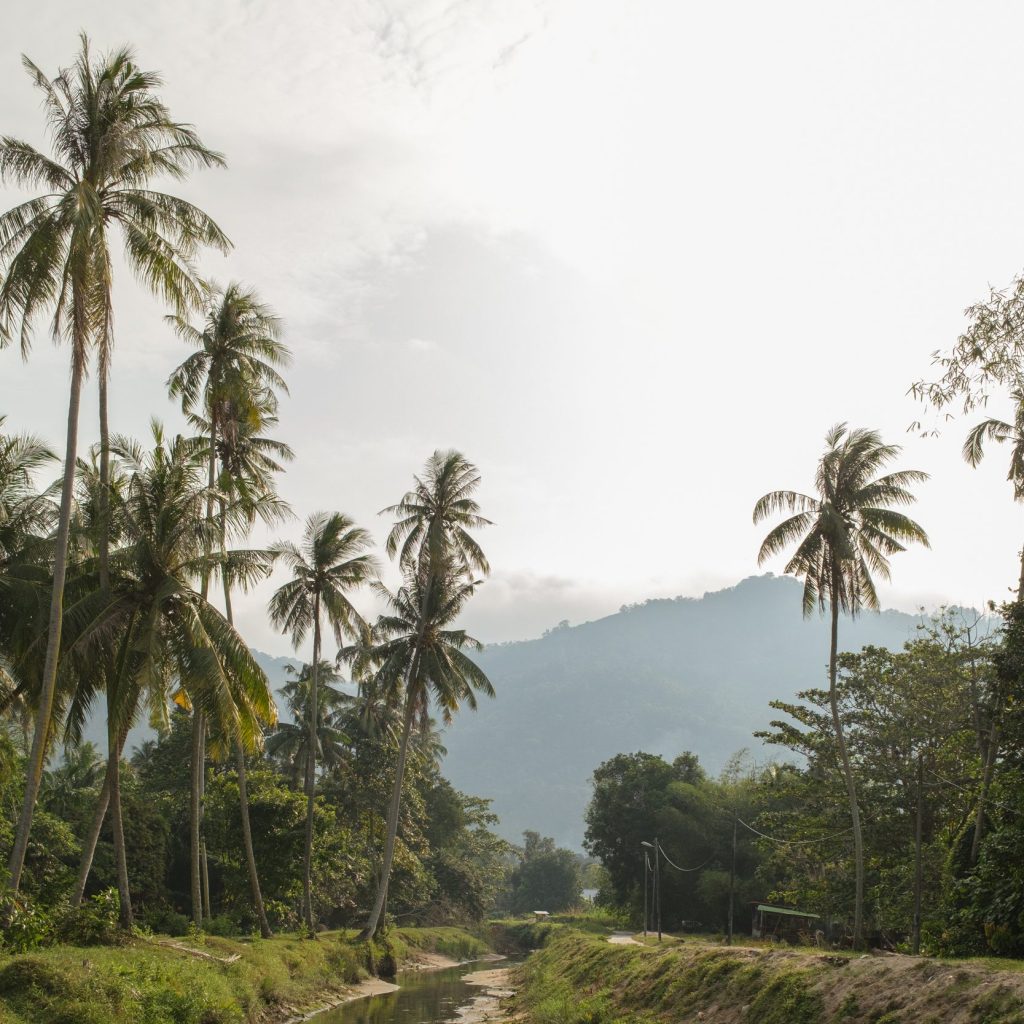
There’s no whisky in a Malaysian toddy. That’s because toddy in Malaysia refers to the kombucha-like coconut drink. Toddy is sugary, sour and a bit funky. But like so many of Malaysia’s foods, the sweet taste obscures a very dark origin.
In the 19th Century, the British East India Company continued its campaign to control the Malay peninsular. Powering this new empire, however, required a substantial labour force. But in a post-slavery world, Britain would need a different approach to securing cheap workers.
We hear from Sushil Nair, owner of Nachi Toddy (@nachitoddy) on the importance of toddy to the Indian and Sri Lankan communities. He talks us through toddy brewing techniques, starting a toddy business and the anti-toddy attitudes from within his own community.
Credits
Hosted by Dr Noby Leong and Philip Gibson
Produced by Dr Noby Leong and Philip Gibson
Sound Design by Jack Barr
English Dub by Anindya Kenyo Larasti
Satay? Okay! is produced by Kopi Productions Limited and supported by the Golden Chopsticks Scholarship, by the Oxford Cultural Collective Trust
Resources and References
A History of Malaysia (2016), Barbara Watson Andaya, Leonard Y. Andaya
The Plantation as Subject? Centring the Plantation within Malayan Anti-Colonial Histories (28 Nov 2024), London School of Economics, Sahil Bhagat
Krishnan, P., & Raman, J.J. (2018). Toddy Business among the Indian Labour in Colonial Malaya, 1900-1957. International journal of humanities and social science, 8.
Parameswari, K. (2014). Anti-toddy movement in Malaya, 1900-1957.
Krishnan, D. P. ., Raman, D. J. H. J. ., & Darkasi , S. . (2020). Between Life and Death: Suicide amongst the Indian Labour in Colonial Malaya, 1900-1941. International Journal of Social Science and Economics Invention, 6(09), 351 TO 355. https://doi.org/10.23958/ijssei/vol06-i09/235
Krishnan, P., Raman, J.J., Krishnan, R. (2020). A Study on the History of Estate Tamil Schools in Malaya, MALAYSIA dari segi SEJARAH
Nachi Toddy – Portuguese Settlement, Medan Selera, Portuguese Settlement, Melaka, 75050 Malacca, Malaysia
Transcipt
Please note that this transcript may contain errors and typos
Welcome to Satay? Okay! A podcast about the foods
that have shaped Malaysia. I’m Dr. Noby Leong,
scientist, food writer and broadcaster. And I’m
Philip Gibson, photographer and empath. And in
this series, we explore the history, cultures
and cuisines of Malaysia, from the ancient lands
of Southeast Asia, all the way through to the
creation of a modern day nation. In today’s episode,
we take a look at Toddy and the colonizer’s secret
treaty. So fill up those ink pots and get ready
for satay. Okay. So Philip. Yeah. In the last
episode, we looked at how Britain wormed its
way to take over the island of Penang in the
th century, followed by Singapore. In today’s
episode, we’re going to continue that journey
into the th century. and see how Britain continued
its colonial trajectory into the region. And
I will try my hardest not to get too angry today,
because there are some very egregious colonial
acts which always get my blood boiling. Yes,
and I’m not even going to apologise on behalf
of the British Empire, because I want nothing
to do with it. So, anyway. But first, before
we do that, let’s look at our food symbol of
the day, one that I don’t think many people would
have heard of, and that is toddy. So when I say
toddy, I don’t mean hot toddy, which I think
more people in Britain, Australia are familiar
with. Certainly, yeah. Like hot whiskey and lemon
and honey and maybe some cloves and spices, which
has got a connection to Southeast Asia. Yeah.
If it’s got some aromatics in it. So toddy is,
I guess you could call it a coconut wine or a
palm wine. Okay. So it’s basically they collect
the sap from an unopened flower bud of the coconut
palm. They collect it and then it’s left to naturally
ferment. So yeast that’s present either in the
sap or in the air inoculates the liquid. And
then in the very hot and humid climate of Malaysia,
it ferments to become alcoholic. And probably
in no time at all. Yeah. Though I do think there
are some non -alcoholic varieties as well. I
guess if you like… tapped the plant or however
you would describe it and got those liquids from
the plant quickly and didn’t leave it out for
too long. It would be more of a fresh drink than
a fermented drink. Yeah. Well, the fermentation
process wouldn’t have happened so you wouldn’t
get all the alcohol getting produced. Yeah. And
those fermenty, funky flavours that fermentation
brings. I wonder if it’s a bit like mead because
isn’t mead just kind of like honey and water
and the honey has like sugars and bacteria and
stuff like that in it that ferments and that’s
how mead… kind of comes about which is what
well it’s certainly an ancient european drink
isn’t it um that’s interesting and very sugary
because having tried toddy it is a very sweet
drink i would say yeah so the flavor for me like
kombucha is that’s the kind of closest drink
you know how kombucha has those fermented kind
of funky flavors yeah funk is the only word that
you could use to describe it it’s just like you
know that wave where like cheese can be described
as smelling of feet like yeah exactly And like
a really bad beer is funky as well. Yeah, but
that’s probably going to rot your guts out. Whereas
like toddy shouldn’t do that. No, no. So it’s
something that I wasn’t very familiar with at
all. So I think my grandpa used to drink it.
Okay. But my dad never drunk it as far as I’m
concerned. I don’t, I can’t remember my mum ever
talking about it either. Yeah, I think when we
were in Malacca doing our research on this, we
were chatting to a couple of people and it seemed
to be that there was kind of negative connotations
around this drink. And yeah, that’s what we’re
going to explore in the episode today. And perhaps
that’s why it’s not as well known because it’s
got some negative connotations. But I think even
in Malaysia, toddy is quite uncommon. It’s not
something that’s widely available. And certainly
if you’re a tourist going to Malaysia, you would
have to actively seek. toddy out i don’t think
you would just stumble across it like you would
other other drinks other foods that are famous
yeah and maybe also because of the like people’s
kind of connotations of hot toddy they were kind
of like why on earth do i want to drink hot whiskey
in malaysia yeah maybe if even if it was available
you just assume it was the whiskey based drink
and not something made from coconut or palm sap
yeah yeah i also think it’s kind of the drink
where there’s not many brewers or sellers and
i think Certainly back in the day, the only way
you could obtain it is by knowing someone. In
the way that durian used to be obtained just
by knowing someone. Going to phone a guy, your
dealer. Community, Philip. Well, sure. Anyway,
it sounds as though we could probably benefit
from talking to somebody who has something to
do with this. So we’ll introduce you to a toddy
maker later in the episode. But for now, let’s
kind of look at our history of toddy in Malaysia
and the context of it. So toddy is an Indian
drink. And as we’ve talked about in previous
episodes, Indians have been traveling to the
Malay Peninsula for centuries. But the consumption
of toddy takes on a pretty interesting role in
Malaysian history when we start looking at the
expansion of the British Empire. So again, as
we talked about in the last episode, in the th
century, Britain got a foothold. in the Malay
Peninsula by trading soldiers for the island
of Penang with our dear friend, the Sultan of
Kedah, who was not happy with this great British
life. I think you would certainly feel short
-changed. The short -change that Francis Light
was firing into the undergrowth to get his men
to cut through it. Yeah, yeah. I was kind of
like thinking about this the other day and how
I have friends. Does this mean today? myself
and those friends could just get together
and then just get one of the Scottish islands
or something. Yeah, I mean, I’m trying to think
what islands must be about the same size. Arran’s
quite a big island. That’s maybe too big for
people. Penang’s quite big though. I guess
it is. Remember, this is not an equal trade film.
You’re right. It doesn’t matter. I don’t know.
I do get the impression, maybe, and if you live
in the Isle of Arran and you’re part of the local
community, you can let us know in the comments,
but they’re a bit fed up with North Ayrshire
Council and certainly the neglect from the Scottish
government. Maybe Arran wants to secede. Maybe.
Maybe it wants to do its own thing. I would listen
to the people of Arran. Yeah, I bet you would.
With all of their wool, cheese and whiskey or
whatever else they produce on the island. Sorry,
Arran. We love you. We love Arran. We love
Arran. Mini Scotland. Yeah. So Britain has
Penang, but it also has Singapore as well. And
they gained Singapore by installing a puppet
sultan and then signing a treaty with that puppet
sultan. And that sort of begins contemporary
Singapore, I suppose. The Singapore that we know
today, this… Modern Singapore. Modern Singapore,
this massive metropolis, has its start in the
British acquisition… Of the island, yeah. By
Mr. Raffles. Yes, Stanford Raffles. I guess you
could call him the quote -unquote founder of
contemporary Singapore. Yeah. Okay, so by the
th century, we’ve got this really complex territorial
situation across the Malay and Indonesian archipelagos
because we have trading ports and regions that
are run by both Britain and also run by the Dutch
VOC. So if you want to kind of play along, it
might help just to get a map for this point,
just for fun. So if we look at just the Malay
Peninsula at this stage, we have Britain is occupying
Penang to the north and Singapore to the south
of the Malay Peninsula. But the Dutch VOC has
Melaka, which is smack bang in the middle. Right.
Over on the Indonesian archipelago side, if we
look at the two big islands of Sumatra and Java,
Britain occupies a place called Bencoolen on
Sumatra. While the Dutch headquarters are in
Batavia. No, no, no, it’s Jakarta. And that’s
on Java. So they’re kind of upping each other’s
business. And it makes for a very messy situation
because they get into all these trade disputes
of who’s allowed to trade with who. They’re getting
into fights all the time. And these two big European
powers are really not happy with each other.
Yeah, I think I read as well that, you know,
if you were part of the East India Company in
Britain, you would… actively avoid ending up
in one of these ports as an absolute kind of
last resort sort of thing because you were just
being imposed on massive tariffs for the amount
of goods and stuff like that. And so that I think
is why Britain and the Netherlands or Holland
I guess at that point were so keen to set up
their own ports so that they did business with
themselves. But if you needed fresh drinking
water or supplies then you didn’t have much of
a choice. I think that seems to be what I’ve
kind of deduced from this. Well, to kind of sort
out all those issues that were happening, London
and Amsterdam end up doing some negotiations
and they decide to sign a treaty between themselves,
which would become known as the Anglo -Dutch
Treaty of So what this treaty established
was two spheres of influence. One was a British
sphere of influence and the other one was a Dutch
one. So Britain’s sphere of influence was over
the Malay Peninsula. And the Dutch sphere of
influence was over Sumatra and Java. So Britain
couldn’t get involved with the Dutch side and
the Dutch couldn’t get involved with the British
side. So that meant that Dutch gave up Melaka
to Britain and Britain gave up Bencoolen to the
Dutch. So what you now have is British Malaya.
and the dutch east indies and while this was
a fantastic deal for both of these european players
not so great for anybody else i could imagine
so so the treaty was signed without any real
or meaningful consultation with the malay rulers
and i’m guessing of the indonesian rulers as
well they didn’t get a say in this and the people
that signed the treaty were in london and amsterdam
and they had never even visited the region before
yeah And so the consequences of this treaty meant
that there were certain royal empires in the
Malay world that were then divided because some
of those empires stretched between those two
spheres of influence. It also prevented locals
from really having a say in their future. So
with these spheres of influence, if you lived
in the Malay Peninsula, you could only make agreements
with Britain. You could negotiate with other
third parties. Right. especially not other third
European parties. So you were kind of locked
in to trading with Britain and only Britain.
Right. And then the other really major consequence
is that these two spheres of influence essentially
established a border between what’s now Malaysia
and Singapore and separated people from each
other. In essence, they carved up Southeast Asia,
basically like a piece of meat, like they owned
it, like it was theirs. could do whatever they
wanted with it. So this is the end of old Nusantara,
basically. Yeah. Hard borders are being drawn.
And I think that’s a really good point to mention,
that the Malayan Indonesian archipelagoes…
is Nusantara. And so for thousands of years,
generations and generations of people have lived
there. They’ve been traveling around these thousands
of islands, going back and forth, marrying, sharing
cultures, trading, living side by side. And now,
because some Europeans decided they want to drink
tea and crack some black pepper on their plate,
that entire way of life disappeared. In a letter
from one of the noblemen of Pahang, he wrote
of his bewilderment of this treaty and said that
it parted father from son, brother from brother,
and friend from friend. So you can just see how
impactful this treaty was for the people of Nusantara
who were no longer connected. Yeah, it is a shame
when you think about the people like Orang Laut.
And those are the sea peoples of Nusantara. And
the people who were expert navigators and occasionally
pirates for hire if they needed them. But as
we heard in our interview in the episode on the
Orang Laut people with Ilya, even just getting
across the Strait of Johor now with Singapore
being an independent country from Malaya, as
we will learn about in future episodes, you know,
their ways of life are still being disrupted
today by these hard barges. Yeah, you know, it’s…
You see this kind of playing out in post -colonial
places all over the world, don’t you? Whether
it’s in the Middle East or whether it’s in Africa
or wherever else, it’s just people with compasses
and set squares and just drawing lines on maps.
It is frustrating because you certainly look
at the amount of ethnic tension that still exists
in the world today between all of these different
places where you’ve got groups of people where
the borders were drawn right through the middle
of it. Did anybody ask the people that lived
there or was it, as you say, just spoken about
in Whitehall somewhere in London? Kind of like,
oh, yeah, old mate Winston Churchill just decides
what we’re going to do with Palestine. Oh, right.
OK. And then has anybody actually asked? No.
Here we are years later after the Balfour
Plan and we’re still at war. So anyway. Just
take some deep breaths. Yeah. I think it is important
to realise that the legacy of this treaty still
exists today. British Malaya was a predecessor
to Malaysia. Dutch East Indies was a predecessor
to what we now know as Indonesia. So if perhaps
history had actually gone a different way, those
two nations might be a lot more united than they
actually are. Yeah. I think what also surprises
me is that you’ve got some cities that are on
Sumatra, which Kuala Lumpur is much, much closer
to them as a capital city. I’ve got a friend
from Aceh, which is at the very northern tip
of Sumatra. And he says he probably spends more
time in Penang and Kuala Lumpur than he does
going to Jakarta because it’s a one hour flight
instead of a three hour flight. Oh, wow. Yeah.
And yeah, it’s again like when you look at a
map, like, you know, it’s not that we’re sitting
here telling these colonists that they got it
wrong, but… Well, they did. But they did get
it wrong. But like, it’s… You know, we talk
about Srivijaya and how that was on Palembang,
which was also on the island of Sumatra. And
it seems as though Sumatra and Peninsular Malaysia
have more in common. And so the fact that it
even ended up with the Dutch in the first place
just seems quite surprising to me. But again,
it’s all about that lucrative business being
on the Strait of Melaka and being able to control
and trade through that bottleneck. It still exists
today. Yeah, yeah, I mean, geography is geography
and can’t get around that. Whether it’s the Suez
or whether it’s the Panama Canal or whether it’s
the Strait of Melaka, it cannot be emphasised
enough how important these bodies of water are.
In history and today? Yes, yeah, yeah, yeah,
yeah. As important just to note is that when
Britain… and holland essentially signed this
treaty it was all done under the guise of legality
so because they had a contract they could claim
that this was a legal agreement and they would
legally now had these two spheres of influence
but really that wasn’t the case there wasn’t
consultation there wasn’t agreements with the
actual malay rulers the people of the malay peninsula
and also of indonesia So when we claim that these
treaties were these legal documents, that’s a
smokescreen. That is % deception, and that’s
a rewriting of the historical reality. Yeah,
yeah. Okay, that was probably as angry as I’m
going to try and get at this point. Yeah. Oh,
wait, no. I’m about to get angrier. Okay. Let
it rip. So now we have British Malaya, and as
Britain expands its empire, it starts to require
a larger labor force so we’ll talk about how
britain expanded the empire in in the next episode
but i want to kind of give you an understanding
of how britain actually powered malaya at this
point so it starts to get involved not with just
trade but it’s also getting involved with actual
industries and production of resources that they
want to trade. So they start getting involved
more with tin mining, with the production of
pepper and other spices. They also experiment
with sugar, coffee, a product called gambia,
which is a plant that’s used in tanning, and
also rubber. So these industries start to become
really massive. There’s also infrastructure like
ports and railways that need to be built. So
Britain needed to find workers. didn’t like to
deal with the local Malay workers. Britain viewed
the Malay population with contempt. They branded
them as lazy and unwilling to work for wages.
So wages meaning, say, a day rate or something
like that. Okay. I’m not really sure why Malay
people weren’t willing to work for wages. I’m
guessing that they did not like this level of
compensation or perhaps they didn’t like that
they weren’t owning certain parts of the business
and preferred a different profit sharing arrangement
or perhaps they wanted to you know own the land
own the mines own the agricultural state whatever
yeah so i’m not really sure why that was but
it does sound like they they could see that this
was not an equitable arrangement probably yeah
And then the other cultural group that were available
as a labor force were Chinese migrants, which
did come in large numbers. But even that wasn’t
enough for Britain’s vision and for what Britain
needed at the time. So they turned to the other
colony in India. So just to set the scene, we
are in the th century and we are in a post
-slavery world. Britain has technically abolished
slavery. both in Britain itself and in its territories
around the world. Right. So they couldn’t use
enslaved labor technically. Right. But what they
could use was a different source of labor that
was still incredibly cheap. And what they called
this system was indentured labor. Right. Indentured
as in being imprisoned. Bonded, I suppose, would
be… the term that people would use. Okay. So
bonded labour, where an employee would be bonded
to an employer for a certain amount of time.
So in a contract, yeah. Yeah. So this would be
a contract between two parties, employee and
employer. They would specify the timeframe that
you would work, and it was typically three to
five years. And the promise of these contracts
was that you would get good living conditions
and high wages. So Britain starts… getting
people from its colony in India to work in Malaya
as part of this indentured labor system. But
the reality of this system was quite different
to what was promised. First of all, the people
that signed up to indentured labor were usually
quite poor. They were also probably illiterate,
a lot of them. Right. Therefore, they’re not
going to understand a contract written in English
and the details of what it entails. So those
contracts could have anything written in it.
Yeah, yeah. Sometimes they were forced to sign
it. Sometimes they were told they were just going
down the road or to Sri Lanka. And they weren’t
told they were actually going to Malaya. Right.
And wages were often not high, surprisingly.
They were often quite low. And British people
actually used to call these laborers coolies.
And coolie is a Tamil word meaning small wage.
So it’s really embedded into the whole lexicon
of the indentured laborer. Right. Yeah, yeah,
yeah. And so coolie is a derogatory term. So
you’ll still see it in a lot of historical texts
and on websites today. And if you want to know
more, you might have to Google coolie when you’re
trying to find out more information. Right. Yeah.
Yeah. Okay. So now you have a lot of these Indian
laborers and they’re often Tamil. Right. And
they start working primarily in the agricultural
plantations. Okay. So these plantations are pretty
far away from the rest of society. They’re far
away from existing Indian populations, from Malay
populations and Chinese populations. So you’re
really not part of society. Yeah. Yeah. You’re
in a camp, basically. Yeah. And you basically
couldn’t leave the plantation. It was very difficult
to leave. They either didn’t let you leave. They
either escorted you or they made you pay to leave.
Also, no one could go into the plantation. Right.
Okay. So you were locked in there. Uh -huh. Living
and sanitation conditions were pretty bad. And
I think a lot of people actually died on the
journey to Malaya itself. I’m going to read you
a quote from a study on the history of estate
Tamil schools in Malaya by Krishnan et al. And
this article says, The situation faced by these
laborers were virtually indistinguishable from
the slavery system, whereby they were settled
and controlled like slaves. Every aspect of their
lives was under the direct control of employers.”
So that tells you just what it was like for these
Tamil people to work in Malaya, sometimes forcibly.
This was a system that wasn’t just in Malaya,
but across… Britain’s colonies, and it’s estimated
between and Britain took more than
million Indian indentured labourers to its
British colonies. So that’s just an estimate.
It could be higher, could be lower. So I’m not
done, though, yet. Yeah. So the Tamil people
were naturally quite frustrated by their situation.
Sure. And so Britain needed to control them to
some degree. in order to keep them on the plantations
and keep them from escaping. Right. One of the
tools that they used was toddy. Okay. So toddy
being this Indian and Sri Lankan drink was probably
brought over by these Tamil laborers and people
started making it just as a social drink. So
people start drinking it, getting drunk, getting
inebriated and… And I think the plantation
owners weren’t too happy about this. They didn’t
want like a drunk and inebriated population.
Yeah, they needed them to be efficient, I guess.
Yeah. But it did mean that if you were drunk,
you were less likely to leave. Right. And if
you were addicted to toddy, you were also less
likely to leave. Right. So toddy then becomes
a tool that these plantation owners use to keep…
the laborers onto the plantation for longer and
one way they did it was to set up toddy shops
official shops where laborers could go into buy
toddy very conveniently so they didn’t have to
leave the estate i mean i guess then they would
have wanted it to be kind of regulated in a way
where you were probably given a ration of it
as in like you could be tipsy but you couldn’t
be drunk yeah i think you could only you know
you couldn’t buy during the day you’d have to
buy it when you’re not working. Yeah, okay. So
Britain regulated it in order to kind of keep
control of it. Britain seems to have this habit
of, yeah, basically using substance abuse in
order to kind of get what it wants. Because we
have to remember at this time, the opium war
was right around the corner with China. And Britain
and the East India Company were, and I think
probably to this day, probably still considered
to be the biggest drug dealers on earth. Yeah,
yeah. Well, you know, they would continue that
in Malaya too. So even though we think of opium
wars as just a China issue, opium was also sold
in Malaya because you sold opium to Malaya to
get tin and spices, which you would then sell
on to China. Anyway, so back to toddy. The other
advantage of these toddy shops was basically
to recoup wages. So they were getting paid such
small amounts anyway, but these toddy shops allowed
Britain to basically win back some of what they
were paying. Fucking hell. Okay. So, yeah. By
the s, though, early s, there was an
anti -Toddy movement. So the broader community,
not just the estates, were seeing Toddy as not
a very nice drink, an evil drink. That led to
a lot of antisocial behavior, and so Toddy consumption
really plummeted from then. It’s probably also
worth noting, given that Toddy typically, being
alcoholic, would not have gone down well with
the Muslim Malay majority at the time? Probably
not. I don’t think it was them that were part
of the anti -Toddy movement. I think it was driven
by Indian populations. Oh, they just saw it as
this taboo drink. So it was kind of ostracised
within their own community. And it could be because
people thought that maybe Toddy gave the rest
of the population a bad name. I’m not really
sure. Yeah. So that is toddy and how it operated
on these British -run plantations in Malaya.
God, we were such good guys, weren’t we? You
just wanted to teach them how to be civilized,
Philip. All for rubber. So toddy, therefore,
is this really interesting food item in the context
of Malaysia and its history because on the one
hand, it’s a very culturally significant drink
to the Indian and Sri Lankan population in Malaysia.
Right. But on the other hand, it was a tool of
the empire. And it was a tool that the British
Empire used for both profit and labor control.
Yeah. They were strategic if nothing else. That’s
all I’ll say. I think it is hard to respond to
this because it is so egregious. It is so disgusting.
And as traumatic as it can be to talk about these
topics, it’s important to acknowledge and remember
this history. Yeah, yeah. I would imagine that,
a lot of people in the uk certainly wouldn’t
have known what britain was up to in malaysia
yeah i mean people probably don’t even know that
malaysia was a british colony so that yeah i
mean everybody i think is quite well aware at
this point of what was happening in the west
indies not the east indies but and uh and probably
in india as well if you’re enjoying this episode
you can follow us on social media at satay okay
We’ll be sharing beautiful photos taken by Philip
of Malaysia, its people, and of course, the food.
We’ll also share photos of Malaysia from the
archives, so you can see how the country has
changed over time. You can also find links to
give us a tip or donation to show your appreciation
for the work we’re doing. So head to our socials,
at SateOK, or visit our website, sateok .com.
So that was toddy then. But what is toddy now?
So I think I wanted to know a bit more about
the state of toddy in Malaysia today. What’s
its place in the culinary scene? What does it
mean to the people today? So we spoke to Sushil
Naya. So Sushil is the owner of Nachi Toddy.
They’re a toddy brewer and also a seller in both
Malacca and the capital Kuala Lumpur. Here’s
Sushil. For me, being in today’s world, I think
this coconut toddy is something a bit different.
cultural because it goes way back to back i think
talking about malaya before malaysia was from
malaya when during the british rule especially
toddy was widely enjoyed by the indian community
actually hello my name is sushil i’m i’m from
malacca originally from here born and bred here
i grew up here most of my life I’ve done my business
for the past five years. So I came up with this
business five years ago. It was It so happened
that this particular drink, this coconut toddy,
was actually introduced by my late dad. So he
told me about this drink when I was in my early
teens actually, during my secondary school time.
He told me, do you know there’s this fresh alcohol
drink? I said, no, I do not know. Have you heard
of toddy before? I said, yeah, I’ve probably
heard of probably the uncles and aunties talking
about toddy, you know. And they say it’s coconut
toddy. It comes from the tree sap. And I’m like,
so blur. And so happened last time in Melaka,
there was this one particular shop. It’s probably
about years old, I think, right now. So
this shop was the only known shop. in Malacca
town, in the central of Malacca, which sells
coconut toddy. So we used to go there whenever
we thought of getting toddy. So just another
reminder, when we talk about toddy in the Malaysian
context, we are not talking about whiskey cocktails.
Toddy is a completely different drink in Asia.
For Asian side, toddy means those fermented juices.
Because I think in the Asian side, Toddy is well
known in terms of two types. There’s the toddy
from the coconut tree and toddy from the palm
tree, if I’m not mistaken. Mine is coconut. So
toddy is the fermented tree sap that comes out
of a coconut palm tree. These trees are also
used to make palm sugar. So it’s quite a versatile
crop. And Sushil explained the Indian way of
extracting and fermenting the sap. Okay, the
Indian way is when new shoots come out, when
the leaves haven’t actually opened up where the
flowers appear. So what we do is we’ll tie up
the whole shoot. Chop the edge off. And then
you notice the tree sap will start to drip out.
That tree shoot, to sort of urge the juice to
purge out more, they tap on that whole shoot.
Tap, tap, tap. So that’s why they put a bowl
to it. and they wrap around the bowl and cover
it to avoid rain or insects coming in because
by right the proper fermentation would probably
take about eight hours after leaving it overnight
so what happened is during that time after harvesting
this straight got to put it into a big big tub
because part of the juice consists of sediments
from the How should I say? It’s just the thickness
of the whole juice. So what we do is we let them
settle down. Just a quick one, just a few minutes.
We start pouring them, letting them settle down.
Of course, when you pour, you notice there’ll
be bubbles on top of it. The foam. So what we
do is we start pushing away the foam and then
start distributing it into little bottles. All
this has to be done within two hours. So within
these two hours, put it in the bottles. Straight
away, chill it. Okay? Otherwise, it starts fermenting
too much, then it’ll turn sour. So I don’t want
that to end up with the customers. So what do
his customers think about the taste of toddy?
Sometimes when I explain to those first -time
customers, I say, it’s just like durian, whether
you like it or you totally hate it. So I get
customers like that. So when they get that gist,
then they would be prepared. But of course I’ll
explain you get that vinegary smell which is
quite common because it’s in a fermenting phase
I keep joking to them Telling it smells like
hell, but tastes like heaven, right? So then
they’re prepared so this kind of things which
I tell them in advance before they try because
we give them little testers We don’t we don’t
you know just to overwhelm them with the taste
Yeah, okay. I will always tell customers imagine
you drinking kombucha Yeah, so a lot of people
can relate to kombucha because kombucha is on
the rise now. A lot of people have taken kombucha,
so they’re well prepared. So they know, hmm,
the smell is okay. Then when they taste it, they
say, hmm, like kombucha. Yeah, so even though
sometimes I do get customers telling like, why
does it taste like durian? I say, oh, I do get
sometimes. Then I joke with them by telling like,
you know, funny thing that you say tastes like
durian. just for you to know at our plantation
we’re just being surrounded by palm oil plantation
and rubber trees there’s no durian at all so
if you get something tasting like durian well
good then well enjoy it enjoy it even more than
you know if you’re a durian lover and you get
that durian taste if you’re not a durian lover
then sorry lah never mind next so uh yeah so
i would tell them uh it has that uh sour sourness
because of the fermentation You still get a sweetness
from the tree sap. The taste, however, differs
between batches and also producers. Just like
wine or whiskey, the final flavour depends on
many factors. And I always also inform my customers,
some days you may get this kind of taste, some
days you may get this kind of taste. A bit more
on the sour side, on the sweet side, but generally
sweet. And then sometimes… we harvest the juices
maybe because of the weather if it’s too hot
sometimes we get the bottles uh the juices a
bit feasible and then when you when it’s more
of a rainy day i think you will get a much more
diluted kind of juice not because of the rain
water sipping into the to the to the bowls but
because i perhaps maybe yeah just sucking up
more water yeah so it’s a bit more diluted so
we get that once in a while uh depending on the
badges that we do you won’t find many places
in malaysia that sell toddy though alcohol licenses
don’t come easily in case you don’t know toddy
toddy this particular drink is actually being
controlled by the customs department of malaysia
so they actually issue out the license for you
to legally harvest and sell so not many people
have these licenses it’s kind of controlling
and i think Most of the licenses or probably
should I say all of the licenses which are available
currently are being passed down from dad to son
and so on. So that’s how they sustain the business.
Sushil didn’t have a license in his family. He
came across a plantation after chatting with
a friend. Right up to my age about plus and
then it came back all of a sudden while sitting
out with friends. We were drinking over one night
and my friend said, hey, do you know there’s
actually still available toddy plantations? I
mean, despite developments and all, there’s so
many toddy plantations which actually closed
down. Some of it because maybe because of the
economy, some is due to development and others
very possibly due to the kids not taking over.
So you just die off like that. So eventually
I was in search. and I found a decent plantation
who was doing they were actually producing fresh
so I got to know the owner who eventually became
my partner today so I remember going to his plantation
late one night it’s about p .m because a friend
who introduced me to this guy he worked late
and he brought me all the way we went through
dark and dark lanes and all it was right deep
in Imlaka itself but a lot of plantation roads
we had to go through met up with him he gave
me a taste of his story and coincidentally at
that time it was just a business idea for me
to sell it over san pedro festival okay so have
you all heard of san pedro festival okay no san
pedro festival is a very uh it’s actually a cultural
event which became commercial past probably
years ago so it’s something uh celebrated locally
here among the portuguese community so that’s
san pedro we’ve got live band concert we’ve got
games during the daytime we’ve got a lot of stalls
booths so i thought it could be a good chance
for me to try out this business so that’s how
i partnered with the plantation became close
partners with the owner and from then on i noticed
the business went well because a lot of people
found it very uh peculiar to find this kind of
drinks most of the times when you go this kind
of events you get cocktails you get beers or
whatever but you don’t get this kind of um specially
freshly harvested natural alcohol so yeah so
when i got to selling it i get i got so excited
that eventually the following weekend i decided
to get more stock so the festival was four days
and was done over that previous weekend the following
weekend i parked my car at the car park here
opened my bonnet and started selling and then
of course throughout me selling illegally you
get people calling the enforcement and all coming
you know but I was still searching for a suitable
place nearby here because I think in KL it’s
quite common that you got seafood restaurants
selling this kind of drinks if you go to the
Banting area which is in Selangor or perhaps
Port Klang or Telok Telok Gong is quite famous
of restaurants selling this kind of drinks to
pair with their seafood so I thought it makes
sense if we already got a seafood range here
so why not just sell it and plus we’re just next
to the sea so it creates that ambience that that
vibe you know so it’s very chilled out kind of
thing so what and along the way I think was year
end because San Pedro was in June By November,
December, I managed to get licensed to open up
a stall here, legally. While Sushil has been
able to make a business for the past five years,
he still faces taboos, particularly from his
own community. But I think throughout the years,
a lot of people gave misconceptions. It had a
bad name because, maybe because of the Indian
community itself. they would probably blame it
generally telling the young ones telling the
younger generation don’t drink toddy it’s something
very alcoholic it’s bad it can cause a disruption
for the family breakdowns for the family you
get the dad would get drunk because of this and
so on so on so eventually it became a taboo among
the community the indian community so when i
got into business i realized after today %
of my customers are actually Chinese and others
except for Indians. It is so true. And sadly,
sometimes you still get that sort of depreciation
from them. It is, yes. We’ve done business here
before. A family was passing by. They were passing
by and they said like, Hey, toddy! Oh my gosh,
toddy! And they sort of became scared of the
word toddy. A few moments later, a Chinese man
came and got so interested in the taste, he started
buying a few bottles, maybe four or five bottles.
So he was walking back happily carrying his bottles.
And we saw, we just wanted to check out the reaction
of the family who was so, they were so close
with him. So they saw him carrying a few bottles
and they got shocked. You could see that expression.
They got shocked. People really like this drink,
which we curse and swear all. Do you think it’s
changing to be less taboo? I would always tell
my wife, telling them, I think we’ve got a big
responsibility in the society, in today’s world,
that we’re responsible to actually change the
mindset of those. Despite the resistance from
his own community, Sushil is making progress,
especially with the younger generation. We get
customers who are pretty new. Like for me in
KL, I get the customers from the younger generation
who have never heard of this before. So I feel
very privileged and glad to be the person responsible
for Introducing it to them. Introducing this
to them. And that was Sushil Nair from Nachi
Toddy. Phil, what I find fascinating about his
story is that he is an Indian businessman selling
a very Indian drink, setting up in the Portuguese
settlement of Malacca, selling toddy primarily
to a Chinese population. ah multiculturalism
isn’t it great i think it’s like it it like sums
up malaysia in some ways of just how multicultural
it is how fascinating the cultural dynamics are
in malaysia as well yeah yeah yeah he was so
animated and so lively about it uh he was so
excited about toddy i think it was interesting
as well that he said that when his um kids have
got a bit of an upset stomach he gives them just
a little thimble of it just because it’s fermented
it’s full of bacteria which is supposedly quite
good for your gut and so helps just kind of like
I don’t know clear you out it’s not a super alcoholic
drink it’s maybe only about or % max like
I think Nachi Toddy they sell they sell a couple
of varieties there’s a there’s a there’s a weaker
one which is maybe only one or two percent um
which yeah it i personally um it is definitely
a bit of an acquired taste it’s not unpleasant
but i definitely think it’s the sort of thing
we we got a couple of bottles off the guy and
we kept it in our fridge but but the second and
third day you’re a bit kind of like this is now
becoming a bit funky you’ve got to have it fresh
yeah over ice it’s very refreshing that way but
yeah he does sell a couple varieties he has essentially
a single blend which is from one type of coconut
but he also has a mixed blend which is for multiple
different kinds so you can see that as this industry
kind of goes people are people are brewing it
in a way that people brew beer and brew wine
right we’re thinking about the complexities of
the drink and how to get different flavors for
different uh buyers yeah yeah yeah i think that
just kind of comes to the acquired tastes um
or like acquiring a taste for it discerning palette
for want of a better way of putting it what I
thought was also interesting that he said was
that he was not remotely threatened by other
toddy makers in the same way that you’re talking
about the single malt and blended varieties and
things like that I think they were in the same
way that you get Islay whiskey and Speyside whiskey
and like all these different regions and or even
like wine as well you know do they want a South
African do you want an Australian but even within
Australia it’s like oh McLaren Vale Barossa uh
Riverland whatever and um I think they just saw
that like the the more the better the more awareness
of the beverage the better and um you know is
the terroir in Perak better than it is in Melaka
you know well That no doubt does affect it in
some ways because he was saying that every batch
is a little bit different. Yeah, whether he catches
it during the rain or whether it’s a flowering
season of other byproducts. I think there was
something else that he said that wasn’t in the
interview there. the he gets i think people from
the philippines coming over and buying the thing
buying the toddy bottles taking it back to the
philippines but intentionally leaving it out
for like six months so that it turns to a vinegar
yeah which um i guess it’s kind of like apple
cider vinegar or any of these other kind of like
red wine vinegar yeah these kind of malted vinegars
i guess uh where yeah you just use it Probably
would be very effective at deglazing pans when
you’re like cooking something that’s sticking
to a wok or whatever. A deglazer. What would
Maggie Beer call that? A verjuice. Verjuice is
a grape based. Right. Okay. Well, it’s coconut
verjuice. There you go. I’ll market it. Yeah,
yeah, yeah. Yeah. And I think that Filipino connection
with Toddy is really interesting because it reminds
you of that noose and time and spirit, which
we’ve talked about a lot in this podcast. I think
that was something that Christopher Tan said
in one of our previous episodes as well. It’s
like wherever there’s a coastline, there are
coconuts growing. And so whether it’s in desserts,
whether it’s in beverages, whether it’s in the
meals, coconut is just such a staple in the tropics.
Of course, these saps are going to fall from
the trees and people have been living underneath
them for thousands of years and they will have
found novel ways of using the products of it
to enhance the food, which is why we’re making
this show. Yeah, yeah, absolutely. So if you
are going to Malaysia do try and seek out toddy
and try this very important drink as I said before
it is a bit hard to find so because Malaysia
is a Muslim majority country toddy is not going
to be something that’s promoted in like big tourism
campaigns for instance you know it doesn’t appear
in the big you have to try the street food of
Malaysia try the roti canai Try the Luxor. They’re
not going to say try the Toddy. Yeah, yeah, yeah.
In the same way, they’re not going to tell you
to try Tiger Beer. But yeah, it’s as prevalent
as that is. And I think the other reason why
Toddy is a bit hard to find, because it’s made
by independent brewers and it’s an alcoholic
beverage, it can’t really compete with the advertising
power of some of those other massive multinational…
beer brands, for instance, that are operating
in Malaysia. It can’t compete against Tiger,
for instance. No, not with a global market, yeah.
Yeah, so toddy does get obscured quite a lot.
Obviously, Nachi Toddy isn’t the only brewer
and seller in Malaysia. So there are several
others across the country. But yeah, you do have
to search for it a little bit more. Even if you
can’t get toddy, if you’re going to Malaysia,
or maybe you just don’t drink alcohol. there
are so many other ways to engage with indian
food culture and i think it’s really hard to
overestimate the impact of the indian community
on malaysia’s food scene because it is massive
both i’m getting hungry thinking about it um
the influence is quite extensive um so many of
malaysia’s most famous dishes are basically indian
origin roti canai probably being the most famous
called roti paratha in singapore but that’s you
know your flaky flatbread in penang you’ve got
nasi kanda which is this curry dish where you
get rice you flood it with a whole bunch of curry
yeah uh rossi china i think is one of those dishes
where i like time stopped when i had it for the
first time just that like it’s basically for
like westerners it’s just like that’s flour and
water mixed together and like fried with oil
like it’s like what’s what not to love like we
all love a croissant that’s basically what a
croissant is i think out of all the foods that
i miss about malaysia body china is probably
the number one and it’s it’s what i want immediately
as soon as i land in malaysia yeah i think it
was our first and last meal i’d say the other
major um most obvious contributor to indian food
culture in malaysia are the mamuks so mamak translates
to uncle in tamil But a mamak is a type of restaurant
that’s open hours. And so this is where you
would get your roti canai from and all your different
curries. But because they’re open -they
are like a meeting point for all aspects of society.
Whether you’re rich or poor or whatever culture
you’re from, people congregate in mamaks. They’re
like that perfect third space. Right. Yeah, yeah,
yeah, yeah. The American diner equivalent. Yeah,
yeah. Bright fluorescent lights, food and coffee
served at any time of the day. Uh -huh. Yeah,
yeah. If you’re a taxi driver or if you’re a
truck driver, it doesn’t matter. Go in there
and get your scran. Yeah. So going back to our
food of the day, toddy, it is a symbol of the
Indian community in Malaysia, but it’s also a
reminder of how this community has been treated
in the past. It’s a reminder of that indentured
labour system during the days of the British
Empire. It’s also interesting that Toddy today
is actually quite hard to find. It’s also pretty
hard to find stories about the Indian community
and their history. And I think that in Malaysia,
the Indian community is very much overshadowed
by some of the other cultures. So, you know,
when you’re seeing representation about Malaysia,
there’ll be Malay people, Peranakan people, Chinese
people. Not as often will you see the Indian
community being represented. Yeah, it’s probably
not hard to see why if there’s intergenerational
trauma from the fact that so many hundreds of
thousands of these Tamil workers came over and
were basically forced to work on plantations
for meagre wages. But yeah, just a reminder that
Indians have been in the region for centuries.
Not all of them came under this indentured labour
system. So if you’re in Malaysia, though, search
out for Toddy, search for those stories and get
to know the Indian and the Sri Lankan community
in Malaysia. So if we just turn back our attention
to the history and just sum things up, Britain
now has its sphere of influence with that Anglo
-Dutch Treaty. It now basically has British Malaya,
which is ripe for picking. So it has Penang,
it has Malacca and it has Singapore. But there
were many other territories that it has its sights
on and many other sultans to kind of coerce in
order to gain a foothold in the rest of the peninsula.
And so we’re going to explore that in the next
episode entitled Chicken Rice and the Making
of an Empire. And that’s going to be our last
episode of the season. So you do not want to
miss out. So please join us for the next episode,
the final episode. of satay. Okay.
 Satay? Okay!