
8. Laksa and the Great British Lie – Satay? Okay!
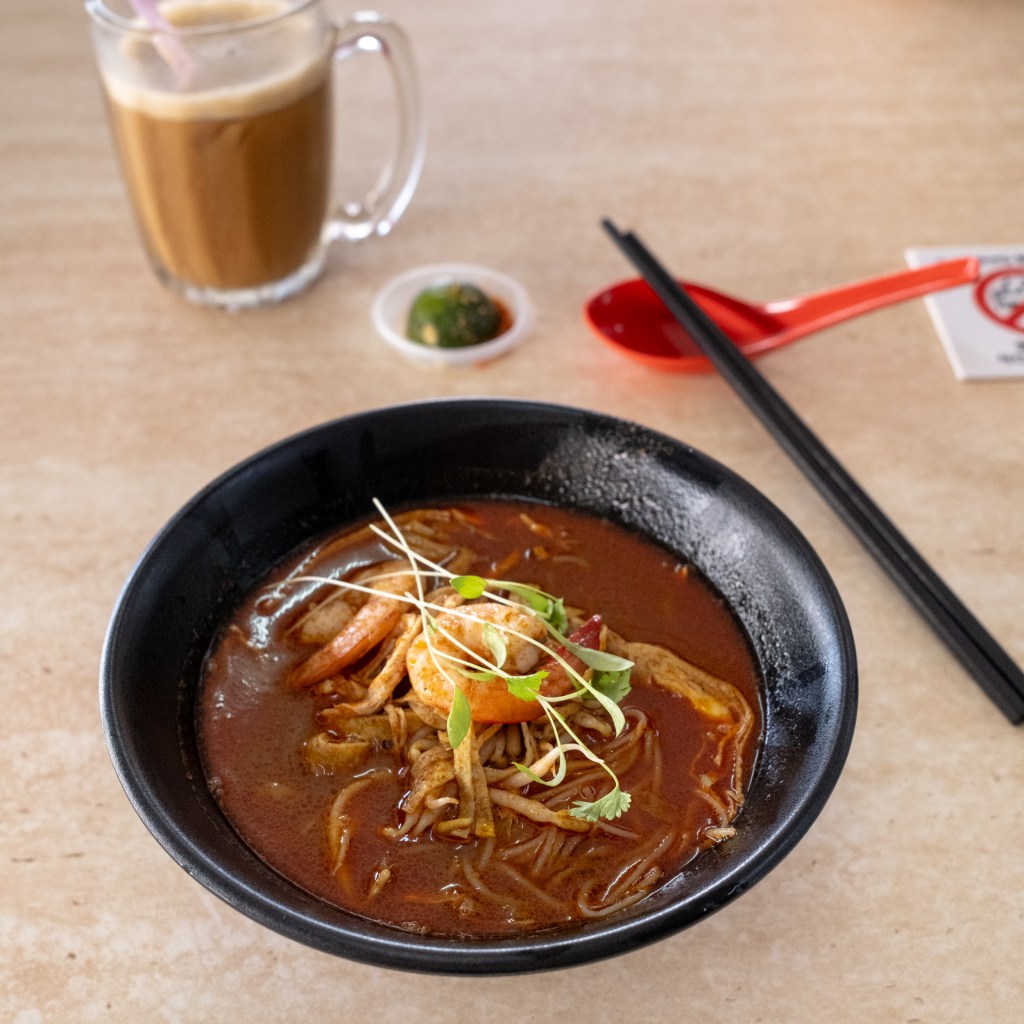
Tried laksa with spaghetti? Or sour tamarind laksa? Laksa comes in many forms, but a classic Nyonya laksa has captured global hearts more than others. Its a dish that’s central to the Chinese Peranakan community – a community that found unusual favour in Britain-controlled Malaya.
As the 18th Century rolled on, the Malay world faced growing European pressure, especially with the rise of the British East India Company. They came not just to trade, but to control. Armed with the power of deception, the Company set its sights on the island of Penang.
We hear from Peranakan researcher Dr David Neo, on the rise of Chinese Peranakan communities in colonial Malaya. He also shares his experiences on the extravagance of Nyonya cuisine and its uncertain future.
And Lillian Tong, Director of the Pinang Peranakan Mansion, recounts life growing up in Penang. She discusses the shame of being Peranakan in the 1980s and the sudden revival and popularisation in the 1990s.
Credits
Hosted by Dr Noby Leong and Philip Gibson
Produced by Dr Noby Leong and Philip Gibson
Sound Design by Jack Barr
English Dub by Anindya Kenyo Larasti
Satay? Okay! is produced by Kopi Productions Limited and supported by the Golden Chopsticks Scholarship, by the Oxford Cultural Collective Trust
Resources and References
A History of Malaysia (2016), Barbara Watson Andaya, Leonard Y. Andaya
Neo, D. H., Ngo, S.-S., & Heng, J. G. K. (2019). Popular imaginary and cultural constructions of the Nonya in Peranakan Chinese culture of the Straits Settlements. Ethnicities, 20(1), 24-48. https://doi.org/10.1177/1468796819867399
Growing Up in a Nonya Kitchen: Asian Recipes from My Mother (2021), Sharon Wee
The Nyonya Kebaya: A Showcase Collection of Nyonya Kebayas from The Collection of Datin Seri Endon Mahmood (2002), Datin Seri Endon Mahmood
Pinang Peranakan Mansion – 29, Church St, Georgetown, 10200 George Town, Penang, Malaysia
Transcipt
Please note that this transcript may contain errors and typos
Welcome to Satay? Okay! A podcast about the foods
that have shaped Malaysia. I’m Dr. Noby Leong,
scientist, food writer and broadcaster. And I’m
Philip Gibson, photographer and regrettably British.
And in this series, we explore the history, cultures
and cuisines of Malaysia from the ancient lands
of Southeast Asia. all the way through to the
creation of a modern day nation. In today’s episode,
we take a look at Laksa and the Great British
Lie. So take your truth serum now and get ready
for satay. Okay. I’ve clearly been watching a
lot of Bake Off and Traitors at the same time.
Yeah, I’m both staples of British reality TV,
I guess. So in the last episode, we looked at
the alliance between the Sultanate of Johor and
the Dutch VOC, and they worked together to oust
Portugal from Melaka. We also looked at the
assassination of the Sultan of Johor in the late
th century, to be precise. Okay. And that
left a giant power vacuum in the region. So today
we’re going to continue that journey. We’re going
to look at what happened in the th century
and who filled that void. But before we do that,
let’s take a look at our food of the day, the
symbol that connects us to the past, and that
is laksa. I love laksa. Yeah, no, I do too. It’s
funny the food that came out of the tropics does
so well in the UK. It’s so well suited to cold
weather. Yeah, just thick, kind of creamy broth,
well, spicy, coconut milk based, isn’t it? It
doesn’t have to be. So laksa is like a category
of food which is like, a noodle soup where you’ve
got noodles in a spicy broth right yeah it often
is creamy though yeah yeah yeah i remember that
i’ve had the first mile of first likes that probably
an adelaide institution uh asian gourmet yes
by my uncle and auntie own asian gourmet it is
oh that that’s my I think that’s my favorite
lock. It’s an institution as well because it
was probably one of the first Malaysian restaurants
to open in Adelaide. What, in the s or something
like that? I think even earlier. I think in the
late s is when Asian Gourmet first opened and
my uncle and auntie took it over in the early
90s. Right. Okay. Wow. There you go. An institution
of the Adelaide Central Markets for those of
you that are listening to us from the antipodes.
I do think it’s sort of the most… famous Malaysian
dish outside of Malaysia, particularly in Australia.
Definitely Australia. I would definitely say
that most Brits are ignorant of all Malaysian
food. And satay, our podcast namesay, is… too
universal across Southeast Asia as a region,
I think, for Malaysia to claim it. There I said
it. And so, yeah, Laksa definitely in Australia,
I think, is one of those things. I mean, Darwin
in Northern Territory has a Laksa festival. Yeah,
Laksa festival in Darwin. I’ve never been, but
I would love to go. Apparently, you know, Laksa
is incredible over there. London, though, has
a Laksa restaurant, Sambal Shiok by Mandy Yin.
Oh, yeah. There’s a range of different Laksas.
I don’t know why more Brits don’t get behind
laksa. Because Brits love curry. Right. And in
winter, you kind of want something soupy, which
Brits also love. Yeah. Combine them both and
you have laksa. You’re right. I mean, I think
give Britain a chance. It’s working its way through
Thai food in kind of a big way. It’s only a matter
of time before people come down the peninsula
and get into the Malaysian offerings. Yes. Hurry
up because I need more Malaysian offerings, please,
Britain. Okay, so there are quite a few different
types of laksa. The most popular one is probably
what you call maybe curry laksa or laksa lemak.
So this is when the broth has got a lot of coconut
milk in it and there’s also a lot of like seafood
in it. And you’ll see like a healthy film of
chili oil over the top. Oh yeah, that’s kind
of what you want. We like to have our coconut
milk split whenever it’s in a sauce so that you
do get a film of red, fiery, spicy chili on top.
Yeah. uh the other really popular one is penang
laksa also called awesome laksa so that’s a really
sour tamarind based laksa sarawak laksa which
sounds like a tongue twister for me sarawak laksa
um from borneo very prawn heavy you have a nyonya
laksa very exuberant quail eggs if you can get
the really traditional one you also have johor
laksa which is probably for me the most fascinating
one because it’s made out of spaghettis. Spaghettis?
It’s made with spaghetti noodles rather than
your typical yellow Hokkien noodles. And it originated
from the Sultan of Johor who visited Italy and
then went back and asked his chefs to make laksa
with Italian spaghetti. And it’s also got things
like salted turnips and just things you wouldn’t
really expect from the other laksas. Yeah. As
I work my way around Malaysia and I try all of
the local laksas, I think I’m glad to say that
I can say that I’ve tried it, but I am definitely
more in a curry laksa, kind of, or nyonya laksa.
That’s what I like. Do you think that’s just
because that’s your staple laksa, your default
laksa? Well, maybe. But also there was a Malaysian
restaurant in Glasgow called Soundbite, which
was up at the university. And they used to do
a Singaporean laksa, which was an everything
but the kitchen sink laksa. It had fried wontons
in it and all kinds of stuff. I kind of love
that. It was great, though. It was in the way
that Italian food’s been bastardized in so many
different ways. Here with Malaysians bastardizing
their own food for a local market. I have had
a kitchen sink laksa in Adelaide once where it
was like your regular laksa lemak with dumplings
with also beef brisket. And it was incredible
because it was like everything on the menu in
one bowl. Which is quite funny to me because…
as we learned over the course of this episode
the laksa typically should be made with only
really seafood and maybe egg and so it shouldn’t
actually have kind of meat or protein in it sorry
meat or poultry in it yeah that’s what malaysians
would prefer is seafood when i was growing up
my mum would kind of make it with chicken though
right and i think just because there were six
of us in the family chicken was much cheaper
and just easier to portion out but typically
yeah it’d be seafood Okay, so that is laksa.
So as we’ve talked about previously, Chinese
peranakan is like a hybrid culture of Chinese
and Malay. And so laksa is a combination of the
noodle traditions of China with the spice and
curry traditions of the Malay world. So therefore
you get this noodles in a spicy broth. So there’s
been a Chinese community on the Malay Peninsula
for as long as there has been trade, so centuries.
And so you’ve probably got some form of Chinese
Peranakan tradition coming into place for hundreds
of years as well. But Chinese people came to
the Malay Peninsula in much greater numbers during
the time of Britain’s occupation of the peninsula.
How did we get there? Okay, well, that leads
us… to our history lesson of the day. So last
episode we talked about the rulers of Johor and
Dutch VOC working together to oust Portugal.
Right. The Dutch VOC wanted a monopoly on the
spice trade and they went through with their
ethnic cleansing of the people of Banda Islands,
the spice islands, so that the Dutch could acquire
and monopolize nutmeg. After we recorded last
episode I was thinking about Michael Caine’s
quote from one of the Austin Power films, which
is, there’s only two people I hate in this world,
people who are intolerant of other people’s cultures
and the Dutch. One and the same, really, in this
case. Yeah, I had an English teacher that used
to say something incredulously. If that happens,
you can call me Dutch. It was always like Dutch
was the butt of the joke. I wonder if this is
where that came from. Well, not Michael Caine.
Not Michael Caine. The British hatred of the
Dutch. And their reputation in the th, th
century as being at war with everyone. Well,
I mean, there’s a lot of British sayings that
are kind of nautical based. When something’s
on the floor, we would say it’s on the deck.
Not to make my nana sound like an alcoholic,
but if it was that time, if somebody was saying,
oh, should we go for a drink? And my nana would
always say, well, the sun’s over the yardarm.
And I had to look up what the fuck a yardarm
was. And apparently it’s a part of the rigging
on a boat, which means the sun was over the yardarm
at about am. Well, she wasn’t a seafarer. No,
she wasn’t. Very much land -based. But I think
what I mean, though, is I think if British English
speakers… think about how many kind of sayings
and idioms we have, colloquialisms that are actually
probably rooted in maritime something. Yeah,
I think we need to do another podcast, but about
the etymology of all these different phrases
and sayings. Maybe there’s a idiom okay podcast.
Idiom? Okay. Anyway. Okay, so with Portugal out
of the equation. The Malay rulers of Johor enjoyed
prosperity for a little while, but then the Sultan
of Johor, Sultan Mahmud Shah II, was assassinated.
He didn’t have any heirs. He was young. But he
came from a long line of rulers that traced their
lineage from Johor to Melaka to Srivijaya all
the way back to Alexander the Great. Sorry, I
shouldn’t laugh. Anyway. I think the laughter
is not coming from humour. It’s like the incredulity
of it all. It’s the disbelief of the fact that
here we have one of the most famous kind of warriors
or military leaders of history that somehow spread
his seed into Southeast Asia. But yeah, who knows
what they were trading on those boats. But yeah,
anyway. So this left a huge power vacuum in the
region. And that’s where we are today, Malaysia.
into the th century so without this centralized
power we have all these different people trying
to vie for trade for royal prestige and philip
i’m just going to run you through a list of all
the different people that are trying to like
claim some power for themselves okay i’m ready
okay so first of all it’s the nobles of johor
so without a sultan there all these noblemen
claiming that oh they’re next in line to the
throne because their daughter married something
something All that kind of stuff. Okay. You then
have a rise in other royal courts around the
Malay Peninsula. So places like Kedah, Selangor
and Terengganu. So those names might not sound
familiar to you. But if you looked at a map of
Malaysia today, you would see that these are
the states of Malaysia. So some of the states
of Malaysia that we have today have their origins
with the regicide of a sultan, which is fascinating.
You then have an increase in people from across
the archipelago, the Bugis from Sulawesi, Minangkabau
from Sumatra, and they are kind of jostling with
Malay people, setting up their own courts. The
Dutch are getting more involved. So previously,
Dutch didn’t care about local politics, but now
they are kind of getting into the nitty gritty
of these royal power plays. and you also have
a lot of pirates now without sort of an authority
um you just have a lot of yeah everybody’s vying
for themselves i think and kind of working in
their own self -interest which you know i guess
that has almost been the theme of what keeps
happening here is that we get years into
something and then somebody dies and there’s
a massive power shift it’s really interesting
that a lot of these like pirates are actually
royalty themselves so this was at a time when
polygamy was quite common in the royal courts
okay and so you had a lot of like um princes
existing that couldn’t get absorbed into the
royal court so they would just leave and become
pirates. Yeah. So with all these different people,
so much tension, you’ve got lots of civil unrest,
a lot of like battles and wars, squabbling families,
alliances. And so rather than power being centralized
and consolidated as it had previously been, it
was really quite spread out. And this was happening
at a time when trade in the Malay Peninsula was
really booming as well. And one particular beverage
sparked this trade boom. What could that be?
Tea! Of course. Britain’s favourite beverage.
So in the beginning of the th century, tea
was really popular across Europe. Demand was
super high. I believe at one point I was importing
something like and a half million kilos of
it. Oh my, jeez, that is a lot of tea. Yeah,
it was something almost about half a kilo per
person per year. Wow. Was the tea consumption.
Now when you put it that way, it’s actually like,
oh, that’s a normal amount of tea. Well, these
days, you know. Yeah, I’m trying to think how
much is in a box of tea that I’m buying, but
yeah, anyway. Yeah. So tea obviously comes from
China. And so Europe had to directly trade with
China in order to get the goods. But the thing
is, China didn’t actually want products that
Europeans were offering. Aside from silver, they
didn’t want the textiles that Europe was producing
that they had a lot of. So Europeans needed to
find an intermediary product, something else
that Chinese traders wanted. And historically,
they were things like metal, agricultural products,
spices, that sort of thing. And that’s how the
Malay Peninsula started to attract trade from
Britain. So enter the British East India Company.
They are a trading company. And like the Dutch
VOC, they’re kind of like an arm of the British
crown. And they’re well -placed to kind of get
the resources from the Malay Peninsula and then
sell that onto China. A few reasons why that
might be. And surprise, surprise, it’s got everything
to do with colonialism. The British East India
Company by the s had gained a pretty tight…
control over lots of parts of india including
the cloth producing regions and the poppy producing
regions right poppy being where we get opium
from so the british east india company could
trade cloth and opium products to the malay peninsula
to get products like pepper and tin right and
malay pepper and tin were highly valued in china
So in summary, products from India got them products
from the Malay Peninsula, which got them tea
from China. And so Britain starts to become a
really big trading player in the region, but
it quickly becomes clear that they need more.
Okay, it doesn’t become clear. They just want
more because they’re insatiable. They want more
tea. They want more money. They want to exploit
as much as they can. And so just like the Dutch
before them, they’re trying to control the trade
routes. They’re trying to control the production.
And an opportunity arises for the British East
India Company in the late th century with an
unlikely event, a new dynasty in Bangkok, Thailand.
Okay. So I’m just going to sidestep here because
it all connects, Philip, I promise. Right, right.
Yeah, yeah, yeah. In we have a new dynasty
in Bangkok and the northern states of Malaysia.
the Malay Peninsula, are pretty uneasy about
this new dynasty because they don’t know what
tributes this new king is going to demand, whether
that be lots of gold, lots of men, or lots of
weapons. So the Sultan of Kadar, and so Kadar
being the northern royal court of the Malay Peninsula,
starts the chat with the British East India Company.
The Sultan is like, all right, if you help us,
if you protect us in a possible attack from Siam,
Thailand, we will give you the island of Penang
as a lease and so they come to an agreement and
in August Francis Light of the British East
India Company takes possession of Penang side
note here for my friends in Adelaide Francis
Light is the father of Colonel William Light
who would go on to become the founder of the
city of Adelaide. Oh, he was the surveyor, right?
Yeah, he was the surveyor general who laid out
plans for the city of Adelaide. The more you
know. So yeah, colonizing runs in the family.
Kind of the worst form of nepotism. Maybe. And
so the time came. The new Thai overlords do demand
an extreme amount of tributes from the Malay
rulers, and the Malay rulers resist. They call
upon the British to help them, but… Britain
does not respond. The reason why is that Francis
Light probably didn’t have permission from the
British crown to sign this treaty with the Sultan
of Kedah. So Britain does not want to help them
in this war. Right. They want to honor the deal
though. So they send men. In exchange for
the island of Penang, Britain provided measly
soldiers. Therefore, they can claim that they
held up their side of the bargain and have legally
acquired Penang. And this is in Yes. And
that is the Great British Lie. Yeah, it was definitely
a bit of embellishing on the offer there. A poorly
worded contract, maybe. And this becomes a theme
across the history of Britain’s colonial legacy.
Like, this is just one of many. lies that Britain
told at the time in order to achieve more power,
achieve more land, things like that. If you’re
enjoying this episode, you can follow us on social
media at Satay Okay. We’ll be sharing beautiful
photos taken by Philip of Malaysia, its people,
and of course, the food. We’ll also share photos
of Malaysia from the archives, so you can see
how the country has changed over time. You can
also find links to give us a tip or donation
to show your appreciation for the work we’re
doing. So head to our socials at SatayOK or visit
our website, satayokay.com. So Britain now gains
a foothold in the region and they start to operate
Penang, just like all the other trading ports
around the region, like Melaka previously. I
heard a funny anecdote about when Francis got
over to Penang and the island was completely
covered in dense forest, as most of the area
is. The trees that were growing along the kind
of bay where Georgetown was now settled, I believe,
were made of such dense wood that the axes that
they brought with them from India were made of
such soft steel that they had to go down and
trade with metal workers in Melaka to go and
get better steel. But so hard was it that in
the three weeks that they were away going down
to Melaka to get these axes, Colonel Light…
in a deeply unserious move, filled his cannons
with money. Like coins? Coinage. Yeah, yeah,
yeah. And shot it into the undergrowth along
the waterfront to encourage the men to go off
and do a bit of a treasure hunt and in the process
get rid of all of the scrub that grew at the
base of these trees so that when they finally
had all of their axes and tools or whatever,
they could get rid of the rest of it. Wow. Something
that sounds like a Boy Scout exercise. If this
wasn’t a fictional TV show, I would think that
is stupid and ridiculous. Yeah, you would make
it up, wouldn’t you? So the more that I start
to read about these kind of colonial books, about
what people were getting up to, particularly
the British, they had so much power that they
seemed to acquire it very unseriously. Yeah.
Everything was just a bit of a kind of like,
a bit of a kind of wheeler -dealer, a bit of
a Del Boy, kind of like from Only Frozen Horses.
But I like the idea of him parking his boat outside
Georgetown and just firing coinage into the,
getting people to chase after pennies with small
knives to cut through grasses and vines and whatever
else. That’s one way to pay for gardening work.
Well, yeah. So now Britain has a foothold in
the Straits of Melaka, that super vital region
that’s connecting trade between India and China.
And with that, there’s now this massive boom
in tin mining. There’s a massive boom in agriculture.
And with that, a massive increase in labor. And
so what we start to now see is people filling
this labor force gap. We have a lot of Indians
coming from the Coromandel Coast. We have a lot
of Arabs from Hadramaut, which is in the southern
part of the Arabian Peninsula. And we have a
lot of Chinese people, particularly from southern
China. And so these three migrant groups join
an existing community that’s been in the Malay
Peninsula for hundreds of years, but now in much,
much larger numbers. And so this influx of people
gives rise to new cultures called Peranakan.
So previously we have talked about Peranakan
cultures with the Melaka Chettis. and also the
Eurasian community, the Kristang community. But
I wanted to dive deeper today to learn a bit
more about these diverse Peranakan communities.
And so to do this, we spoke to Dr. David Neo.
So David Neo is a researcher in Peranakan culture,
and we spoke to him at his home in Kuala Lumpur.
Okay, I’m David Neo. Do you want me to go on
about my family background? Yeah, you can. I
guess I’m Peranakan on both sides of the family.
So my dad’s family, we probably can trace as
far back as about generations in Melaka. And
mum’s family is more established in Singapore.
So I think there’s probably about five generations
of Peranakan in Singapore. So I was born and
bred in Singapore and then went abroad. for my
tertiary education and I guess I found my way
back to Asia about years ago. I am a Chinese
Peranakan so of course it’s like you know I know
that best but the thing is that since being here
there are like at least sort of nine Peranakan
communities that are documented in Malaysia.
So of course your Baba Nonya is the most known
Peranakan group, but you also have the Indian
Peranakans, which are the Melaka Chittis. You
have your Jawi Peranakans, which are the Arabs
intermarrying with the locals. Then in the East
Coast, you have Kelantan and Terengganu that
have very strong Thai influence in their Peranakan
culture. So there’s actually really a variety
in Malaysia and I have sort of like basically
kind of just been looking more at Melaka in the
last years. So I really want to kind of like…
do more work with the East Coast and particularly
also Indonesia because I think there are a lot
more pockets of Peranakan cultures in Indonesia.
While Peranakan cultures are typically associated
with Malaysia and Singapore, the phenomenon may
also extend to other countries across Southeast
Asia. Okay, so the term Peranakan is a Malay
term, which means locally born. And it has basically
come to… describe your mixed race groups that
were born in the Malay archipelago. So that is
what Peranakan means. And if you go into all
the many different parts of Southeast Asia, you’ll
find this phenomenon. But the thing is that regional
differences would be there. where the term comes
from. So the term pretty much has been developed
or like made popular by Singapore and sort of
like them being in the forefront of Peranakan
or all things Peranakan basically. But the thing
is that there are other groups that are similar.
So you have like the Senglis in the Philippines.
So the Chinese merchants who’ve sort of like
acculturated and assimilated and they were wealthy
as well because they were merchants. So they
were very similar to the Peranakan. In fact,
someone, a Filipino friend of mine actually explained
the word Sengli to me. He says that it’s actually
from your Hokkien word. which is business. So
it actually is very much like the Peranakan culture.
But would you classify them as Peranakans? You
have Phuket that also has a very big community
of Peranakans who are basically the Penang Peranakans
that established second homes in Phuket and also
took advantage of the tin mining and whatnot
there. Rangoon is another place. So the whole
Peranakan word does get problematic in terms
of the categorisation and how do you define Peranakan.
So I think it’s super important to clarify that
when we say Peranakan, it’s quite a big category
of lots of different cultures. And I say that
because I think in Australia and UK and lots
of other places, A lot of people, if they come
across the word Peranakan, it’s only in reference
to Chinese Peranakans. Right. And they assume
that there’s no other type of Peranakan. And
so, and as David was saying, which was something
I learned for the first time, there were also
quote -unquote Peranakans in Thailand, in Philippines,
and all over Southeast Asia, which I thought
was, oh, obvious, but fascinating. Right. And
I think you were having a bit of an identity
crisis when you were over there. It’s kind of
like, am I Peranakan? Well, so my grandmother
is Chinese Peranakan. She’s Nyonya. Right. So
I do have that heritage. But yeah, I’m constantly
trying to think of where does Chinese Peranakan
fit into my life? Beyond the plate. Beyond, yeah,
beyond the plate. And it kind of adds to the
complex identity issues that I have of whether
I’m Malaysian, Chinese Malaysian, Australian.
Yeah. So perhaps the reason why Chinese Peranakans
are the most spoken about. outside of Malaysia
is because they’re probably the largest group.
So you might hear them talked about as Baba Nyonya
and Baba is the name for the men and Nyonya is
the term for the women. So you will sometimes
hear Chinese Peranakan culture being talked about
as Baba Nyonya culture. So to find out more about
Chinese Peranakans, we spoke to Lillian Tong
from Penang and I’ll let her introduce herself.
So my name is Lillian Tong and I am the Museum
Director of Penang Peranakan Mansion and also
the President of the Persatuan Peranakan Bapak
Nonya Pula Penang, Deputy President of the State
Chinese Association, which formerly was the British
Straits Chinese Association, and Council Member
of the Penang Heritage Trust. Lillian Tong grew
up in Penang, though she wasn’t initially aware
of her own heritage. So as a child, life was
happy. I thought everybody was Baba Nonya until
I went to school and realised that people speak
Chinese in a different way from my Baba Hokkien.
And then when I was older in secondary school,
when I visited my friends in the house, then
I realised they dress differently. My grandmother
is always in teza and sarong. So their grandmothers
are different. And then, of course… You understand
that people are different, so you accept that.
And of course, when I was younger, it didn’t
mean anything. You are just who you are. When
I was in my s, s, it was career and looking
after my family. So I never thought about who
I am or the culture. But when my children…
So my children grew up and then that’s when I
got interested. One turning point in my life
was when… I was having to go for a surgery
and I thought I’m going to die. And I was so
worried about whether my daughter will know who
she is, Chinese or Nyonya. And that who she is
will form her worldview of how she live out her
life. Lillian explained to me some of the ways
that she learnt about her own culture. One moment
was during her career in film and television,
where she worked alongside older Nyonya women.
When I was filming The King and I, I was a street
woman in a market selling or buying vegetables
and all that. And so we were dressed casually
and we’re supposed to behave likewise. So during
break time when we have buns and we are tired,
we’ll just sit by the longkang, the drain, and
just eat the buns. But when I was filming Road
to Dawn, acting as a Nonya, and in Little Nonya,
or even Sensei Nonya, the call time was o ‘clock
for makeup. And that means o ‘clock in the
morning to o ‘clock at night. We had no chairs.
They didn’t give us any chairs. So, you know,
as we’re so tired throughout the day, we wanted
to lean on the tree or even to squat. And the
older Nonyas will say, Eh, please ah, that’s
Rono ah. You know, it’s not proper. It’s improper
for nonyas to be leaning on the tree. You just
have to carry yourself. So then, even when there
was a lunch time, and the older nonyas would
say, no, we let them go and eat first. If there’s
left over, then we’ll take whatever. We won’t
rush for it. So then I realised, how when I think
I’m a street girl in a market, I behave likewise.
And then when I am a nonya, I hold myself differently.
So that is the whole view of how then you live
out your life. So there’s a huge array of cultural
traditions, from the etiquette to the clothing
and the food. Lillian explained just some of
the aspects of Chinese Peranakan culture and
the reasons why we often shorten this to Nyonya
culture and cuisine. There was one symposium
that I went to that says the people who carries
the culture or preserves or conserve the culture
are the women well i cannot say that the men
did nothing because they actually went out to
work they gave us the money to do everything
and so the culture was brewed and grew within
the home each home so the nonya having the money
and the time and the many servants or her friends
and the many children she has, then starts to
cook and does all this. So visibly even, if you
see nonya cooking, it’s the ladies. Of course,
today they are men. If you see kebaya, it’s the
women. Awakaso maneh is the women. Aworong geng?
Oh, no, no. Orong geng is mixed. So donang sayang
is men. So you will see that a lot of it is carried
by the women. Food is, of course, a huge part
of Chinese Peranakan culture, and Lillian shared
why it’s so important. I think it is, as in most
cultures, very important because it is where
you bring people together and families together
and friendships are made, which is why when you
have a business discussion or meeting, sometimes
people will say meet over dinner. I think that
food changes a lot of things. So it is with Bapa
Nyonya families too, which is why like Chinese
New Year, birthdays, especially reunions or like
the Soi Festival, the Tongyin Festival, families
need to come together, must come together in
the past. But now today with children like in
Sarawak and KL, it’s difficult. But in those
days, people come together. And in fact, not
only coming together to eat, coming together
to prepare food. And I think that is such a bonding
time. And it’s a cuisine that’s truly hybrid,
not just between Chinese and Malay, but with
influences reflective of its colonial origins.
I think it’s the most amazing. I mean, I’m not
being biased just because I’m Nonya. Because
if you go to our kitchen, which later I’ll show
you, There’s a Dutch coal scuttle and there are
Malay moles, Indian blanca, the pots, and Chinese
koi kape ting and all that. Everything from all
over the world is in one kitchen. English jelly
moles, the blanche or something like white, white
porcelain jelly moles, usually shaped like rabbits.
Everything from all over the world. So can you
imagine that means… we are cooking a mix of
everything because Penang was a port city that
was a gilded age and I think that formed our
gave the foundation to our cooking besides being
in Penang we are Bapa Nyonya’s are married to
Thai Burmese Indonesians so all these flavors
from Nusantara and the Chinese background and
your Indian curry Despite how much she loves
food, Lillian says she doesn’t actually cook.
I actually don’t have much interest in cooking
because my mother was such a good cook she was
so meticulous that everything has to be chiffonade
very fine and even the carrot that’s going to
be thrown into a soup to make stock it has to
be cut into flowers yeah and then if you don’t
do that she’ll like do it again or not fine enough
then get scolding so it’s like I’m never good
enough you know that kind of feeling so I don’t
even want to try now Yeah. So we’re going to
hear a little bit more from Lillian David in
just a tick, but I just thought it was really
interesting to hear her describe the cuisine
and the culture because, well, a lot of people
would call it really refined, fine clothing,
fine etiquette. Yeah, you totally get an idea
of the kind of how labour -intensive that all
is when we think back to the interview with the
Melaka Chettis and Amuda just kind of… audibly
sighing when she just talked about how much preparation
went into all the chiffonading she talks about
um but you know that was their status wasn’t
it if they were to be serving this food that
was to be this immaculate then it gave off the
sense of um fineness and and and opulence. Yeah
and you get a sense of the wealth involved with
these Chinese Peranakan communities and that
wealth is reflected in its origins. Right. So
David Neo elaborated more on the origins of Chinese
Peranakan culture and how it’s changed over time.
Peranakan culture I think is a product of colonialism.
I think colonialism was gave the opportunities
to the Peranakans to basically flourish. I would
say the biggest Peranakan group would be the
Chinese Peranakans. So their golden age was really
s to s. So that was when… At that time
too, it was like, you know, they were about two,
three generations maybe. It’s like, you know,
here in Southeast Asia. And their drive to sort
of like, you know, succeed or there’s no more
option of going back to China, I think sort of
like, you know, drove them to amass the wealth
that they amassed, right, at that time. With
the British being here, it’s like, you know,
and how they developed the straight settlement.
It’s like, you know, the Pranakans basically
became rich from all the opportunities that came
from that. So that was… that was basically
sort of, you know, their golden age. The idea
of Peranakan culture flourishing and also being
a product of colonialism is a really interesting
one. And David shared with me the impacts of
this wealth and power on the community dynamics.
To me, privilege. I’ve actually written a paper
on the nonya imaginary. And this was my argument
in the paper that nonyas were valued and privileged.
And they actually endorse or they perpetuate
the patriarchy with your patrilineal line and
patrilineal focus in the Peranakan culture of
wanting a son and continuing the family name.
So the oppression didn’t come from men but the
oppression actually came from nonyas. And so
my argument there was that nonyas are actually
very privileged and they always occupy a very
interesting space in Pranakan culture because
they are not oppressed like how most women are
oppressed by patriarchy. The privilege of Nyonya’s
then filtered into other aspects of the culture,
like cuisine. So they grew up very privileged
and they grew up also sort of like, you know,
in the kitchen and in this culture. So the older
generations basically had to learn to cook. That
was their value, right? That was how they would
be able to get married. That was, etc, etc. It’s
like, you know, their role was very much in the
home. The hallmarks of the cuisine that Lillian
mentioned almost take on a new understanding
against the arguments by David, and we start
to see that Nyonya cuisine, which often includes
fine chiffonading of ingredients, the use of
European molds and equipment, the very specific
demands on the taste and texture of the food,
are all reflections of the status of privileged
Chinese Peranakans in society. However, that
was in many ways in the Golden Age. and david
shared with me how changes in the th century
signaled a decline and the end of that golden
era so you have the great depression that came
in that was sort of like you know the first thing
that uh started crippling their wealth it’s like
and then then the second world war uh pretty
much decimated a lot of um the wealthy pranakans
wealth aside from their wealth being decimated
their entire identity was being attacked too
After Malaysian independence, there was an increase
in the number of new migrants from China, and
this became a source of tension between Chinese
Peranakans and the new class of Chinese migrants.
With independence, I think particularly the s
and the s, it’s like the Peranakans were starting,
that was sort of like the OCBC time. Okay, so
OCBC basically… It’s an acronym for a bank.
It’s a popular bank here. And what they have
done is they’ve actually used it to mean orang
China bukan China. So, you know, you’re Chinese,
but you’re not Chinese to describe the Peranakans.
So I think with sort of like the Peranakans diminishing
prominence in the s and the s, they started
feeling or with the rise as well with the later
Chinese immigrants because there’s always this
tension the Pranakans would look down at the
later Chinese immigrants and so with the later
Chinese immigrants growing to be more prominent
there was a discrimination with the Peranakan.
So I think that’s where the term comes from.
And I guess there was that time when people were
ashamed of wearing kebayas and not wanting to
wear kebayas or be associated with the Peranakan
culture or to be associated or to be known as
Chinese but not Chinese. This discrimination
led a lot of people to question their identity
and feel ashamed. their prominence I guess had
dropped and also it’s like you know it also affected
that generation in terms of how they saw themselves
as well so like with my cousin it’s like you
know I know this term sort of like you know resonates
with her more than it does with me because I
kind of like celebrate the fact that you know
I am orang China bukan China it’s like you know
but to her it’s like I think she’s even sort
of like learning Mandarin now to sort of make
up or compensate for not being Chinese enough.
I don’t feel that need. It’s like, you know,
I am quite happy to be China Buddha. It’s like,
you know, which is, if you translate that from
Malay, it’s like being Chinese blind. Yeah, it’s
like, yeah, so it’s, I think we have very different
experiences with the Peranakan culture. Lillian
echoed the sentiments of David, and she told
me the story of her own family’s struggle with
discrimination. At one point, like maybe say
s, s, it was going down. And I have aunties
in Melaka from very old families who tell me
that they were so ashamed when they went to school
because people would be laughing at them and
say, orang China bukan China. And she’s like,
you are… But it wasn’t just social issues that
caused the decline. Administrative issues also
played a role in downplaying Chinese Peranakan
identity, especially when it comes to identity
cards or ICs and other official government documents.
So a lot of us have become or identify ourselves
as Chinese because in the IC and everywhere else
is Malay, Chinese, Indian. So you just take Chinese
and others. So we don’t normally bother with
Baba Nonya. And so it became lost. Like even
in my IC, it was Chinese because there was just
three to choose from. Even as in school, we just
take the one that, you know, suits you best.
But things turned around in the s and s,
when Chinese Peronican culture saw a massive
revival. I attribute the revival to two events.
One is our Prime Minister Badawi’s wife Endon,
Datin Sri Endon. She wrote a book on Kabaya and
she promoted it. She visited the Baba Nonya associations
and brought it to Australia, brought it to the
National Museum, which I went in. dance and there
was a big exhibition so she started in malaya
malaysia and then little nonya the movie so little
nonya did the movie and they filmed here which
also made us famous otherwise you know where
in my when i was here in the beginning people
would just come and say is this where little
nonya was filmed so i knew that that was a selling
point you think so um because of this too it
created an interest and now today look at all
the tourists here they are from china and they
where did they hear that you must dress in the
sarang kebaya and they will pay to rent and take
photos and then um they um uh nonya restaurant
i think in the last even before covid say so
last eight years start to mushroom up because
that means there must be demand and people are
asking for it and there is awareness and don’t
ask me which one is the best on your restaurant
because you know um every restaurant i find have
their own specialty like if you go babapang make
sure you order their um kerabu like the best
ever and then another place you go for the lobak
so the there’s not that one restaurant has it
all so yeah So from a golden age in the th
century, followed by a steep decline from the
s, and then a resurgence in the s and
s, Chinese Peranakan culture has undergone
vast changes. But what does the future hold for
the culture and community in the modern age?
I think our… idea of identity is actually more
self -conscious now than it has ever been. I
think, you know, the last years, it’s just
evolved and people sort of like just saw themselves
as, yeah, what they are. But it’s like, you know,
I think in this modern age, it’s like we are
becoming more self -conscious in terms of our
cultural and self -identity as well. Why do you
think that’s? Why is there this shift to… Globalisation?
I don’t know. I’m thinking a lot about Singapore
context in terms of this. And maybe that’s also
tied to my own background or understanding. I
find that Singapore tends to be very self -conscious
in terms of these… cultural identities because
I think they have modernized so fast and so they’ve
sort of like lost their culture and they’re basically
searching for their culture I think more so than
Malaysia. Yeah it’s like you know in my experience
and in what I think it’s like you know Malaysians
tend to be more comfortable with themselves.
than Singapore. I think Singapore is always searching
and I think the fact that they’ve developed so
fast is one of the reasons why there’s this lack
or this deep sense of nostalgia for Peranakan
culture and whatever else. Even though there
is now an increased awareness and popularity
of Chinese Peranakan culture, David shared with
me some of the drawbacks. I have a lot of issues
with that. I think there’s a lot of marketing
ploy and commodification that’s going on. That’s
one of the issues that I have with your restaurants
and the peranakan culture that’s now circulating.
And I think most of it probably started with
Singapore with tourism board promoting it and
whatnot. So now it becomes this commodified culture
that I sometimes think is really not authentic
anymore. So one of my issues is blue rice. yeah
it’s like you know this this whole blue rice
thing um i have never seen blue rice growing
up you know in a pranakan home in the pranakan
kitchen it’s like you know we never stain our
rice blue we stain our pulut our glutinous rice
blue it’s like you know and that’s basically
just for desserts yeah it’s like um but yeah
but we don’t do blue blue rice so now these days
you know it’s pretty yes it’s like you know the
restaurants are sort of like selling it but i’m
just going like what’s pranakan about that and
when i walk in when i walk into a pranakan restaurant
these days as well i find that you know i don’t
recognize half the things that are in the menu
um so yeah so so i find that there’s a lot of
commodification that’s happening um and Even
with my students, I have issues with, well, I
don’t know how to mark their papers. Because
I kind of feel, well, half of it is not right.
They’re getting all the information online. And
there’s so much bastardization and commodification
that’s happening. But I’m just going like…
The commodification of Chinese Peranakan culture
is something that Lillian struggles with too.
they put malay hairpins on the hair you know
like an added bonus for for the customers but
it’s like oh no not traditional yeah and the
men’s clothes is we have i’ve never seen a baba
wearing the clothes they imagined and they put
on the tourists to wear so it’s like maybe cannibalizing
the culture because the world is going to think
oh baba nonias wear like this yeah yeah and tourists
can’t tell yeah the tourists can’t tell the difference
yeah yeah and especially when it’s in here yeah
they think that it’s you know it should be so
um and so many restaurants coming up which some
are not so good yeah but but people still go
because they don’t know any better maybe yeah
and um yeah is that like upsides and downsides
to tourism it’s brought a lot of people here,
but it’s also diluted the culture. And then I
am for people who are interested to get to know
our culture or be enculturated, acculturated
or unculturated. But then some people start to
use it for profit, like claiming their peranakans
or having a peranakan business and claiming to
be Baba Nonyas. With so much misinformation about
the culture, so much commodification and cultural
appropriation, What’s the solution to preserving
the culture for the future? The newer generation
also need to sort of like embrace the culture
and evolve with it as well. It’s like, so maybe
blue rice will have to be, you know, part of
Peranakan food. I don’t know. Because I’m just
going like, I have a reference point for what
is authentic because of what I have lived through,
right? It’s like, you know, but culture never
remains static. Yeah, so this is also another
issue that I’m kind of like going, yeah, I tend
to be a purist in a lot of things, but I’m also
kind of like realizing the younger generation,
that may alienate them and it may not be their
reality as well. So it’s like, you know, how
do we kind of like bridge the gap with that,
with the younger generation? The older generation
is dying and the newer generation just have not
seen what the older generation have seen. I want
to pass everything that I know to my niece. But
I realise that I will still bring a lot to the
grave with me. I think it is the family. Because
how much you enculturate the children and pass
it on. go with the flow. So like my daughter,
I’m very happy to say that I managed to encounter
her because she dresses up in sarong kebaya frame.
She was just years old and she promotes the
culture still and she writes. Other relatives
who have got daughters like years old. that
have never put on a kebaya in years. They
haven’t worn a kebaya before. So that is how
much the person, how much the parent encounters
and how much the child wants to receive. Because
families are now moving out, I think associations
are good, clubs, or even among families. And
to have it once a year or any celebration, everybody
comes back, everybody dresses in kebaya. We eat
the food, we play mahjong, we bring home your
custom money, and we do ronggeng. But of course,
I understand it’s getting harder. That was Dr
David Neo, Peranakan researcher, and Lillian
Tong, Peranakan community leader. So Philip, I
thought that was a really interesting discussion
from both people, especially that last segment
where we were talking about cultural preservation.
Because in so many of our previous interviews
that we’ve done, culture hasn’t been preserved
and they’re struggling to preserve it. But with
Chinese Peranakan culture, it has gone through
a revival. It is being preserved in some way,
but that hasn’t solved the issue. It’s just created
new issues, especially in regards to commodification
and what we now think is Chinese Peronican culture.
Yeah, that is a shame. I think that it’s being
bastardized, as David says. And the people are
just kind of using it as an excuse to play dress
up. But I guess you can’t really blame tourists
because they don’t know. They’re going to the
country to try and figure out or trying to learn.
But the issue is not the tourists. It’s from
the businesses that are commodifying incorrectly
the culture. And I can see how even a well -meaning
person or business. can appropriate culture incorrectly
very, very easily. Yeah. So David gave the example
of blue rice. So in Nyonya food, you would only
stain glutinous rice, which you’d call pulut.
This is a very different word to regular rice
called nasi. Okay. But a well -meaning food writer,
for instance, could translate glutinous rice
to just rice. And then another food writer…
might read that and think oh all rice is blue
in yonyo cuisine and then that becomes the dominant
narrative that’s perpetuated over and over again
in blogs and into social media and then that
myth of blue rice appears in ai summaries and
chat gbt and then that becomes the dominant so
i can see very easily how a culture can be twisted
and contorted from what actually was Right. And
I mean, it’s coming also from the fact that it
is a hybrid culture of two races. And so like
those demarcation lines between the two are going
to be very blurry. Even like yourself, you know,
your grandmother was Nyonya, but you are then
one eighth Nyonya. And so therefore, what does
that mean? Does your food only have one eighth
of the amount of blue dye in it? You know, sometimes,
you know, in food writing today, it’s really
unpopular. to suggest that there’s such a thing
as authenticity. It’s really unpopular to say
that there’s no such thing as authenticity and
that there are many ways to interpret culture.
I think the danger in that is that small aspects
of the culture can become amplified and then
twist what the majority of the culture know it
to actually be. Or it risks just appropriating
the culture altogether. Because I always think
authenticity is on a spectrum. To say aspects
of our culture is authentic depends on who you
are, where you’re living, and the time and place
that you’re living. Okay. You know what I mean?
Yeah, yeah. Well, culture is evolving. Yeah,
exactly. So I think when we say that authenticity
doesn’t exist, we run the risk of erasing very
meaningful cultural traditions, whether we realize
it or not. I just think that whenever we’re talking
about any aspect of cultural traditions we should
try and contextualize it more so rather than
saying authenticity doesn’t exist let’s talk
about the story the very specific story about
whatever tradition you’re talking about whether
it’s food whether it’s your costume or anything
else yeah but then what happens if you have like
people whose parents don’t respond to it and
so therefore don’t cook or dress in such a way
and you have these kind of people who have been
orphaned from their own culture, you know what
I mean? Having to go and do that kind of research
that they don’t actually have a personal connection
with. That’s a difficult thing for people to
seize upon and feel authentic within themselves.
It’s messy, isn’t it? It’s messy. But I think
that’s how cultures evolve. Right. You know,
I was talking before how in my family we make
laksa with chicken. I should never say to anyone
that this is a quote -unquote authentic Malaysian
laksa. But I can say that this is authentic to
a Malaysian diaspora. And the reason why we use
chicken rather than, say, prawns is because it’s
cheaper, it’s easier to get hold of. And I think
it’s beautiful to have both stories and both
representations. Yeah, I think it is wrong to
kind of deny people their ancestry just because
they’re not being orthodox. Absolutely. So yeah,
it is really messy, but I’m really grateful to
both David and Lillian for sharing their perspectives
to add more depth to this story. So back to our
symbol of the day, which is of course laksa.
Laksa really is a symbol of Chinese Peranakan
culture, which is itself though a product of
British colonialism. So when you eat a bowl of
laksa, think about the events that led to the
emergence of Chinese Peranakan communities. Back
to our history, the events of the th century
effectively suppressed the formation of a new
centralized Malay power. So now there was no
more Srivijaya type reign. There’s no Malaccan
type city that’s arrived. And that’s largely
due to the regicide, the assassination of the
Sultan of Johor. Right. And that allowed players
like the British East India Company to come in
and take control. And following the acquisition
of Penang, they also end up gaining Singapore
a few years later. And they did that by essentially
propping up a puppet successor to the throne.
They just kind of got this guy and was like,
yeah, he’s the new sultan and therefore he controls
Singapore. Therefore, we will sign a treaty with
him. Therefore, we have Singapore legally. Right.
Okay. Dutch VOC was not happy about this because
it’s encroaching on their territory. Right. They
are claiming that their treaty is illegal and
wrong. So this spout has profound impacts for
the region again, which we’re going to explore
in the next episode, Toddy and the colonizers’
secret treaty. So don’t miss the next episode
of Satay. Okay.
 Satay? Okay!